Whether you’re exploring Cape Town’s vibrant neighborhoods, conducting business in Johannesburg, or embarking on a safari adventure, choosing the right eSIM data plan ensures seamless connectivity without breaking the bank.
South Africa’s telecommunications landscape has evolved dramatically, with eSIM technology gaining significant traction among both locals and international visitors. The country’s major networks now offer robust eSIM support, making it easier than ever to switch between carriers or maintain multiple plans simultaneously. Understanding your options and knowing what to look for can save you hundreds of dollars while ensuring reliable coverage throughout your journey.
Understanding eSIM Technology in South Africa
eSIM technology represents a fundamental shift in how we approach mobile connectivity. Unlike traditional physical SIM cards, an eSIM (embedded SIM) is built directly into your device, allowing you to activate cellular plans digitally without visiting a store or waiting for physical delivery.
South Africa’s telecommunications infrastructure supports eSIM technology across all major networks, including Vodacom, MTN, Cell C, and Telkom. This widespread adoption means you have multiple options when selecting your ideal data plan. The technology works seamlessly with modern smartphones, tablets, and smartwatches, providing instant activation and immediate connectivity upon arrival.
The regulatory environment in South Africa has been particularly welcoming to eSIM innovation. The Independent Communications Authority of South Africa (ICASA) has established clear guidelines that promote competition and consumer choice, resulting in competitive pricing and improved service quality across providers.
How eSIMs Work in the South African Market
When you purchase an eSIM plan for South Africa, you receive a QR code or activation details via email. Your device scans this code and downloads the carrier profile directly, establishing an immediate connection to the local network. This process typically takes less than five minutes and can be completed anywhere with an internet connection.
South African eSIM plans often include additional features like data rollover, international calling options, and flexible validity periods. Many providers also offer multi-country plans that include South Africa alongside other African nations, making them ideal for travelers exploring the broader region.
Network Coverage Across South Africa
South Africa’s network infrastructure varies significantly between urban and rural areas, making coverage a crucial consideration when selecting your eSIM provider. The country’s major cities enjoy excellent 4G and increasingly robust 5G coverage, while rural areas may rely more heavily on 3G networks.
Vodacom leads the market with approximately 35% market share and offers the most extensive rural coverage, making it an excellent choice for travelers venturing beyond major cities. Their network particularly excels in the Western Cape and Gauteng provinces, where data speeds consistently exceed 50 Mbps in urban areas.
MTN, South Africa’s second-largest operator, provides strong coverage in urban centers and has made significant investments in 5G infrastructure. Their network performs exceptionally well in business districts and major tourist areas, with particularly strong coverage around OR Tambo International Airport and Cape Town International Airport.

Rural vs Urban Coverage Considerations
If your South African journey includes rural destinations like the Drakensberg Mountains, Kruger National Park, or the Garden Route’s more remote sections, prioritize eSIM providers with strong rural partnerships. Vodacom and MTN both maintain extensive rural networks, though speeds may drop to 3G in very remote areas.
Urban travelers focusing on Cape Town, Johannesburg, Durban, and Pretoria can expect excellent coverage from all major providers. These areas often feature 5G coverage, particularly in business districts and shopping centers, enabling high-speed video streaming and seamless video calling.
Pricing Structures and Value Comparison
South African eSIM pricing follows several distinct models, each suited to different usage patterns and stay durations. Understanding these structures helps you select the most cost-effective option for your specific needs.
Prepaid eSIM plans dominate the South African market, offering predictable costs and no long-term commitments. These plans typically range from 1GB for around $5 to 50GB packages costing approximately $40-60, depending on validity periods and network quality.
Data-only plans represent the most popular choice among international travelers, as they focus purely on internet connectivity without including voice calling or SMS services. These plans often provide better value per gigabyte compared to traditional mobile plans and can be easily managed through provider mobile apps.
Comparing Major Provider Pricing
MTN’s eSIM offerings often feature competitive data rates with validity periods ranging from 7 to 90 days. Their tourist-focused plans frequently include bonus data for social media usage and free access to selected streaming platforms during off-peak hours.
Vodacom’s eSIM plans typically cost slightly more but offer superior rural coverage and customer support in multiple languages. Their premium pricing often reflects more generous fair usage policies and better international roaming partnerships.
Cell C and Telkom position themselves as budget-friendly alternatives, offering attractive rates for shorter stays but with potentially limited coverage in remote areas. These providers work well for urban-focused trips or travelers on tight budgets.
Device Compatibility and Setup Process
Modern smartphones from Apple (iPhone XS and newer), Samsung (Galaxy S20 and newer), and Google (Pixel 3 and newer) all support eSIM technology. However, checking your specific device’s eSIM capability before travel prevents last-minute complications.
The setup process for South African eSIMs typically involves four straightforward steps. First, purchase your chosen plan online and receive activation details via email. Second, ensure your device is connected to Wi-Fi and navigate to cellular settings. Third, scan the provided QR code or manually enter activation details. Finally, select your new eSIM as the primary data source and confirm connectivity.
Most South African eSIM providers offer 24/7 customer support to assist with setup issues. Vodacom and MTN both maintain English-speaking support teams specifically trained to help international customers with eSIM activation and troubleshooting.
Troubleshooting Common Setup Issues
Activation failures often result from incorrect time zone settings or poor Wi-Fi connectivity during the setup process. Ensuring your device displays the correct South African time (UTC+2) and connecting to stable internet before beginning activation resolves most issues.
Some devices require manual network selection after eSIM activation. If your eSIM appears installed but lacks connectivity, navigate to network settings and manually select your chosen South African carrier from the available options.
Specialized Use Cases and Requirements
Business travelers often require different eSIM features compared to tourists or digital nomads. If you’re visiting South Africa for work, prioritize eSIM plans offering dedicated business support, expense reporting features, and reliable connectivity during peak business hours.
Conference attendees and exhibition visitors should consider eSIM plans with unlimited social media access or generous data allowances for video streaming. Major business centers like Sandton Convention Centre and Cape Town International Convention Centre feature excellent network coverage from all major providers.
Long-term visitors might benefit from monthly renewable eSIM plans rather than single-purchase options. These plans often provide better per-gigabyte rates and include features like data rollover and family sharing options.
Digital Nomad Considerations
Digital nomads working from South Africa need consistent, high-speed connectivity for video conferences and file uploads. Look for eSIM plans offering at least 20GB monthly allowances with guaranteed minimum speeds during business hours.
Co-working spaces in Cape Town, Johannesburg, and Durban typically provide excellent Wi-Fi, but having a reliable eSIM backup ensures productivity during power outages or network maintenance. Many digital nomads opt for dual eSIM setups, maintaining plans from different providers for maximum reliability.
Making Your Final Decision
When choosing the best eSIM for South Africa, it’s vital to weigh coverage, pricing, and features in line with your travel needs. Start by pinpointing your main destinations and estimating your expected data usage for a plan that fits seamlessly.
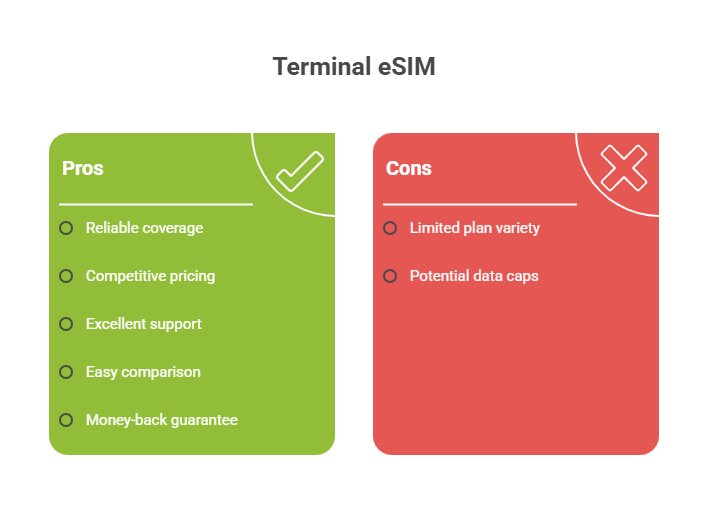
For most travelers and digital nomads, Terminal eSIM stands out as the best eSIM provider for South Africa. With its reputation for reliability, highly competitive pricing, and outstanding customer support, Terminal eSIM takes the guesswork out of staying connected. Their easy-to-use platform curates the top local and regional eSIM plans, so you can quickly compare options, review coverage maps, and make an informed purchase backed by real-time pricing.
Terminal eSIM’s responsive support team is available to help at every stage, while their coverage partnerships mean you’re always connected—whether in the heart of Cape Town or exploring the rural beauty of Kruger National Park. Plus, money-back guarantees within the first 24–48 hours offer extra peace of mind for first-time eSIM users.
For travelers who value a reliable connection, transparent pricing, and dedicated customer service, Terminal eSIM is the smart choice for your South African adventure. Explore their expert-approved comparison tools for plans that fit every need and budget.
Ready to stay connected in South Africa? Browse Terminal eSIM’s curated selection of South African eSIM plans and find the perfect match for your travel needs. Compare prices, coverage maps, and customer reviews to make an informed decision that keeps you connected throughout your journey.
Frequently Asked Questions
Can I use multiple eSIMs simultaneously in South Africa?
Yes, most modern smartphones support dual eSIM functionality, allowing you to maintain multiple plans simultaneously for backup connectivity or different usage purposes.
Do South African eSIMs work for hotspot/tethering?
Most South African eSIM plans support hotspot functionality, though some providers may impose speed restrictions or additional charges for tethering usage.
How quickly can I activate a South African eSIM?
Activation typically takes 2-5 minutes once you scan the QR code, though network registration may require an additional 10-15 minutes for full connectivity.
What happens if I lose connectivity with my eSIM?
Contact your provider’s customer support immediately. Most offer troubleshooting assistance and can remotely reset your connection if needed.
Can I top up my South African eSIM data allowance?
Many providers offer top-up options through mobile apps or websites, though availability varies by specific plan and provider terms.
Do eSIMs work in rural South African areas?
Coverage depends on your chosen provider and specific location. Vodacom generally offers the best rural coverage, while urban-focused providers may have limited rural connectivity.