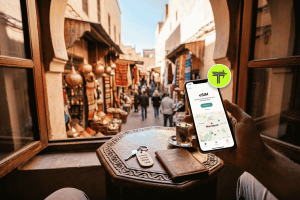
Do you buy a SIM card at home or upon arrival? Which local carrier is reliable? How much data do you even need? This uncertainty often leads to stress and overspending, turning what should be a simple task into a significant travel headache.
Fortunately, there’s a modern solution that simplifies everything: the eSIM card. An eSIM (embedded SIM) is a digital SIM that lets you activate a cellular plan from a carrier without having to use a physical nano-SIM. This technology is revolutionizing how we connect while traveling, offering flexibility, convenience, and cost savings. But with a growing number of providers, how do you choose the right one?
This guide will walk you through everything you need to know. We’ll break down the key factors to consider, from data needs and coverage to pricing and device compatibility. By the end, you’ll be able to confidently select the perfect eSIM card for your next adventure.
What is an eSIM and Why Should Travelers Care?
Before we dive into choosing one, let’s clarify what an eSIM is. Unlike a physical SIM card you insert into your phone, an eSIM is a small chip already built into your device. You activate it by scanning a QR code or using an app from an eSIM provider. This simple process allows you to download and install a “digital” SIM profile.
For travelers, the benefits are immense:
- Instant Connectivity: You can purchase and set up your eSIM card before you even leave home. This means you’re connected the moment you land, ready to book a ride, check maps, or let loved ones know you’ve arrived safely.
- Avoid Roaming Fees: An eSIM card lets you access local data plans at local prices, bypassing the notoriously high roaming charges from your home carrier.
- Flexibility: Many phones allow you to store multiple eSIM profiles. You can switch between plans for different countries or even use your regular SIM for calls and texts while using the eSIM for data.
- Security: There’s no risk of losing a tiny physical SIM card. Your eSIM profile is stored securely on your device.
- Eco-Friendly: Since there’s no plastic card or packaging, eSIMs are a more sustainable choice.
The first step, however, is to ensure your phone is compatible. Most flagship smartphones manufactured since 2018 support eSIM technology, including recent iPhones, Google Pixels, and Samsung Galaxy models. A quick search for “[Your Phone Model] + eSIM support” will give you a definitive answer. Most eSIM providers also have a compatibility checker on their websites.

How to Choose the Best eSIM Card for Your Travel Needs
Selecting the right eSIM card involves more than just picking the cheapest option. Your travel style, destination, and data habits all play a crucial role. A business traveler on a two-day trip to London has different needs than a backpacker exploring Southeast Asia for a month. Let’s explore the key factors to help you make an informed decision.
1. Check Coverage and Destination Options
The most important factor is whether the eSIM card will work where you’re going. Providers offer three main types of plans:
- Country-Specific Plans: These are perfect if you’re visiting a single country. For example, if you’re only traveling to Japan, a Japan-specific eSIM card will offer the best value and performance. It connects to local networks, ensuring strong and reliable service.
- Regional Plans: Ideal for trips spanning multiple countries in one area, like a European tour or a visit to several Southeast Asian nations. A regional eSIM card saves you the hassle of buying a new plan for each country. For instance, a “Europe” plan might cover 30+ countries, allowing seamless connectivity as you cross borders.
- Global Plans: For the world-roamers and frequent flyers visiting multiple continents on a single trip, a global plan is the ultimate convenience. While often more expensive per gigabyte (GB) than regional or local plans, a global eSIM card provides coverage in a vast number of countries under a single package.
Pro-Tip: Always check the fine print. A “Europe” plan from one provider might not cover the exact same countries as another. Make sure all your intended destinations are on the list before you buy.
2. Determine Your Data Needs
How much data do you really need? This is where many travelers either overspend on a massive plan they’ll never use or buy too little and get cut off mid-trip. Estimating your usage is key.
Here’s a general guide to data consumption:
- Light User (1-3 GB per week): You primarily use data for essentials like Google Maps, messaging apps (WhatsApp, iMessage), checking emails, and light social media browsing. You avoid streaming video or music and rely on Wi-Fi when possible.
- Medium User (5-10 GB per week): You do all of the above, plus you regularly post photos and videos on social media, stream some music on Spotify, and watch the occasional YouTube video. You might also use your phone for work-related tasks.
- Heavy User (15+ GB per week): You are constantly connected. You stream HD video, use your phone as a mobile hotspot for your laptop, upload large files, and engage in video calls. Unlimited plans are often the best choice for this category.
Example Scenario: Imagine a 10-day trip to Italy. You plan to use Google Maps extensively for navigation, post daily stories on Instagram, and make a few video calls back home. A 10 GB plan would likely be a comfortable fit. However, if you also plan to stream Netflix in your hotel room every night, you might want to look at a 20 GB or unlimited option.
Many eSIM providers offer flexible plans, from 1 GB valid for 7 days to 50 GB or even unlimited data valid for a month or longer. It’s often more cost-effective to buy a slightly larger plan than to need a top-up later.
3. Compare Pricing and Validity
Price is always a consideration, but it shouldn’t be the only one. You need to evaluate the cost in relation to the data amount and the validity period.
- Cost per GB: This is the best way to compare apples to apples. A $20 plan with 10 GB of data ($2/GB) is a better value than a $15 plan with 5 GB of data ($3/GB).
- Validity Period: This is how long your plan lasts after activation. A plan might offer 20 GB of data but only be valid for 15 days. If your trip is 20 days long, that plan isn’t suitable, even if the data amount is perfect. Always match the validity period to the length of your stay.
Let’s compare two fictional eSIM card offers for a trip to Thailand:
- Provider A: 15 GB, valid for 30 days, for $25 ($1.67/GB).
- Provider B: 10 GB, valid for 15 days, for $18 ($1.80/GB).
For a three-week trip, Provider A is the clear winner. It offers a lower cost per GB and a validity period that covers your entire stay. For a one-week trip, Provider B might be sufficient and slightly cheaper upfront, but Provider A still offers better overall value.
4. Understand Plan Features and Limitations
Not all data is created equal. Beyond the amount and validity, look into these important features:
- Network Speed (5G/4G/LTE): Does the plan support high-speed data? Most providers partner with top-tier local networks to offer 4G/LTE or even 5G speeds. A plan that only offers 3G will feel painfully slow for anything beyond basic messaging.
- Hotspot/Tethering: Do you need to share your connection with other devices, like a laptop or a travel partner’s phone? Check if the eSIM card plan allows for mobile hotspotting. Some providers disable this feature or offer it only on specific plans.
- Top-Up Capability: What happens if you run out of data? The best providers allow you to easily top up your existing eSIM through their app. Others may require you to purchase and install a whole new plan, which is less convenient.
- Calls and Texts: Most travel eSIMs are data-only. This is usually fine, as you can use apps like WhatsApp, FaceTime Audio, or Skype for calls over the internet. However, some providers offer plans that include a phone number and a bundle of minutes and texts. This can be useful if you need to make local calls to restaurants or tour operators.
With a clear understanding of your needs, you can find a plan that works perfectly. An eSIM card puts you in control, letting you choose the right amount of data, for the right amount of time, in the right place.
Ready to find your perfect travel connection? Explore our flexible eSIM plans for over 200 countries and regions.
Check Out Terminal eSIM Plans Now!
5. Evaluate Provider Reputation and Customer Support
Your eSIM experience doesn’t end after the purchase. What if you have trouble with activation? What if your connection drops? This is where a provider’s customer support becomes critical.
Before committing, do a little research:
- Read Reviews: Look for recent reviews on platforms like Trustpilot, app stores, or travel blogs. Pay attention to comments about activation ease, network reliability, and customer service responsiveness. A few negative reviews are normal, but a consistent pattern of problems is a red flag.
- Check Support Channels: Does the provider offer 24/7 support? What channels do they use? Live chat and WhatsApp are often the most convenient for travelers, as you can get help without making an international call. Email support is standard, but check for promised response times.
- Activation Process: The best providers have a seamless activation process, usually via a QR code and a simple set of instructions. Look for providers with clear guides and video tutorials on their websites.
A reputable provider with excellent support provides peace of mind, ensuring that if anything goes wrong, help is readily available.
Q&A: Choosing Your eSIM Card at a Glance
| Question | Quick Answer |
| How do I know if my phone supports eSIM? | Most smartphones from Apple, Samsung, and Google made after 2018 are compatible. Check your phone’s settings under “Cellular” or “Mobile Data” for an “Add eSIM” option, or search your model online. |
| Should I get a local, regional, or global plan? | Choose a local plan for single-country trips, a regional plan for touring multiple countries in one area (e.g., Europe), and a global plan for multi-continent journeys. |
| How much data do I need? | Estimate based on your usage. 1-3 GB/week for light use (maps, messaging). 5-10 GB/week for medium use (social media, light streaming). 15+ GB/week for heavy use (video streaming, hotspotting). |
| What’s more important: price or validity? | Both. Calculate the cost per GB to find the best value, but ensure the validity period covers your entire trip. A cheap plan that expires early is useless. |
| Can I make phone calls with an eSIM? | Most travel eSIMs are data-only. Use apps like WhatsApp or FaceTime for calls. Some providers offer plans with included call minutes and a phone number if you need one. |
| What if I run out of data? | Choose a provider that offers an easy top-up option through their app. This is much more convenient than having to install a new eSIM card mid-trip. |
Your Journey to Seamless Connectivity Starts Here
Gone are the days of fumbling with tiny plastic chips, paying for outrageous roaming, or being disconnected from the world when you travel. An eSIM card is the modern, smart solution for staying online wherever your adventures take you. It offers unmatched convenience, control, and cost-effectiveness.
By evaluating your destination, data habits, and trip duration, you can confidently choose the perfect plan. Remember to prioritize coverage, check the cost-per-GB, ensure the validity period matches your stay, and opt for a provider with a reputation for solid support. With the right eSIM card in your digital pocket, you can focus on what truly matters: enjoying your trip.
Don’t let connectivity be an afterthought. Plan ahead and travel smarter.