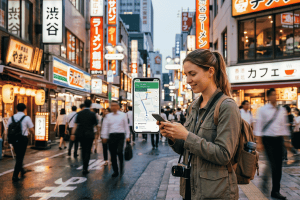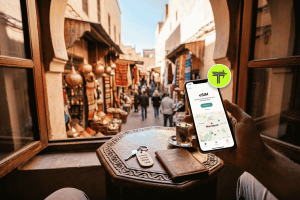
But what if you could land in a new destination and be online instantly, without ever swapping a tiny piece of plastic? This is the freedom an eSIM phone plan offers.
An eSIM, or embedded SIM, is a digital version of the physical SIM card you’re used to. It’s built directly into your smartphone, allowing you to activate a cellular plan from a provider without a physical card. For travelers hopping between countries, this technology is a game-changer. It eliminates the hassle of finding a local store, dealing with language barriers, and managing multiple SIM cards. An eSIM phone plan provides a single, streamlined solution for global connectivity, making your multi-country adventures smoother and more connected than ever before. This guide will explore exactly why an eSIM is the perfect travel companion for your next journey across borders.
Understanding the Evolution of Global Connectivity
Before we dive into the practical benefits of eSIM technology, it helps to understand how we got here. The journey to seamless global connectivity has been a long one, marked by several key stages of innovation. For decades, the physical SIM (Subscriber Identity Module) card has been the standard. This small chip stores your user information and connects your device to a specific mobile network.
When traveling internationally, the traditional approach involved a few inconvenient options. The first was to use your home provider’s international roaming plan. While simple, this is often notoriously expensive, with travelers frequently returning home to shocking bills filled with data overage fees and high per-minute call rates. The second option was to purchase a local physical SIM card upon arrival in a new country. This is more cost-effective but comes with its own set of challenges. You have to locate a vendor, navigate potential language barriers, and go through the physical process of swapping the card—and risk losing your tiny home SIM in the process. For anyone visiting multiple countries, this process had to be repeated at every border crossing, adding time and stress to the trip.
The introduction of the eSIM marks a significant leap forward. First appearing in consumer devices around 2017, the embedded SIM removes the physical component entirely. Your phone’s identity and connection details are provisioned digitally, “over the air.” This means you can download and activate a new cellular plan directly from your device. The technology empowers you to switch carriers and plans on the fly, making it an ideal solution for globetrotters. An eSIM phone plan isn’t just a minor upgrade; it represents a fundamental shift in how we think about mobile connectivity, prioritizing flexibility, convenience, and control.
Your Practical Guide to Using an eSIM Phone Plan Abroad
Adopting an eSIM phone plan for your travels is remarkably straightforward. The process is designed to be user-friendly, getting you connected in just a few minutes without any technical expertise. Here’s a step-by-step guide to setting up and managing your eSIM for a multi-country trip.
Step 1: Check Your Device Compatibility
First, ensure your smartphone supports eSIM technology. Most modern flagship phones from major manufacturers like Apple (iPhone XS and newer), Google (Pixel 3 and newer), and Samsung (Galaxy S20 and newer) are eSIM-compatible. You can typically find this information in your phone’s settings under “Cellular” or “Mobile Network.” A quick search for your specific model and “eSIM compatibility” will also give you a definitive answer.
Step 2: Choose the Right eSIM Phone Plan
This is where the flexibility of eSIMs truly shines. Instead of being locked into one provider, you can choose a plan that best fits your itinerary. Providers like Terminal eSIM offer various options tailored to different travel needs.
- Regional Plans: If you’re exploring a specific continent, like Europe or Asia, a regional eSIM phone plan is perfect. It provides coverage across dozens of countries under a single plan, so you don’t have to switch or purchase a new one as you cross borders.
- Global Plans: For those on a round-the-world adventure or a trip spanning multiple continents, a global plan offers the ultimate convenience. It provides a single data package that works in a vast number of countries worldwide.
- Country-Specific Plans: If your trip is primarily in one country with just a short visit to another, you might opt for a country-specific plan and add a smaller one for the second location.
Step 3: Purchase and Install Your eSIM
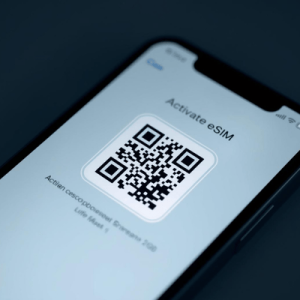
Once you’ve selected your plan, the purchase process is entirely online. After payment, you’ll typically receive a QR code via email. To install the eSIM:
- Go to your phone’s settings.
- Select “Cellular” or “Mobile Data.”
- Tap “Add eSIM” or “Add Cellular Plan.”
- Scan the QR code provided by your eSIM provider.
Your phone will then guide you through a few simple prompts to finalize the installation. It’s best to do this while you still have a stable Wi-Fi connection, such as at home or at the airport before you depart.
Step 4: Activate and Manage Your Plan
You can install the eSIM before your trip, but wait to activate it until you arrive at your destination to ensure your plan’s validity period starts upon use. Upon landing, simply switch your cellular data line to the newly installed eSIM. Your phone will automatically connect to the local partner network, and you’ll be online immediately. You can keep your primary SIM active for calls and texts from home while using the eSIM for affordable mobile data, giving you the best of both worlds.
Comparing Connectivity Options for Travelers
Choosing how to stay connected abroad can feel overwhelming. To make it clearer, let’s compare the most common options: an eSIM phone plan, a local physical SIM card, and your home provider’s international roaming. The best choice depends on your travel style, destination, and budget.
Below is a table breaking down the key features of each option.
| Feature | eSIM Phone Plan (e.g., Terminal eSIM) | Local Physical SIM Card | International Roaming |
| Activation | Instant, digital activation via QR code before you even land. | Requires finding a store, purchasing, and physically swapping cards upon arrival. | Automatic activation, but may require enabling it with your provider first. |
| Convenience | Highest. No physical swaps needed. Manage multiple plans from your phone. | Low. Must repeat the purchase and swap process in each new country. | High. No action is needed upon arrival. |
| Cost | Very cost-effective. Plans are prepaid and transparent, with no surprise fees. | Generally affordable for data, but costs can add up across multiple countries. | Typically the most expensive option, with high rates for data, calls, and texts. |
| Coverage | Excellent. Regional and global plans provide seamless coverage across borders. | Limited to the country of purchase. A new SIM is needed for each new country. | Generally good coverage, but it depends on your home provider’s partner networks. |
| Flexibility | High. Easily switch between plans and providers. Keep your home number active. | Low. You are locked to one local carrier per SIM card. | Low. You are tied to your home provider’s rates and terms. |
As the comparison shows, an eSIM phone plan excels in convenience, cost-effectiveness, and flexibility, making it the clear winner for multi-country travelers. While international roaming is simple, its high cost is a major drawback. Local SIMs are budget-friendly but create significant hassle for anyone visiting more than one destination. An eSIM combines the affordability of a local SIM with even greater convenience than roaming, providing a modern solution that fits the needs of today’s traveler. With a regional or global plan, you get a “set it and forget it” experience for the entire duration of your trip.
Common Questions and Traveler Concerns Answered
As with any new technology, travelers often have questions about how eSIMs work in the real world. Many of these concerns revolve around reliability, cost, and the practicalities of using a digital SIM for the first time. Let’s address some of the most common issues and provide clear answers to help you travel with confidence.
One major trend in travel is the need for constant, reliable connectivity. Digital nomads need to work from anywhere, families want to share updates, and solo travelers rely on maps and translation apps. An eSIM phone plan directly supports this trend by providing instant, on-demand data without the logistical hurdles of traditional methods. It solves the problem of “connectivity anxiety”—the fear of being offline in an unfamiliar place. Instead of spending the first hour of your trip searching for a SIM vendor, you can step off the plane, order a ride-share, and message your family that you’ve arrived safely.
Here are some frequently asked questions about using an eSIM for international travel:
FAQs about eSIM Phone Plans
- Can I still use my regular phone number with an eSIM?
Yes, absolutely. Most modern smartphones are Dual SIM, meaning you can have both your physical SIM (or another eSIM) and your travel eSIM active at the same time. This allows you to continue receiving calls and texts on your primary number while using the affordable data from your eSIM phone plan. You can easily designate which line is for voice and which is for data in your phone’s settings. - What happens if I run out of data on my eSIM plan?
Topping up your data is simple and can be done right from your phone. With providers like Terminal eSIM, you can log into your account or use their app to purchase a top-up package or a new plan. The new data is added to your account almost instantly, so you can get back online without any significant interruption. There’s no need to find a physical store. - Is an eSIM secure?
eSIM technology is just as secure, if not more so, than a physical SIM card. Because the SIM is embedded within your device, it cannot be physically stolen or cloned in the same way a traditional SIM card can. The activation process is encrypted and requires a unique QR code, adding a strong layer of security to your mobile connection. - Will an eSIM drain my phone’s battery faster?
No, using an eSIM does not consume any more battery than using a physical SIM card. The power consumption for connecting to a cellular network is the same regardless of whether the SIM is physical or digital. If your phone supports Dual SIM, having two lines active may use slightly more power, but the effect is generally negligible for most users.
The Smart Traveler’s Choice for Global Connectivity
To sum it up, the world of travel has been transformed by technology, and how we stay connected is no exception. We’ve moved past the days of exorbitant roaming fees and the time-consuming ritual of hunting for local SIM cards in every new airport. An eSIM phone plan has emerged as the superior solution for any traveler, especially those embarking on multi-country journeys. Its design directly addresses the core pain points of international travel: high costs, inconvenience, and the need for immediate, reliable internet access.
The core advantages are undeniable. An eSIM offers unparalleled convenience—you can purchase and install a plan from anywhere, activating it the moment you land. This eliminates stress and saves precious vacation time. The cost-effectiveness is another huge benefit; with transparent, prepaid data plans, you can budget accurately and avoid the shock of a massive phone bill upon your return. Finally, the flexibility to choose from local, regional, or global plans and manage everything from your device gives you complete control over your connectivity. For digital nomads, frequent flyers, and adventurous backpackers alike, this combination of features is simply unmatched.
Stay Connected Effortlessly with Terminal eSIM
Your next adventure deserves to be about the experiences, not about stressing over mobile data. Imagine hopping from the cafes of Paris to the canals of Amsterdam and the historic streets of Rome, all while staying seamlessly connected with a single data plan. No more SIM swapping, no more Wi-Fi hunting, and no more bill shock. This is the new standard for travel, powered by an eSIM phone plan.
Whether you’re a digital nomad who needs reliable internet for work, a family sharing vacation photos, or a solo explorer navigating new cities, an eSIM is your key to a hassle-free journey. At Terminal eSIM, we offer a wide range of affordable, high-speed data plans covering over 190 countries and regions. Our regional and global plans are designed specifically for multi-country travelers, ensuring you’re always connected without the complexity.
Get ready to transform the way you travel. Explore our flexible and budget-friendly eSIM plans today and make connectivity the easiest part of your trip.