Whether you’re wandering through ancient Mayan ruins in Yucatán or sampling street tacos in Mexico City, reliable internet access keeps you connected to maps, translation apps, and loved ones back home.
Gone are the days of hunting for local SIM cards at crowded airports or dealing with language barriers at mobile shops. eSIM technology revolutionizes how travelers stay connected, offering instant activation and multiple carrier options right from your smartphone. This comprehensive guide explores everything you need to know about choosing the perfect eSIM for your Mexican adventure.
Why Choose an eSIM for Mexico Travel?
Traditional SIM cards present numerous challenges for Mexico travelers. Physical SIM swapping risks damaging your device, while airport kiosks often charge premium prices for subpar service. Many travelers face communication barriers when purchasing local SIMs, leading to confusion about data allowances and validity periods.
eSIMs eliminate these headaches entirely. This embedded technology transforms your phone into a global connectivity powerhouse, allowing you to download and activate Mexican data plans instantly. You maintain your home number while accessing local data rates, creating the perfect dual-connectivity solution for international travel.
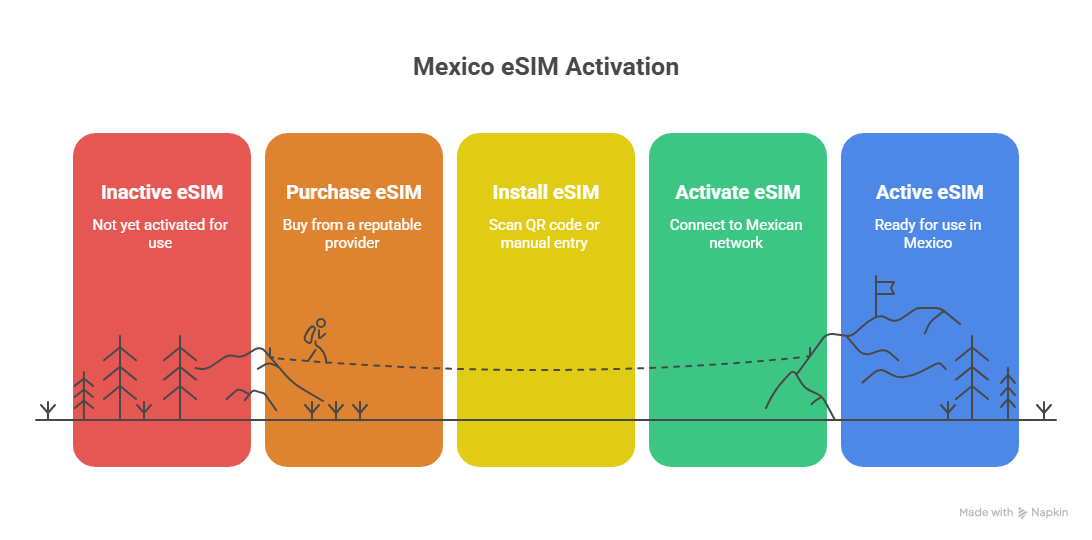
The convenience factor alone makes eSIMs invaluable for Mexico trips. Activation happens through simple QR code scanning, taking minutes instead of hours. No more waiting in lines or carrying multiple physical cards—your digital SIM library lives securely in your device.

The Technology Behind eSIM Success
Modern smartphones from Apple, Samsung, Google, and other major manufacturers now include eSIM capabilities as standard features. This embedded Subscriber Identity Module technology allows your device to store multiple carrier profiles simultaneously, switching between them as needed.
Mexico’s telecommunications infrastructure supports eSIM technology across major networks including Telcel, AT&T Mexico, and Movistar. These carriers provide extensive coverage throughout the country, from metropolitan areas to remote beach destinations. The technology seamlessly integrates with existing network infrastructure, ensuring reliable performance comparable to traditional SIM cards.
Security features built into eSIM technology protect your personal data and prevent unauthorized access. Remote provisioning protocols encrypt all data transfers, while your carrier profiles remain isolated from other device functions. This enhanced security proves especially valuable when traveling through unfamiliar territories.

Top eSIM Providers for Mexico
Selecting the right eSIM provider significantly impacts your Mexican travel experience. Several companies specialize in international eSIM services, each offering unique advantages for different traveler types.
Terminal eSIM stands out as a top choice for travelers seeking the best eSIM for Mexico. With a reputation for reliable customer support, wide network coverage across Mexico’s major carriers, and consistently competitive pricing, Terminal eSIM makes it easy to compare plans and find the perfect fit. Their user-friendly platform ensures travelers can activate their plans within minutes, and ongoing assistance is always available, whether you’re in a bustling city or exploring remote regions.
Airalo leads the market with extensive Mexico coverage and competitive pricing structures. Their plans range from short-term tourist options to extended business travel packages, accommodating various usage patterns. Customer support operates 24/7, providing assistance in multiple languages including Spanish and English.
Holafly offers unlimited data plans specifically designed for Mexico travel, eliminating concerns about exceeding data limits while streaming music or uploading photos. Their user-friendly app simplifies plan management and top-ups, while their Mexico-specific customer service team understands local network conditions and coverage areas.
Nomad provides flexibility through regional plans covering Mexico plus neighboring countries, perfect for multi-destination trips. Their pay-as-you-go model appeals to budget-conscious travelers, while premium plans offer enhanced speeds and priority network access.
Comparing Coverage and Performance
Network coverage varies significantly across Mexico’s diverse geography. Telcel dominates rural areas and smaller cities, making it essential for travelers venturing beyond major tourist destinations. AT&T Mexico provides excellent urban coverage and competitive data speeds, particularly in business districts and resort areas.
eSIM providers typically partner with multiple Mexican carriers, automatically connecting you to the strongest available signal. This multi-network approach ensures consistent connectivity whether you’re exploring Cancun’s hotel zone or hiking through Oaxaca’s mountain villages.
Speed performance depends on both carrier partnership and network congestion. Peak tourist seasons may impact data speeds in popular destinations, while off-season travel often delivers faster connections. Most eSIM providers offer 4G LTE speeds throughout Mexico, with 5G availability expanding in major cities.
Pricing and Plans: Finding Value
Mexican eSIM pricing varies considerably based on data allowances, validity periods, and provider positioning. Budget options start around $5 for 1GB plans lasting seven days, suitable for light social media usage and basic navigation. Mid-range plans typically offer 3-5GB for $15-25, covering most travelers’ needs for two-week vacations.
Premium unlimited plans command $30-50 monthly rates but eliminate data anxiety entirely. These plans particularly benefit content creators, remote workers, or families sharing hotspot connections. Some providers offer daily unlimited options for $8-12, ideal for short business trips or weekend getaways.
Validity periods significantly impact overall value calculations. Thirty-day plans often provide better per-gigabyte rates than weekly options, even for shorter trips. However, unused data expires with the plan, making accurate usage estimation crucial for optimal value.
Hidden Costs and Fair Use Policies
Many eSIM providers advertise “unlimited” plans with fair use policies limiting high-speed data. After reaching specified thresholds—often 1-5GB daily—speeds reduce dramatically, affecting streaming and large file downloads. Understanding these limitations prevents frustrating surprises during your trip.
Activation fees occasionally apply, particularly for premium or unlimited plans. Some providers waive these fees during promotional periods, making timing your purchase advantageous. Currency conversion fees from international transactions may add 2-3% to advertised prices, depending on your payment method.
Overage charges vary by provider, with some offering automatic top-ups and others simply stopping service when limits are reached. Automatic renewals can surprise travelers with unexpected charges, making plan cancellation timing important for cost control.
Setting Up Your Mexico eSIM
eSIM installation requires compatible hardware and basic technical knowledge, but the process remains straightforward for most travelers. iPhone users need iOS 12.1 or later, while Android requirements vary by manufacturer and model. Checking compatibility before purchase prevents disappointment at activation time.
Purchase confirmation emails contain QR codes and manual installation instructions. Stable WiFi connection ensures smooth activation, making hotel or airport WiFi ideal for setup. The installation process typically takes 2-5 minutes, though network registration may require additional time.
Timing your activation strategically maximizes plan value. Most eSIMs begin their validity period upon activation, not purchase, allowing advance planning without immediate consequences. However, some providers enforce activation deadlines, requiring use within specific timeframes after purchase.
Troubleshooting Common Setup Issues
Network registration failures often result from incomplete carrier settings downloads. Restarting your device after eSIM installation frequently resolves these connectivity issues. Ensure your device has adequate storage space, as carrier profiles require minimal but essential storage allocation.
Dual-SIM configuration requires careful attention to data and voice settings. Designating your home SIM for calls and messages while routing data through the Mexican eSIM optimizes both connectivity and costs. Most smartphones automatically configure these settings, but manual adjustments ensure optimal performance.
Geographic activation restrictions occasionally prevent eSIM installation outside designated regions. Some Mexican eSIMs require activation within Mexico’s borders, necessitating backup connectivity plans for immediate arrival needs. Contacting customer service before travel clarifies any geographic limitations.
Real-World Use Cases and Scenarios
Business travelers benefit enormously from eSIM convenience and reliability. Sales representatives can access CRM systems, join video conferences, and respond to urgent emails without connectivity interruptions. The ability to maintain both home and local numbers simultaneously streamlines communication with clients across multiple time zones.
Digital nomads working from Mexican locations rely on consistent internet access for productivity. eSIMs provide the flexibility to test different networks and adjust plans based on actual usage patterns. Monthly unlimited plans often prove most economical for extended stays, while shorter plans suit location scouting trips.
Family vacationers face unique connectivity challenges, with multiple devices competing for data access. Hotspot capabilities allow one eSIM-enabled device to share connectivity with tablets, laptops, and other family members’ phones. Parents can monitor usage through provider apps, preventing bill shock from teenage streaming habits.
Adventure Travel Connectivity
Remote adventure travel demands reliable emergency connectivity options. Mexican eSIMs provide crucial safety nets in areas where WiFi doesn’t exist. GPS navigation, weather updates, and emergency communication capabilities can prove lifesaving during outdoor activities.
Scuba diving operations, hiking expeditions, and archaeological site visits often occur in areas with limited infrastructure. eSIM networks generally provide better remote coverage than international roaming, though coverage maps should guide destination planning for critical connectivity needs.
Photography enthusiasts benefit from instant upload capabilities, backing up precious vacation memories to cloud storage immediately. Social media sharing becomes seamless, allowing real-time travel documentation without storage concerns or internet cafe dependencies.
Maximizing Your eSIM Experience
Data management strategies significantly extend eSIM plan longevity and value. Disabling automatic app updates, reducing streaming quality, and utilizing offline maps conserve data for essential uses. Most smartphones provide detailed data usage statistics, enabling proactive management throughout your trip.
WiFi prioritization settings automatically connect to known networks, reducing cellular data consumption in hotels, restaurants, and public spaces. However, public WiFi security risks require VPN protection, which ironically increases data usage through your eSIM connection.
Background app refresh settings consume surprising amounts of data through automatic syncing and updates. Disabling unnecessary background processes can double or triple your eSIM plan’s effective duration, particularly important for budget-conscious travelers.
Advanced Features and Settings
Modern eSIM management apps offer sophisticated controls beyond basic activation. Usage alerts prevent overage charges, while automatic top-up features ensure connectivity continuity during extended trips. Some apps provide network speed tests and tower location information for optimizing performance.
Multi-carrier eSIM profiles enable seamless switching between networks based on signal strength and performance. Advanced users can manually select carriers for specific applications, routing video calls through premium networks while using budget carriers for basic data needs.
Quality of Service (QoS) settings prioritize specific applications or services, ensuring critical business communications receive bandwidth priority over entertainment apps. These features particularly benefit business travelers managing multiple connectivity priorities simultaneously.
Frequently Asked Questions
Can I use an eSIM and physical SIM simultaneously in Mexico?
Yes, most modern smartphones support dual-SIM functionality, allowing you to keep your home SIM active while using a Mexican eSIM for data. Configure your device to use the home SIM for calls and the eSIM for data to optimize costs.
Do Mexican eSIMs work in rural areas outside major cities?
Coverage varies by provider and carrier partnership. Telcel generally offers the best rural coverage, while AT&T Mexico excels in urban areas. Check provider coverage maps for your specific destinations before purchasing.
How quickly can I activate a Mexico eSIM upon arrival?
Activation typically takes 2-5 minutes with good internet connection. Some eSIMs require activation within Mexico, while others can be activated before travel. Network registration may take additional time after installation.
What happens if I exceed my eSIM data limit in Mexico?
Consequences depend on your provider. Some stop service entirely, others reduce speeds dramatically, and premium plans may offer automatic top-ups.