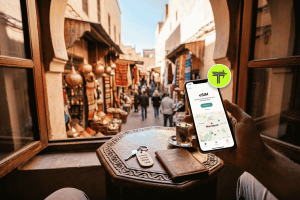
This isn’t a futuristic dream; it’s the reality of traveling with an e sim. For years, staying connected abroad meant dealing with expensive roaming fees or the hassle of buying and swapping physical SIMs. Now, this digital-first technology is changing the game for globetrotters.
An embedded SIM, or e sim, is a small chip built directly into your phone, tablet, or smartwatch. It eliminates the need for a physical card by allowing you to download and activate a cellular plan digitally. This guide will walk you through everything you need to know, from understanding the technology to activating your first plan. We’ll break down how it works, compare your options, and provide a step-by-step process to ensure you stay connected effortlessly on your next adventure. Get ready to make travel connectivity simple and stress-free.
What Is an e Sim and How Does It Work?
At its core, an e sim is the next evolution of the traditional SIM card. The “e” stands for embedded, meaning the SIM technology is integrated directly into your device’s motherboard during manufacturing. Unlike a physical SIM card that you must insert and remove, an e sim is a permanent part of your device. It functions just like a regular SIM, authenticating your identity with a carrier and allowing you to connect to a cellular network. The key difference is how you get your cellular plan onto it.
Instead of receiving a physical card, you download a digital “e sim profile” from a carrier or provider like Terminal eSIM. This profile contains all the information your device needs to connect to the new network. The process is usually as simple as scanning a QR code or tapping a link in an app. Once activated, your device can connect to the designated network just as it would with a physical SIM.
This technology offers incredible flexibility. Most modern smartphones can hold multiple e sim profiles at once, though you can typically only use one or two at a time. This means you can keep your home plan on one profile and add a travel-specific e sim for data when you’re abroad. For example, a traveler from the United States visiting Europe can purchase a European data plan, activate it via an e sim, and use it for affordable data while still being able to receive calls and texts on their primary US number. This dual-SIM capability is a major advantage, combining convenience with cost savings and transforming how we think about mobile connectivity while on the move.

Your Practical Guide to Using an e Sim for Travel
Switching to an e sim for your travels is a straightforward process that can save you time and money. It removes the uncertainty of finding a reliable local SIM card upon arrival and protects you from unexpected roaming charges. Follow these steps to get connected seamlessly.
Step 1: Check for e Sim Compatibility
Before you purchase a plan, you need to confirm that your device supports e sim technology. Most smartphones released in the last few years are compatible.
- For iPhone users: Models from the iPhone XR/XS and newer generally support e sim. You can check by going to Settings > Cellular. If you see an option like “Add Cellular Plan” or “Add e Sim,” your device is compatible.
- For Android users: Compatibility varies by manufacturer and model. For Google Pixel phones, check Settings > Network & Internet > SIMs, and look for a “+” sign or “Add e Sim” option. For Samsung devices, go to Settings > Connections > SIM card manager and look for “Add mobile plan.” A quick web search for your specific model and “e sim compatibility” is the fastest way to be sure.
Step 2: Choose and Purchase Your Travel e Sim Plan
Once you’ve confirmed compatibility, it’s time to select a plan that fits your travel needs. Providers like Terminal eSIM offer a wide range of options tailored to different destinations and data requirements.
- Consider your destination: Are you visiting a single country or multiple? Many providers offer regional plans (e.g., Europe, Asia) that cover several countries under one package.
- Estimate your data usage: Think about how you’ll use your phone. Will you be streaming videos and using maps heavily, or do you just need data for emails and messaging? Plans typically range from 1GB to unlimited, so choose one that aligns with your habits.
- Check the validity period: Ensure the plan’s duration (e.g., 7 days, 30 days) covers your entire trip.
Step 3: Install and Activate Your e Sim
After purchasing, you will receive activation instructions, usually involving a QR code.
- Find a stable Wi-Fi connection: You’ll need internet access to download and install your e sim profile. It’s best to do this at home or at the airport before you depart.
- Scan the QR code: On your phone, go to the cellular settings menu mentioned in Step 1 and select the option to add an e sim. Your phone’s camera will open, allowing you to scan the QR code provided by your e sim provider.
- Follow the on-screen prompts: Your device will guide you through the final steps, which may include labeling your new plan (e.g., “Travel Data”) and choosing its role (e.g., primary or secondary data line).
- Activate upon arrival: Keep your new e sim line turned off until you reach your destination to ensure the validity period doesn’t start prematurely. Once you land, simply switch it on in your settings and turn on data roaming for the e sim line. You’ll be connected in moments.
Choosing the Right Connection: e Sim vs. Physical SIM vs. Roaming
When traveling, you have three main options for staying connected: using an e sim, buying a local physical SIM card, or enabling international roaming with your home carrier. Each has distinct advantages and disadvantages. The best choice depends on your device, destination, and personal preferences. This table breaks down the key differences to help you decide.
| Feature | e Sim | Local Physical SIM | International Roaming |
| Convenience | High. Instant digital delivery and activation. No physical card swapping. | Low to Medium. Requires finding a store, potential language barriers, and registration. | Very High. Works automatically upon arrival. |
| Cost | Low to Medium. Very competitive pricing, especially for data-only plans. | Low. Often the cheapest option for heavy data use in a single country. | Very High. Can lead to exorbitant bills for data, calls, and texts. |
| Flexibility | Very High. Store multiple profiles and switch between them. Easy to top up or change plans online. | Low. Tied to one carrier. Switching countries often means buying a new SIM. | Medium. Limited to the plans and partners offered by your home carrier. |
| Setup | Easy. Scan a QR code before you travel. Requires a compatible device. | Medium. Can be complicated by ID requirements and in-person setup. | Very Easy. Usually requires just a simple activation with your provider. |
| Best For | Tech-savvy travelers, multi-country trips, and those wanting instant connectivity. | Budget travelers staying in one country for an extended period. | Short business trips where convenience outweighs cost. |
In summary, an e sim offers a powerful blend of convenience and affordability that is hard to beat. While international roaming is the simplest option, its high cost makes it impractical for most travelers. Local physical SIMs are budget-friendly but come with the significant hassle of acquiring and setting them up. For the modern traveler, an e sim provides a happy medium, delivering the cost benefits of a local plan with the ease of digital activation.
Common Traveler Questions and Key Trends
As e sim technology becomes more popular, travelers have questions about its practical application and what the future holds. Understanding these points can help you make the most of this innovative solution and travel with greater confidence. The biggest trend is clear: the industry is moving away from physical SIMs. Major device manufacturers are increasingly prioritizing e sim, with some even releasing e sim-only phones in certain markets. This shift signals that digital connectivity is the future standard for mobile devices.
This trend is driven by user demand for flexibility. Travelers no longer want to be locked into a single carrier or deal with the logistics of physical SIMs. An e sim empowers them to shop around for the best data plans, switch providers with a few taps, and manage their connectivity entirely from their device. This is especially beneficial for digital nomads and frequent flyers who cross borders regularly.
Frequently Asked Questions (FAQs)
- Can I still use my primary phone number with an e sim?
Yes, absolutely. This is one of the biggest benefits of dual-SIM devices. You can use an e sim for affordable travel data while keeping your primary physical SIM or e sim active for calls and texts on your home number. You can even configure your phone to use the travel e sim for all mobile data while routing calls and SMS through your primary line. - What happens to my e sim after my trip?
Once the plan’s validity period expires or you use all the data, the e sim will simply stop working. You can either delete the e sim profile from your device settings or keep it and top it up for a future trip if the provider allows. It doesn’t interfere with your primary plan. - Do I need an internet connection to activate my e sim?
Yes, you need a stable Wi-Fi or cellular connection to download the e sim profile to your device. This is why it is highly recommended to install your e sim before you leave for your trip. However, you do not need an internet connection to activate it once you arrive at your destination—you just need to switch it on. - Is my phone unlocked? Do I need it to be?
To use an e sim from a provider other than your home carrier, your phone must be “carrier-unlocked.” If you bought your phone directly from the manufacturer (like Apple or Samsung), it is likely unlocked. If you purchased it through a carrier on a payment plan, it might be locked. Contact your carrier to confirm and request an unlock if needed.
Your Journey to Seamless Connectivity
Staying connected while traveling has evolved from a luxury to a necessity. We rely on our devices for navigation, translation, booking, and sharing our experiences with loved ones. For too long, the options available were a trade-off between convenience and cost. You could either pay exorbitant roaming fees for the ease of using your home plan or endure the hassle of finding and installing a local SIM card to save money. The rise of e sim technology has finally eliminated this compromise.
As we’ve explored, an e sim is an embedded, digital SIM that allows you to activate a cellular plan without a physical card. This guide has shown you how to check for device compatibility, choose the right plan for your trip, and activate it in a few simple steps. By comparing it to traditional options like physical SIMs and international roaming, it’s clear that the e sim offers a superior balance of affordability, flexibility, and convenience for most travelers. With the ability to keep your home number active while using a separate data plan, you get the best of both worlds. The travel-tech landscape is moving decisively toward this digital standard, making global connectivity more accessible than ever.
Unlock Your Next Adventure with Terminal eSIM
Are you ready to say goodbye to high roaming charges and the search for airport Wi-Fi? It’s time to embrace the freedom of instant, affordable connectivity with Terminal eSIM. Whether you’re a digital nomad hopping between continents, a family on a week-long vacation, or a frequent business traveler, our e sim plans are designed to fit your journey. Imagine landing in Tokyo, Paris, or São Paulo and being online before you even deplane, ready to navigate the city like a local.
With Terminal eSIM, you get access to reliable, high-speed data in over 190 countries. Our platform makes it incredibly easy to purchase and install your plan in minutes, so you can focus on what truly matters: enjoying your trip. Stop overpaying for data and start traveling smarter. Explore our flexible and budget-friendly e sim plans for your next destination and experience the future of travel connectivity today.
Visit Terminal eSIM to find the perfect plan for your adventure.