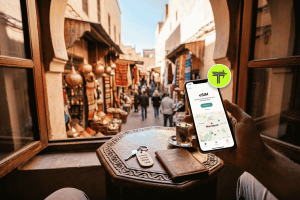
What if there was a simpler way? Enter the eSIM, a digital SIM card that revolutionizes how we connect while traveling. Instead of physically swapping tiny plastic cards, you can download a data plan directly to your phone. This technology opens up a world of seamless connectivity.
This guide will explore the expanding landscape of eSIM international coverage. We’ll break down what eSIMs are, how they work, and most importantly, which countries support this game-changing technology. You’ll learn how to choose the right plan for your travels and discover how providers like Terminal eSIM are making it easier than ever to stay connected, no matter where your adventures take you. Get ready to say goodbye to roaming fees and hello to hassle-free travel data.
What is an eSIM and How Does it Work for Travelers?
Before we dive into global coverage, let’s clarify what an eSIM actually is. The “e” stands for “embedded,” meaning the SIM is a small chip built directly into your device’s motherboard by the manufacturer. Unlike a traditional physical SIM card that you must insert and remove, an eSIM is activated digitally. Think of it as a rewritable SIM card that can hold multiple cellular plans at once. When you purchase an eSIM plan, you receive a QR code or an in-app activation prompt. A quick scan or tap is all it takes to install the plan onto your device.
This technology was first introduced in 2016 in smartwatches to provide cellular connectivity without needing a bulky SIM tray. However, its potential for smartphones quickly became apparent. Major manufacturers like Apple, Google, and Samsung began integrating eSIM chips into their flagship phones around 2018. This adoption marked a turning point for international travelers. No longer were they tethered to their home carrier’s expensive roaming packages or forced to find a local SIM vendor upon arrival.
For a traveler, the process is incredibly simple. Let’s say you’re planning a trip from the United States to Italy. Before you even pack your bags, you can browse online for an eSIM plan that covers Italy. You might purchase a plan offering 10 GB of data valid for 30 days. After payment, you’ll receive a QR code via email. By going into your phone’s cellular settings and selecting “Add eSIM,” you can scan the code. Your phone downloads the Italian data plan, and it sits dormant until you land in Italy. Upon arrival, you simply switch your cellular data line to the new eSIM, and you’re instantly connected to a local network. Your primary number remains active for calls and texts, while all your data usage goes through the affordable, local eSIM plan.

Your Guide to Securing eSIM International Coverage
The beauty of eSIM technology lies in its vast and growing global footprint. Today, you can find eSIM coverage in over 200 countries and regions, making it a truly global solution for travelers. This extensive network means that whether you’re backpacking through Southeast Asia, on a business trip in Europe, or exploring South America, there’s an eSIM plan for you. The key is knowing how to find and activate the right one for your journey. Using an eSIM international plan simplifies this process, offering a single point of purchase for multiple destinations.
Here’s a practical step-by-step guide to get you started:
- Check Device Compatibility: The first and most crucial step is to ensure your smartphone is eSIM-compatible. Most flagship phones released from 2018 onwards support eSIM technology. This includes iPhones (XS, XR, and newer), Google Pixels (3 and newer), and Samsung Galaxy devices (S20 and newer). A quick search for your phone model plus “eSIM compatibility” will give you a definitive answer. Your phone must also be “unlocked” from your home carrier to use an eSIM from another provider.
- Identify Your Destination(s): Where are you going? Your travel itinerary will determine the type of eSIM you need.
- Single-Country Plans: Perfect if you’re visiting just one country, like Japan or Spain. These plans are often the most cost-effective for focused trips.
- Regional Plans: Ideal for multi-country trips within a specific area. For example, a “Europe” eSIM will cover you seamlessly as you travel from France to Germany to the Czech Republic. Other popular regions include North America, Asia, and Latin America.
- Global Plans: The ultimate solution for globetrotters or those on a round-the-world trip. A global eSIM provides coverage across a vast list of countries under a single plan, offering maximum convenience.
- Choose Your Data Plan: Once you know your destination, select a data package that fits your needs. Consider how long you’ll be traveling and how much data you typically use. Plans can range from 1 GB for a short trip to 50 GB or more for long-term travelers or digital nomads. It’s often more economical to buy a slightly larger plan than to run out and need to top up.
- Purchase and Install: Reputable providers like Terminal eSIM make purchasing easy. You can buy a plan directly from their website. After your purchase, you’ll receive a QR code. To install it, go to your phone’s settings:
- On iOS: Settings > Cellular > Add eSIM.
- On Android: Settings > Network & Internet > SIMs > Add eSIM.
- Follow the on-screen prompts to scan the QR code. It’s best to do this while connected to Wi-Fi before you leave for your trip.
- Activate Upon Arrival: Once you land at your destination, simply turn on your new eSIM line in your cellular settings and enable data roaming for it. Your phone will automatically connect to a local network, giving you instant internet access without the outrageous fees.
Comparing eSIM Plans: Global vs. Regional vs. Local
Choosing the right eSIM plan depends entirely on your travel style. A weekend trip has very different data needs than a three-month backpacking adventure. To help you decide, let’s compare the main types of eSIM plans available. We’ll look at a hypothetical comparison between plans offered by a provider like Terminal eSIM to illustrate the differences.
| Plan Type | Ideal For | Coverage Area | Typical Pricing Structure | Key Benefit |
| Local eSIM | Single-country visits, short trips | One specific country (e.g., Mexico) | Pay-per-country (e.g., $10 for 5GB in Mexico) | Most cost-effective for a single destination. |
| Regional eSIM | Multi-country tours, continental trips | A specific region (e.g., Europe, Asia) | One price for the entire region (e.g., $35 for 10GB across 39 European countries) | Seamless connectivity across borders without changing plans. |
| Global eSIM | Globetrotters, long-term travelers, flight crews | 100+ countries worldwide | A single, comprehensive package (e.g., $60 for 5GB across 130 countries) | Ultimate flexibility and convenience for worldwide travel. |
Summary of Insights:
For the average vacationer visiting one country, a Local eSIM offers the best value. You get a generous amount of data for a specific destination at a very low price. There’s no need to pay for coverage in countries you aren’t visiting.
If you’re planning a European backpacking trip or an Asian tour, a Regional eSIM is your best friend. The convenience of crossing borders from Portugal to Spain to France without losing connectivity or having to manage multiple plans is a massive advantage. It simplifies your travel tech so you can focus on the experience.
Finally, the Global eSIM is designed for the modern nomad, business professional, or anyone on an extensive, multi-regional journey. While the cost per gigabyte might be slightly higher than a local plan, the sheer convenience of having one plan that works almost everywhere is unmatched. It eliminates the need to research and purchase new eSIMs for every leg of your journey. Providers like Terminal eSIM curate these plans to ensure travelers have a reliable connection from the moment they land.
Common Questions and Trends in eSIM Travel
As eSIMs become more popular, travelers naturally have questions and concerns. The technology is also evolving, with new trends shaping how we use it. Let’s address some common issues and look at what’s next for eSIM international connectivity.
One major trend is the move toward eSIM-only phones. Apple has already released iPhone models in the U.S. without a physical SIM tray. This shift is likely to be adopted by other manufacturers, pushing eSIMs from a convenient alternative to an everyday necessity. This will accelerate the adoption of eSIMs globally and encourage even more mobile carriers and providers to support the technology, leading to more competitive pricing and better coverage.
Another growing trend is the integration of eSIMs into travel apps and platforms. Imagine booking a flight and being offered a destination-specific eSIM plan at checkout. This level of integration simplifies the process even further, making travel connectivity a seamless part of trip planning. Providers are increasingly focusing on user experience, offering intuitive apps for purchasing, managing, and topping up eSIM plans on the go.
Here are answers to some frequently asked questions:
- Can I keep my original phone number while using an eSIM?
Yes, absolutely. This is one of the biggest advantages of dual SIM technology. Your primary physical SIM or eSIM can remain active for calls and texts from your home number, while you use the travel eSIM for all your mobile data needs. You have full control in your phone’s settings to designate which line is used for voice and which is for data. - What happens if I use up all the data on my eSIM plan?
Most eSIM providers, including Terminal eSIM, make it easy to top up your plan. You can typically do this through their website or app. Some providers will send you a notification when your data is running low, giving you the option to purchase more. This prevents any sudden loss of connectivity while you’re abroad. - Is an eSIM more secure than a physical SIM card?
Yes, in many ways, an eSIM is more secure. Because it’s embedded in your phone, it can’t be physically removed and stolen if your device is lost or taken. This makes it harder for thieves to access your phone number for fraudulent purposes. Activation is also secured through QR codes or app logins, adding another layer of protection. - Will using an eSIM drain my phone’s battery faster?
No, using an eSIM does not inherently drain your battery faster than using a physical SIM. Having two lines active (your primary SIM and the travel eSIM) can use slightly more power, but the impact is generally negligible and not something most users will notice in day-to-day use. The convenience far outweighs any minimal effect on battery life.
A World of Connectivity at Your Fingertips
The world of travel has been transformed by technology, and the eSIM is at the forefront of this revolution. We’ve explored how this embedded chip is replacing the traditional plastic SIM card, offering a far more flexible and convenient way to stay connected abroad. With an eSIM, you no longer need to waste precious vacation time hunting for a local SIM card vendor or worry about shocking roaming bills when you return home. The process is simple: check your device’s compatibility, choose a plan that matches your itinerary, and activate it with a quick scan.
The scope of eSIM international coverage is truly impressive, spanning over 200 countries and regions. Whether you’re taking a short trip to a single country, embarking on a multi-country European tour, or traveling the globe, there’s a plan designed for you. Local, regional, and global eSIMs each offer distinct advantages, allowing you to tailor your connectivity to your specific travel needs. As the technology becomes standard in new smartphones and more providers enter the market, access to affordable, reliable international data will only get easier.
Unlock Your Next Adventure with Terminal eSIM
For the modern traveler, digital nomad, or frequent flyer, seamless connectivity isn’t a luxury—it’s a necessity. It’s the tool you use to navigate new cities, book last-minute accommodations, share your experiences with loved ones, and stay productive on the go. Terminal eSIM was built to empower your travels by providing instant, affordable, and reliable data in over 200 destinations. Forget the stress of international roaming and embrace the freedom of eSIM technology.
Our platform is designed for simplicity. In just a few taps, you can purchase and install an eSIM for your next trip, ensuring you’re connected from the moment you land. We offer a wide range of flexible plans, from local packages for a weekend getaway to regional and global plans for your grandest adventures. With Terminal eSIM, you get transparent pricing, excellent coverage, and the peace of mind that comes with knowing you’ll never be disconnected.
Ready to experience travel without boundaries? Explore our extensive list of supported countries and find the perfect plan for your journey today.