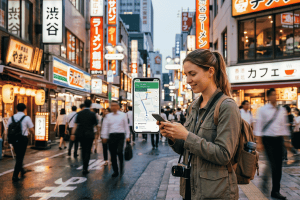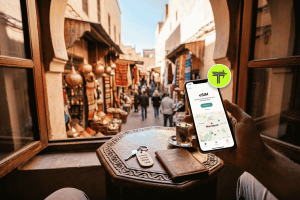
Choosing the right connectivity option is as crucial as picking the right hotel. It can mean the difference between seamless navigation and getting lost, or sharing your memories in real-time versus waiting days to find Wi-Fi.
This decision used to be simple: either risk exorbitant roaming charges or hunt down a local physical SIM card upon arrival. Today, a powerful third option has changed the game for global travelers: the eSIM.
This comprehensive guide will break down everything you need to know about staying connected abroad. We’ll compare the modern eSIM against traditional physical SIMs and your home provider’s roaming plans. Through side-by-side comparisons, real-world travel scenarios, and clear breakdowns of pros and cons, you’ll gain the confidence to choose the best option for your next adventure. Get ready to leave connectivity worries behind for good.
What Is an eSIM and How Does It Work?
An eSIM, or embedded SIM, is a digital version of the physical SIM card you’re familiar with. Instead of a tiny plastic chip you need to insert into your phone, the eSIM is a small chip that is built directly into your device’s motherboard during manufacturing.
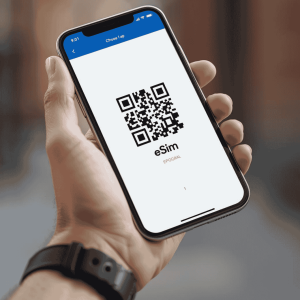
Think of it like a rewritable SIM card. You don’t need to physically swap it out. Instead, you download a “profile” from a carrier or eSIM provider, which contains all the information needed to connect to a mobile network. You can store multiple eSIM profiles on your phone at once, allowing you to switch between different plans and providers with just a few taps in your device settings.
This technology has been gaining momentum, with most modern smartphones from major brands like Apple, Samsung, and Google now supporting eSIMs. It offers a new level of flexibility and convenience, especially for people who travel frequently.
The Three Main Choices for Travel Connectivity
When you travel internationally, you have three primary ways to keep your phone connected to a mobile network:
- International Roaming: Using your home mobile plan in a foreign country.
- Local Physical SIM: Buying a physical SIM card from a local carrier at your destination.
- Travel eSIM: Purchasing a digital data plan from a global eSIM provider before or during your trip.
Each option has distinct advantages and disadvantages. Let’s explore how they stack up against each other.
Head-to-Head: eSIM vs. Physical SIM vs. Roaming
Making the right choice depends on your travel style, budget, and priorities. Do you value convenience above all else? Are you looking for the cheapest possible data? Let’s dive into a detailed comparison.
| Feature | Travel eSIM | Local Physical SIM | International Roaming |
| Convenience | Very High: Instant activation, no physical swap. | Low: Requires finding a store, potential language barriers. | High: Works automatically upon arrival. |
| Cost | Low to Medium: Highly competitive, often cheapest. | Low: Usually very affordable for local data. | Very High: Can be extremely expensive. |
| Flexibility | Very High: Switch plans/providers digitally. | Medium: Locked to one carrier per SIM. | Low: Locked to your home provider’s partners. |
| Activation | Instant: Scan a QR code or use an app. | Manual: Requires physical insertion and activation. | Automatic: Activates when you land in a new country. |
| Phone Number | Data-only plans don’t include a number. | Provides a local phone number. | Keeps your existing phone number. |
| Availability | Available globally online before you travel. | Must be purchased at your destination. | Dependent on your home carrier’s agreements. |
| Security | High: Cannot be physically stolen or cloned. | Medium: Can be lost, stolen, or damaged. | High: Managed by your trusted home carrier. |
The Pros and Cons of Each Option
To help you weigh your options, here’s a closer look at the benefits and drawbacks of each connectivity method.
Travel eSIM
A travel eSIM is a data-only plan designed specifically for travelers. You buy it from a provider like Terminal eSIM and activate it on your phone for use in a specific country or region.
Pros:
- Ultimate Convenience: Buy and install your plan from anywhere, anytime. You can be online within minutes of landing.
- Cost-Effective: Often significantly cheaper than roaming, with transparent, upfront pricing. No surprise bills.
- Global Coverage: A single eSIM provider can offer plans for hundreds of countries and regions.
- Keep Your Home Number: You can use an eSIM for data while keeping your primary physical SIM active for calls and texts from your home number (if your phone supports Dual SIM).
- Secure: Since it’s digital, you can’t lose it or have it stolen like a physical card.
Cons:
- Device Compatibility: Your phone must be unlocked and eSIM-compatible. Most newer models are, but older devices are not.
- Usually Data-Only: Most travel eSIM plans do not include a local phone number, relying on apps like WhatsApp or FaceTime for calls.
- Slight Learning Curve: First-time users may need a moment to understand the activation process.
Local Physical SIM
This has been the go-to method for savvy travelers for years. It involves buying a prepaid SIM card from a local mobile operator once you arrive at your destination.
Pros:
- Very Affordable: Often the cheapest way to get a large amount of data and a local phone number.
- Local Number: Useful for making local calls, booking restaurants, or using services that require a local number.
- Widely Available: You can find them in airports, convenience stores, and official carrier shops.
Cons:
- Inconvenient: You waste precious travel time hunting for a store, dealing with language barriers, and going through the registration process (which can sometimes require a passport).
- Lose Your Home Number: While the local SIM is in your phone, you can’t receive calls or texts to your primary number unless you have a dual-SIM phone.
- Physical Hassle: You have to handle a tiny, easy-to-lose chip and keep your home SIM safe.
International Roaming
This is the easiest option. Your phone simply connects to a partner network abroad, and the charges are added to your regular monthly bill.
Pros:
- Effortless: It works automatically without any setup.
- Keep Your Number: You continue to use your phone exactly as you do at home, with the same number for calls and texts.
- Seamless Billing: All charges appear on one bill from your trusted home provider.
Cons:
- Extremely Expensive: This is almost always the most expensive option. “Bill shock” is a real phenomenon, with travelers returning to bills of hundreds or even thousands of dollars.
- Throttled Speeds: Some carriers cap data speeds or amounts when you’re roaming, giving you a subpar experience.
- Lack of Control: It can be hard to track your usage in real-time, leading to unexpected overage charges.
Travel Scenarios: Putting Connectivity to the Test
Theory is great, but how do these options perform in the real world? Let’s look at a few common travel scenarios.
Scenario 1: The Backpacking Adventure in Southeast Asia
Traveler: Chloe, a 24-year-old backpacker on a two-month trip through Thailand, Vietnam, and Cambodia.
- Her Needs: Affordable and reliable data for maps, booking hostels, and staying in touch with family. She’ll be crossing borders frequently.
- Local SIM Approach: Chloe would need to buy a new SIM card in each country. In Bangkok, she spends an hour at the airport getting a Thai SIM. When she crosses into Cambodia, she has to find another vendor. In Vietnam, the registration process is more complex. She juggles three different SIM cards and loses connectivity every time she crosses a border.
- Roaming Approach: Her home plan charges $15 per day for roaming. Over 60 days, this would cost her an astronomical $900. This is completely out of her budget.
- eSIM Approach: Before her trip, Chloe buys a regional Asia eSIM from Terminal eSIM that covers all three countries. She activates it on her flight to Bangkok. The moment she lands, her phone connects. When she crosses the land border to Cambodia, her phone automatically switches to a local Cambodian network. The same happens in Vietnam. She has uninterrupted service for her entire trip with one single purchase and setup.
Winner: The eSIM is the clear winner for multi-country trips, offering unparalleled convenience and affordability.
Scenario 2: The Two-Week European Business Trip
Traveler: Marcus, a 45-year-old consultant visiting clients in Germany, France, and the UK.
- His Needs: Constant, reliable data for emails, video calls, and navigation. He must be reachable on his primary business number at all times.
- Local SIM Approach: Buying a local SIM is not practical. He would lose access to calls on his business number whenever the local SIM is active. Juggling SIMs is unprofessional and inefficient.
- Roaming Approach: His company has a corporate roaming plan. It’s convenient but still costly, and data speeds can be unreliable, which is risky for important client calls.
- eSIM Approach: Marcus uses his phone’s Dual SIM capability. He keeps his primary physical SIM active for incoming calls and texts from his business number. For data, he installs a regional Europe eSIM. This gives him high-speed, low-cost data across all three countries while ensuring he never misses a call from a client. He can even turn off data roaming on his primary SIM to prevent accidental charges.
Winner: The eSIM used in a Dual SIM configuration provides the perfect blend of professional accessibility and cost-effective data.
Scenario 3: The Family Vacation in Mexico
Traveler: The Garcia family on a 10-day all-inclusive resort vacation in Cancún.
- Their Needs: Data for sharing photos on social media, streaming music by the pool, and using maps for one or two day trips. They’ll be on resort Wi-Fi most of the time.
- Local SIM Approach: The family could send one person to a convenience store in town to buy SIM cards for everyone, but they would rather not waste their vacation time on this errand.
- Roaming Approach: Their carrier offers a “Mexico Pass” for $5 per person per day. For a family of four for 10 days, that’s $200. It’s simple but adds up quickly.
- eSIM Approach: Before leaving home, Mrs. Garcia buys four Mexico eSIMs from Terminal eSIM. She chooses a 5GB plan for each family member, costing around $15 each, for a total of $60. She helps everyone install their eSIM on the plane. They are connected from the moment they step off the plane and have plenty of data for their needs outside the resort Wi-Fi zone.
Winner: The eSIM provides significant cost savings and better preparation compared to roaming, making the vacation smoother from the start.
Your Final Checklist for Choosing a Connectivity Option
Still unsure? Ask yourself these four questions:
- Is my phone eSIM-compatible? A quick Google search of your phone model (“iPhone 15 eSIM support”) will tell you. If not, your choices are a local physical SIM or roaming.
- How many countries am I visiting? For single-country trips, a local SIM can be a decent option if you don’t mind the hassle. For multi-country trips, an eSIM is almost always superior.
- Do I need to be reachable on my home phone number? If yes, your best options are roaming or using an eSIM for data alongside your primary SIM (on a Dual SIM phone).
- What is my budget and priority? If your top priority is convenience at any cost, roaming works. If you’re on a tight budget and don’t mind an errand, a local SIM is cheap. If you want the best balance of convenience, cost, and control, an eSIM is the modern solution.
The Future is Digital: Why an eSIM is the Smartest Choice
The world of travel is moving towards seamless, digital experiences, and mobile connectivity is no exception. The physical SIM card is becoming a relic of the past. The hassle of finding a store, the risk of losing your tiny home SIM, and the inconvenience of being out of touch during transit are all problems of a bygone era.
While roaming offers simplicity, it does so at a punitive cost that is simply not justifiable for the modern traveler.
The eSIM represents the evolution of travel connectivity. It combines the low cost of a local SIM with a level of convenience that even roaming can’t match. It puts you in complete control, allowing you to choose the exact data plan you need, activate it instantly, and get online the second you arrive at your destination. It’s flexible, secure, and perfectly designed for the way we travel today.
For your next journey, don’t leave your connectivity to chance. Step into the future of travel and embrace the freedom of an eSIM.
Ready to experience seamless global connectivity without the high costs? Browse affordable and reliable data plans for over 200 countries with Terminal eSIM. Get your plan in minutes and travel smarter.