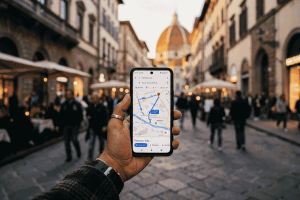
Modern solutions like international phone plans and eSIMs offer a lifeline, keeping you in touch with family, navigating new cities, and sharing your experiences in real time. However, not all plans are created equal. Choosing the wrong one can lead to surprise bills, slow data speeds, and frustrating connectivity gaps when you need it most.
To avoid these common pitfalls, it’s essential to do your homework. Understanding your specific needs and comparing them against what different providers offer is the key to a stress-free travel experience. This guide will walk you through the ten most important questions to ask before you commit to an international phone plan. By answering these, you’ll be able to select a plan that fits your travel style, destination, and budget, ensuring you stay connected effortlessly from takeoff to touchdown.
Understanding Your Connectivity Options Abroad
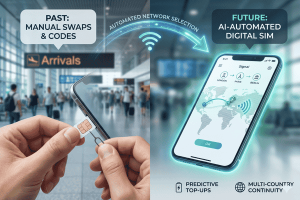
Before diving into the specific questions, it’s helpful to understand the landscape of staying connected internationally. For years, travelers had limited choices, each with significant drawbacks. The most common method was relying on your home carrier’s international roaming service. While convenient, this often came with exorbitant per-minute, per-text, and per-megabyte charges, resulting in what is commonly known as “bill shock” upon returning home. Many carriers have introduced daily or monthly international passes, which are an improvement but can still be costly, especially for longer trips.
Another popular option has been to buy a local physical SIM card upon arrival at your destination. This approach generally provides better rates for local calls and data. However, it comes with its own set of hassles. You have to find a reputable vendor at the airport or in the city, navigate language barriers, and deal with local registration requirements. It also means swapping out your primary SIM card, so you lose access to your regular phone number, which can be inconvenient for receiving verification texts or important calls from home.
The evolution of mobile technology has introduced a far more elegant and efficient solution: the eSIM. An eSIM, or embedded SIM, is a digital SIM that allows you to activate a cellular plan from a provider without needing a physical SIM card. Most modern smartphones are eSIM-compatible, enabling you to download and install a data plan for your destination country before you even leave home. This technology combines the best of both worlds: you get affordable, local-like rates without the hassle of swapping physical cards. Providers like Terminal eSIM specialize in this space, offering flexible data plans for hundreds of countries, making it a seamless choice for the modern traveler.

Key Questions for Choosing International Phone Plans
Selecting the right plan requires a clear understanding of your travel habits and connectivity needs. A weekend business trip to London has very different requirements than a month-long backpacking adventure across Southeast Asia. Answering the following questions will help you narrow down the options and find the perfect fit.
1. Which Countries Does the Plan Cover?
This is the most fundamental question. A plan is useless if it doesn’t cover your destination. Many providers offer country-specific plans, while others provide regional or even global packages. If your trip involves multiple countries, a regional plan (e.g., for Europe, Asia, or North America) is often more cost-effective and convenient than buying separate plans for each country. Check the provider’s coverage list carefully. Ensure that it includes not just the primary countries you’ll visit but also any layover destinations where you might want to use your phone.
2. How Much Data Do I Really Need?
Estimating your data usage is crucial to avoid overpaying for data you won’t use or running out mid-trip. Consider your typical phone habits:
- Light User: You primarily use data for maps, messaging apps (like WhatsApp), and occasional web browsing. 1-3 GB per week should be sufficient.
- Moderate User: You add social media scrolling, photo uploads, and some light video streaming to the mix. Aim for 3-5 GB per week.
- Heavy User: You frequently stream music or videos, use your phone as a hotspot for work, or upload large files. You’ll likely need 10 GB or more per week.
Check your current phone’s data usage statistics for an average month to get a baseline. It’s always wise to slightly overestimate your needs to have a buffer.
3. What is the Validity Period of the Plan?
International phone plans come with a set validity period, such as 7 days, 15 days, or 30 days. The plan expires once the period is over, regardless of how much data you have left. Match the validity period to the length of your trip. If you’re traveling for 10 days, a 15-day plan is a better fit than a 7-day plan that would require a top-up. Some providers, especially eSIM companies, offer flexibility and allow you to easily extend or top up your plan through an app if your travel plans change.
4. Does the Plan Include Calls and Texts?
Many modern international phone plans, particularly those offered by eSIM providers, are “data-only.” This is often sufficient for most travelers, as you can use apps like WhatsApp, FaceTime Audio, or Skype to make calls and send messages over the internet (VoIP). If you need a traditional phone number to make local calls to landlines or receive standard SMS messages, you must seek out a plan that explicitly includes calling minutes and texts. Data-only plans are typically more affordable and simpler to manage, making them a popular choice.
5. What is the Network Speed and Quality?
Not all networks are created equal. A plan might offer a large amount of data, but if it’s on a slow or unreliable network (e.g., 3G instead of 4G or 5G), your experience will be poor. Research which local network partners the provider uses in your destination country. Reputable providers will partner with top-tier local carriers to ensure you get fast and reliable 4G/LTE or 5G speeds. Reading reviews from other travelers can provide real-world insight into the network performance you can expect.
Comparing Your Options: A Quick Guide
To help visualize the differences, here’s a comparison of the most common types of international phone plans. This table highlights the general pros and cons, but specific details will vary by provider.
| Feature | Home Carrier Roaming | Local Physical SIM | eSIM Data Plan (e.g., Terminal eSIM) |
| Convenience | Very High (activates automatically) | Low (requires purchase and installation on arrival) | High (can be installed before travel) |
| Cost | Very High | Low to Moderate | Low to Moderate |
| Flexibility | Moderate (daily or monthly passes) | Low (tied to one country, hard to change) | Very High (easy to switch plans or top up) |
| Phone Number | Keep your own number | Get a new, local number | Data-only (use VoIP apps with your number) |
| Setup | None | Physical swap, potential registration | Digital scan of a QR code |
| Best For | Short business trips, emergencies | Long stays in a single country | Most travelers, multi-country trips, digital nomads |
As the table shows, eSIMs offer a compelling balance of cost, convenience, and flexibility. They remove the physical hassle of traditional SIM cards while providing competitive rates that home carriers can rarely match. For the vast majority of modern travelers, an eSIM data plan represents the most efficient and user-friendly solution.
Common Traveler Concerns and FAQs
Navigating international connectivity can still bring up questions and concerns. Here are answers to some of the most common issues travelers face.
FAQs about International Phone Plans
- What happens if I run out of data?
Most eSIM providers make it easy to top up your data directly from their app. With Terminal eSIM, for instance, you can monitor your usage in real-time and purchase additional data packs instantly if you’re running low. With a physical SIM, you may need to find a local store to buy a recharge voucher. - Can I use my phone as a hotspot with an international plan?
This depends entirely on the provider and the specific plan. Many eSIM plans allow tethering, so you can share your data connection with a laptop or another device. However, some may restrict it. Always check the plan details before purchasing if this feature is important to you. - Is my phone compatible with an eSIM?
Most smartphones released since 2018, including iPhones (XS and newer), Google Pixels (3 and newer), and high-end Samsung Galaxy models, are eSIM compatible. You can usually find a list of compatible devices on the eSIM provider’s website or check your phone’s settings under “Cellular” or “Mobile Network” for an option to “Add eSIM” or “Add Cellular Plan.” - What’s the difference between an international plan and a global plan?
An “international plan” is a broad term. A “global plan” is a specific type of international plan that offers coverage in a large number of countries (often 100+) under a single package. These are ideal for frequent flyers, flight crews, or those on a round-the-world trip, as they eliminate the need to buy new plans for each leg of the journey. - How do I activate an eSIM?
Activation is simple. After purchase, you’ll receive a QR code via email. On your phone, go to your cellular settings, select “Add eSIM,” and scan the QR code. The plan will be downloaded and installed on your device. It’s best to do this while you still have a Wi-Fi connection before you depart. Once you arrive at your destination, you simply switch your cellular data line to the eSIM, and you’re connected.
Summary: Making an Informed Decision
Choosing the right international phone plan doesn’t have to be complicated. By taking a thoughtful approach and asking the right questions, you can find a solution that keeps you connected without breaking the bank. Start by evaluating your destination and trip duration to determine coverage needs. Then, honestly assess your data consumption habits to pick a plan that offers enough gigabytes for your activities.
Remember to check the fine print regarding plan validity, whether calls and texts are included, and the quality of the network you’ll be using. For most modern travelers, the convenience, flexibility, and affordability of an eSIM make it the superior choice over traditional roaming or local SIMs. By clarifying these ten key points—from coverage and data allowance to network speed and activation process—you empower yourself to make a smart purchase. This ensures your focus remains on enjoying your travels, not worrying about your phone bill.
Stay Connected Seamlessly with Terminal eSIM
Your travels deserve to be seamless and stress-free. Don’t let the fear of high roaming charges or the hassle of finding local SIM cards get in the way of your adventure. With Terminal eSIM, you can step off the plane and be connected instantly. We offer affordable, high-speed data plans for over 190 countries and regions, so you can navigate, share, and stay in touch from anywhere.
Whether you’re a digital nomad working from a cafe in Lisbon, a family on vacation in Japan, or a business traveler heading to a conference in Dubai, our flexible plans are designed to fit your needs. Forget swapping physical SIMs or hunting for Wi-Fi. Simply scan a QR code before you leave and enjoy reliable connectivity the moment you arrive. Explore the world without limits and let us handle the connection.
Discover the future of travel connectivity. Visit Terminal eSIM today to find the perfect plan for your next journey.