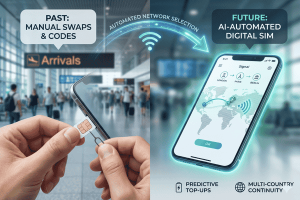
An eSIM, or embedded SIM, is a digital version of the traditional physical SIM card, built directly into your device. This technology allows you to activate a cellular plan from a provider without needing a physical nano-SIM.
For the modern traveler, this is a game-changer. Imagine landing in a new country and instantly connecting to a local network without swapping tiny plastic cards or paying exorbitant fees to your home carrier. This guide provides ten essential tips to help you master using an eSIM for international travel. From checking device compatibility to managing your data usage, these insights will ensure your next trip is connected, stress-free, and more enjoyable. Let’s dive into how you can make the most of this powerful travel tool.
What is an eSIM and How Does It Work for Travelers?
Before you can master using an eSIM, it helps to understand what it is and why it’s become so popular among globetrotters. At its core, an eSIM is a small chip embedded inside your smartphone, tablet, or smartwatch. Unlike the physical SIM cards you can remove and replace, the eSIM is a permanent part of your device’s hardware. Its power lies in its ability to be reprogrammed remotely.
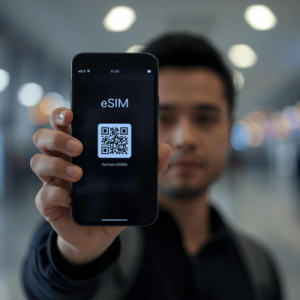
Think of it like a blank slate. When you purchase an eSIM plan, your provider sends you a QR code or an in-app activation prompt. Scanning this code or following the instructions downloads a “profile” onto your eSIM chip. This profile contains all the information needed to connect your device to a specific mobile network. You can store multiple eSIM profiles on a single device, though you can typically only use one at a time. This means you could have a profile for your home network, another for a trip to Europe, and a third for a business trip to Asia, switching between them as needed.
The history of the SIM card has been one of constant shrinkage, from the credit card-sized original to the mini, micro, and nano-SIMs we’ve used for years. The eSIM represents the next logical step: eliminating the physical card entirely. This evolution was driven by the need for smaller, more versatile connectivity solutions, especially with the rise of wearables and IoT devices. For international travelers, the benefits were immediately clear. No more waiting in airport queues to buy a local SIM, no more carrying around tiny, easy-to-lose plastic chips, and no more surprise roaming bills. An eSIM for international travel offers a simple, digital solution to a long-standing travel problem.
A Practical Guide: 10 Essential Tips for Using an eSIM for International Travel
Getting started with an eSIM is simple, but a few pro tips can make your experience even smoother. By following these practical steps, you can avoid common pitfalls and ensure you have reliable connectivity from the moment you land.
- Check Device Compatibility First: Not all phones support eSIM technology. Before you purchase a plan, verify that your device is eSIM-compatible. Most newer models from Apple, Google, and Samsung include it, but it’s always best to check your phone’s settings (often under “Cellular” or “Mobile Network”) or do a quick search online for your specific model.
- Purchase and Install Before You Go: The best time to set up your eSIM is while you’re still at home with a stable internet connection. Purchase your desired plan from a provider like Terminal eSIM and follow the instructions to install it. This way, you can activate it the moment you arrive at your destination.
- Understand Activation Timing: Most travel eSIMs only activate upon connecting to a network in the destination country. This means you can safely install it at home without starting the clock on your plan’s validity period. Read your plan’s details to confirm when the activation begins.
- Label Your eSIMs Clearly: If you have multiple eSIMs (e.g., your home plan and a travel plan), label them in your phone’s settings. Naming your travel eSIM “Europe Trip” or “Japan Data” will help you easily switch between lines and avoid accidentally using your primary plan for data.
- Keep Your Primary SIM for Calls and Texts: A major benefit of dual-SIM capability is keeping your home number active for calls and SMS messages while using the travel eSIM for data. In your phone’s settings, you can designate your travel eSIM as the primary source for mobile data, preventing your home carrier from charging you for roaming.
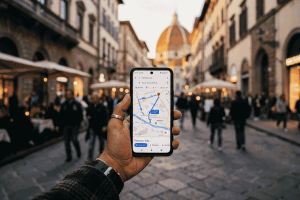
- Download Offline Maps: While your eSIM provides data, it’s always a smart backup to download offline maps for your destination via Google Maps or a similar app. This ensures you can navigate even if you find yourself in an area with poor connectivity.
- Monitor Your Data Usage: Keep an eye on how much data you’re using. Many eSIM provider apps, including Terminal eSIM, allow you to track your consumption in real-time. You can also see usage stats in your phone’s cellular settings. This helps you avoid running out of data unexpectedly.
- Know How to Top Up: Familiarize yourself with the top-up process before you need it. Some plans allow you to easily add more data through an app, while others may require you to purchase a new plan. Knowing this in advance saves you from scrambling to get back online.
- Turn Off Mobile Data Switching: Some phones have a feature that allows them to automatically switch to your primary SIM for data if the eSIM connection is weak. To avoid accidental roaming charges, disable this feature (often called “Allow Cellular Data Switching” on iPhones) before you travel.
- Have the QR Code and Manual Details Saved: After purchasing your eSIM, take a screenshot of the QR code and save any manual installation details in a safe place (like a notes app or as an image in your gallery). If you ever need to reinstall the eSIM, you’ll have the information handy without needing an internet connection.
Comparing Your Connectivity Options: eSIM vs. Other Methods
When planning for international travel, you have several options for staying connected. An eSIM is often the most convenient and cost-effective, but it’s helpful to see how it stacks up against traditional methods.
| Feature | eSIM (e.g., Terminal eSIM) | Local Physical SIM | International Roaming |
| Convenience | High: Instant digital activation before you travel. No physical swap needed. | Medium: Requires finding a store, purchasing, and swapping SIM cards upon arrival. | High: No setup required, uses your home plan automatically. |
| Cost | Low-Medium: Highly competitive pricing for specific regions and data amounts. | Low: Often the cheapest per-GB rate, but can have hidden activation fees. | Very High: Notoriously expensive, with high daily rates or per-MB charges. |
| Flexibility | High: Store multiple plans and switch between them. Easy to top up or change plans. | Low: Tied to one carrier in one country. A new SIM is needed for each new country. | Medium: Works in many countries but is tied to your home carrier’s agreements. |
| Setup Time | Minimal: A few minutes to scan a QR code and configure settings at home. | Varies: Can take 30 minutes to an hour, including travel and queueing time. | Instant: Activates automatically as soon as you land. |
| Keeping Home Number | Yes: Most phones allow you to keep your primary line active for calls/texts. | No: You must remove your primary SIM, losing access to your home number. | Yes: Your home number works as usual. |
As the table shows, an eSIM for international travel strikes the perfect balance. It combines the convenience of international roaming with the affordability of a local SIM, all while allowing you to keep your primary phone number active. For example, a traveler visiting multiple European countries would need to buy a new local SIM in each nation. With an eSIM from a provider like Terminal eSIM, they can purchase one regional plan that covers their entire trip, saving both time and money. While international roaming is effortless, the cost can be staggering, often reaching hundreds of dollars for a short trip. The eSIM emerges as the clear winner for the smart, modern traveler.
Common Questions and Concerns About eSIM Travel
As with any new technology, travelers often have questions about how eSIMs work in practice. Addressing these concerns can help you travel with confidence, knowing you’ve prepared for any potential issues. Here are answers to some of the most frequently asked questions.
What if I lose my phone? Is my eSIM secure?
Your eSIM is arguably more secure than a physical SIM card. Because it’s embedded in your device, a thief cannot simply remove it and place it in another phone to access your service or intercept two-factor authentication codes. Your eSIM profile is protected by your phone’s security features, such as your passcode, Face ID, or fingerprint lock. If your phone is lost or stolen, you can remotely wipe the device, which also deletes the eSIM profile. You can then contact your eSIM provider to have the plan reissued to your new device.
Can I share my eSIM data with other devices?
Yes, in most cases. The ability to use your phone as a personal hotspot (tethering) depends on the specific eSIM plan and the local carrier’s policies. The vast majority of travel eSIM plans, including those offered by Terminal eSIM, allow tethering. This is incredibly useful for connecting a laptop, tablet, or a travel partner’s device to the internet using your single eSIM data plan. Always check the plan details before purchase to confirm that hotspot functionality is supported.
What happens if my eSIM doesn’t work when I arrive?
While rare, connectivity issues can happen. The first step is to ensure data roaming is enabled for your travel eSIM in your phone’s settings (this is necessary for it to connect to partner networks). Next, try restarting your phone, as this often resolves minor network glitches. If it still doesn’t work, check your phone’s network settings to see if it has automatically selected a carrier. You may need to manually select a different supported network from the list provided by your eSIM provider. Finally, if all else fails, contact your eSIM provider’s customer support. A good provider will offer responsive support to help you troubleshoot the issue.
Can I use an eSIM and a physical SIM at the same time?
Absolutely. This is one of the biggest advantages of eSIM technology for travelers. Devices with both a physical SIM slot and an eSIM are known as “Dual SIM, Dual Standby” (DSDS). This allows you to have both your primary physical SIM and your travel eSIM active simultaneously. You can receive calls and texts on your home number while using the affordable, high-speed data from your travel eSIM. You just need to configure your phone’s settings to specify which line to use for data, voice, and messages.
Your Summary for a Seamless eSIM Experience
Using an eSIM for international travel simplifies connectivity and empowers you to explore the world without fear of high roaming fees or the hassle of physical SIM cards. By understanding the technology and following a few key practices, you can ensure a smooth and reliable internet connection wherever your journey takes you.
The core takeaway is preparation. Before you depart, confirm your device is eSIM-compatible, purchase a plan tailored to your destination, and install it while you have a stable Wi-Fi connection. Once abroad, manage your connectivity by labeling your SIMs, monitoring data usage, and keeping your primary line active for essential communication. This dual-SIM capability is a powerful feature, giving you the best of both worlds: local data rates and the ability to be reached on your regular number. Comparing eSIMs to traditional options like local SIMs and international roaming reveals that eSIMs offer a superior blend of convenience, cost, and flexibility for the modern traveler.
Get Connected Instantly with Terminal eSIM
Your next adventure deserves to be shared, navigated, and enjoyed without connectivity worries. An eSIM is the key to unlocking a world of hassle-free travel, whether you’re a digital nomad working from a cafe in Lisbon, a family exploring the temples of Kyoto, or a frequent flyer hopping between business meetings. The freedom to land and connect instantly is no longer a luxury—it’s an essential part of modern travel.
With Terminal eSIM, you gain access to affordable, high-speed data plans in over 190 countries. Our platform is designed for travelers by travelers, focusing on simplicity, reliability, and exceptional customer support. Forget about complicated contracts and hidden fees. Choose your destination, select a plan that fits your needs, and get connected in minutes. It’s time to upgrade your travel experience and say goodbye to roaming charges forever.
Explore our flexible data plans and start your journey today. Visit https://terminalesim.com to find the perfect eSIM for your next trip.