
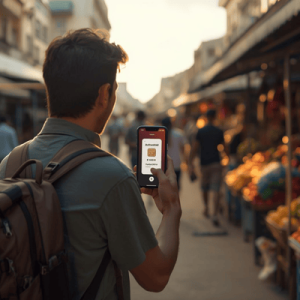
This isn’t a scene from a futuristic travel movie; it’s the reality made possible by eSIM technology. For years, travelers have juggled expensive roaming charges, language barriers at local SIM card kiosks, and the constant fear of losing their primary SIM. But that era is rapidly coming to an end.
An eSIM, or embedded SIM, is a digital version of the physical SIM card you’re used to. It’s built directly into your device’s hardware, allowing you to activate a cellular plan from a provider without needing a physical nano-SIM. This guide will walk you through exactly what an eSIM is, how it revolutionizes international travel, and why it’s the one travel hack you can’t afford to ignore. We’ll cover everything from the basics of how it works to a step-by-step guide on getting connected, helping you stay online seamlessly wherever your adventures take you.
Understanding the Magic: What Is an eSIM and How Does It Work?
At its core, an eSIM is a small chip integrated inside your phone, tablet, or smartwatch. Unlike a traditional SIM card, which you must physically insert and swap, the eSIM can be programmed and reprogrammed remotely. Think of it as a rewritable SIM card that lives permanently inside your device. When you purchase an eSIM plan, you receive a QR code or an in-app prompt that, once scanned or tapped, downloads a carrier’s profile directly onto your device. This profile contains all the information needed to connect to that carrier’s network.
The concept began to gain traction around 2016 when the GSMA, the organization that represents mobile network operators worldwide, published the first standard for remote SIM provisioning. This paved the way for device manufacturers like Apple, Google, and Samsung to start embedding eSIM chips into their products. Initially, it was a niche feature found only on high-end devices. However, its undeniable convenience has pushed it into the mainstream. Today, most new flagship smartphones are eSIM-compatible, and some, like the latest iPhone models in the US, have removed the physical SIM tray altogether, going all-in on eSIM technology.
So, how does this process work when you’re abroad? Let’s say you’re traveling from the United States to Japan. Before you even leave, you can browse and purchase a Japan-specific data plan from a provider like Terminal eSIM. You’ll receive a QR code via email. In your phone’s settings, you’ll select “Add Cellular Plan” and scan the code. Your phone then downloads the Japanese carrier profile. Upon landing at Narita Airport, you simply switch your cellular data line to the newly installed eSIM, and you’re instantly connected to a local network, often at a fraction of the cost of traditional roaming. You can even keep your primary SIM active for calls and texts from home, giving you the best of both worlds.
Your Step-by-Step Guide to Using an eSIM for International Travel
Making the switch to an eSIM for international travel is simpler than you might think. It eliminates the hassle of finding a local store and navigating language barriers just to get connected. Follow these steps to unlock seamless, affordable data on your next trip.
Step 1: Check Your Device for eSIM Compatibility
Before anything else, you need to ensure your phone supports eSIM technology. Most smartphones released in the last few years are compatible.
- For iPhone: Go to Settings > Cellular (or Mobile Data). If you see an option to “Add eSIM” or “Add Cellular Plan,” your device is compatible. Models from the iPhone XS, XR, and newer support eSIM.
- For Android (Samsung, Google Pixel, etc.): The path is usually Settings > Network & Internet > SIMs. Look for a “+” icon or an “Add eSIM” option. As Android settings can vary by manufacturer, a quick search for “[Your Phone Model] eSIM support” will give you a definitive answer.
Step 2: Choose and Purchase Your eSIM Plan
This is where the flexibility of an eSIM truly shines. Instead of being tied to your home carrier’s expensive roaming packages, you can shop around.
- Visit a global eSIM provider: Marketplaces like Terminal eSIM offer a wide range of plans for individual countries, regions (e.g., Europe, Asia), and even global packages.
- Select your destination and plan: Consider the length of your trip and your expected data usage. Plans typically vary by data amount (e.g., 5GB, 10GB, 20GB) and validity period (e.g., 7 days, 15 days, 30 days). Choose one that fits your needs.
- Complete the purchase: Once you’ve selected your plan, complete the checkout process. You will receive an email almost instantly containing your installation instructions and a QR code.
Step 3: Install and Activate Your eSIM
You can install your eSIM right before you leave or upon arrival—it’s up to you. The plan will only activate once it connects to a network in your destination country.
- Connect to Wi-Fi: You’ll need an internet connection to download the eSIM profile.
- Scan the QR Code: Go back to your phone’s cellular settings and select “Add eSIM.” Use your phone’s camera to scan the QR code from your confirmation email.
- Follow the On-Screen Prompts: Your phone will guide you through the setup. You’ll be asked to label your new plan (e.g., “Italy Data”) and choose how you want to use your lines. A common setup is to use your primary SIM for calls and texts and your new eSIM for cellular data.
- Switch on Arrival: Once you land, go back to your cellular settings and turn on the new eSIM line. Make sure “Data Roaming” is enabled for this eSIM line (don’t worry, you won’t be charged extra roaming fees by the eSIM provider) and select it as your line for cellular data. Your phone will connect to the local network within minutes.
Comparing Your Options: eSIM vs. Physical SIM vs. Roaming
When it comes to staying connected abroad, you have several choices, each with its own set of pros and cons. Understanding the differences helps you pick the best solution for your travel style. Here’s a breakdown of eSIMs, traditional physical SIMs, and international roaming plans.
| Feature | eSIM (e.g., Terminal eSIM) | Local Physical SIM | International Roaming |
| Convenience | Excellent: Instant activation via QR code. No physical swap needed. Buy anytime, anywhere. | Fair: Requires finding a store, dealing with potential language barriers, and registration. | Good: Automatic activation upon arrival. No setup required. |
| Cost | Excellent: Highly competitive, local-like pricing without the hassle. Often the cheapest option. | Good: Generally affordable, but requires an upfront purchase and may have hidden fees. | Poor: Extremely expensive. Costs can quickly add up to hundreds of dollars for minimal data. |
| Flexibility | Excellent: Store multiple eSIM profiles and switch between them easily. | Poor: Device must be unlocked. Can only use one physical SIM at a time (unless you have a dual-SIM phone). | Fair: Tied to your home carrier’s specific partners and packages. |
| Security | Excellent: No physical card to lose or have stolen. QR code is a secure one-time use. | Fair: The small plastic card is easy to misplace or lose, along with your home number. | Good: Managed by your home provider, so security is generally robust. |
| Keeping Your Home Number | Excellent: Keep your primary line active for calls and 2FA texts while using the eSIM for data. | Poor: Requires removing your home SIM, meaning you can’t receive calls or texts to your regular number. | Excellent: Your phone number and service work exactly as they do at home. |
After reviewing the comparison, it’s clear that each option serves a different need. International roaming is convenient but prohibitively expensive for most people. Local physical SIMs offer good value but come with significant logistical hurdles. The eSIM for international travel emerges as the superior choice for the modern traveler. It combines the cost-effectiveness of a local SIM with even greater convenience than roaming. Providers like Terminal eSIM bridge this gap perfectly, offering the best of all worlds: affordability, flexibility, and ease of use.
Traveler Concerns & Frequently Asked Questions
As with any new technology, travelers have valid questions and concerns about using an eSIM. Let’s address some of the most common ones to help you feel confident in making the switch. The biggest trend in mobile tech is the move away from physical components, and the eSIM is at the forefront of this shift. As more travelers experience the convenience, the demand grows, and more destinations and affordable plans become available. It solves the core problem for travelers: how to get easy, affordable, and reliable internet access abroad without the traditional headaches.
FAQs About Using an eSIM for International Travel
- Can I still receive calls and texts on my regular number with an eSIM?
Yes, absolutely! This is one of the biggest advantages of dual-SIM functionality enabled by eSIMs. You can designate your new eSIM for data usage while keeping your primary physical SIM or eSIM active for voice and text. This means you won’t miss important calls or two-factor authentication (2FA) messages sent to your home number. Simply configure your phone’s settings to use the eSIM for “Cellular Data” and your home line for “Voice & SMS.” - What happens if I use up all the data on my eSIM plan?
Running out of data mid-trip is a common worry, but eSIM providers make it easy to manage. Most, including Terminal eSIM, allow you to top up your existing plan directly through their app or website. You can purchase more data without needing to install a new eSIM. Some providers also send you notifications when you’re running low, giving you plenty of time to add more data and avoid any interruption in service. - Do I need to have my phone unlocked to use an eSIM?
Yes, your device must be unlocked from your carrier to use an eSIM from a different provider. A locked phone is restricted to working only with the carrier you bought it from. If you purchased your phone directly from the manufacturer (like Apple or Samsung), it’s likely already unlocked. If you bought it through a carrier on a payment plan, you may need to contact them to request an unlock once your device is paid off. You can usually check your unlock status in your phone’s settings or by calling your carrier. - Can I use my eSIM on multiple devices?
An eSIM profile is tied to the specific device it is installed on. Once a QR code is scanned and the profile is downloaded, it cannot be transferred to another phone or tablet. However, you can purchase separate eSIM plans for each of your compatible devices. For example, you could buy one plan for your smartphone and another for your cellular-enabled tablet to ensure all your gear stays connected.
The Smart Traveler’s Choice for Global Connectivity
To sum it up, the world of international travel connectivity has been transformed. We’ve moved past the days of exorbitant roaming fees and the frustrating search for local SIM cards. The eSIM has emerged as the clear winner for savvy travelers, offering an unmatched blend of convenience, affordability, and flexibility. By embedding a digital SIM directly into your device, it allows you to connect to local networks instantly upon arrival, all while keeping your primary number active for important calls and texts.
We’ve walked through what an eSIM is, from its technical foundation as a remotely programmable chip to its practical application for a trip abroad. You now have a step-by-step guide to check for compatibility, purchase a plan, and activate it seamlessly. The comparison with physical SIMs and roaming highlights the definitive advantages of using an eSIM for international travel, especially when it comes to cost and ease of use. By addressing common questions, we’ve aimed to demystify the technology and empower you to travel smarter, not harder.
Stay Connected Effortlessly with Terminal eSIM
Are you a frequent flyer, a digital nomad building a business from your laptop, or a family planning an unforgettable vacation? No matter your travel style, staying connected is non-negotiable. With an eSIM, you can share your journey in real-time, navigate new cities with ease, and stay in touch with loved ones without worrying about a massive phone bill waiting for you back home. Terminal eSIM is designed for the modern traveler who values simplicity and reliability.
Stop overpaying for data and embrace the future of travel connectivity. Explore plans that cover over 190 countries and regions, with options tailored to fit any trip length or data need. Get your plan in minutes and connect the moment you land. Make your next trip the most connected one yet.
Visit Terminal eSIM today to find the perfect plan for your next adventure!