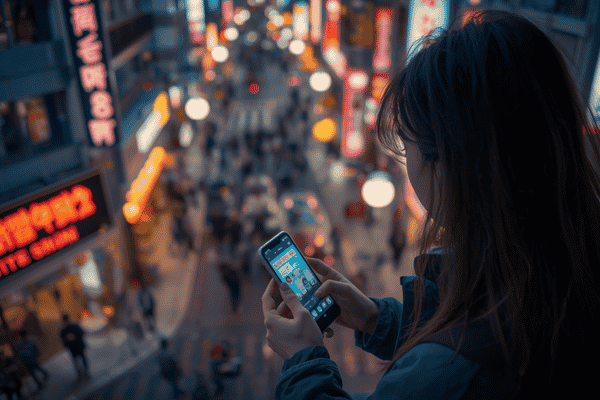
If you’re planning a trip to South Korea, you probably already know that having a solid data connection isn’t just a “nice to have”—it’s a survival tool. Whether you’re trying to decipher a menu in a hidden Myeong-dong alleyway using Papago or checking the real-time arrival of the bus in Busan, your phone is your lifeline.
The good news? South Korea has some of the fastest internet in the world. The challenge? Deciding which eSIM Korea plan actually delivers on its promises without overcharging you or cutting your speeds when you need them most.
I’ve spent plenty of time navigating the subways of Seoul and the hiking trails of Jeju Island. In this guide, I’m breaking down the top 5 eSIM providers for Korea based on real-world use, speed, and what you actually get for your money.
Why an eSIM is Usually Better Than a Physical SIM in Korea
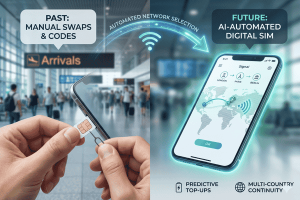
Before we dive into the providers, let’s talk logistics. In the past, everyone headed straight for the “Roaming” booths at Incheon Airport to pick up a physical SIM. It worked, but it meant standing in line after a 12-hour flight and keeping track of a tiny piece of plastic the size of a fingernail.
With an eSIM, you can buy your plan while you’re still packing your bags. You scan a QR code, and by the time your plane touches down at Icheon, you’re already connected. Plus, you get to keep your home SIM active for those important two-factor authentication (2FA) texts from your bank.

1. Terminal eSIM: The Best All-Rounder
If you’re looking for a balance between price and performance, Terminal eSIM has become a go-to for many frequent travelers. Unlike some “big name” brands that route your data through servers in Europe or Singapore (which causes annoying lag), Terminal eSIM focuses on providing direct-access quality.
Why travelers like it:
- Local Network Quality: It taps into Korea’s premium networks (like SK Telecom), so you aren’t stuck with “second-tier” speeds.
- Transparent Pricing: You aren’t hit with “convenience fees” at checkout.
- Simple Activation: The setup is straightforward, which is exactly what you want when you’re tired and just trying to find your hotel.
Things to consider:
- Purely Digital: Like all eSIMs, you won’t get a physical card. If your phone is an older model that doesn’t support eSIM technology, you’ll have to stick to the traditional route.
2. Airalo (LG U+ / SKT)
Airalo is the “household name” of the eSIM world. They offer a variety of packages for Korea under their “LG U+” and “SKT” labels.
The Experience:
Airalo is great for short trips. If you only need 1GB or 3GB for a quick weekend in Seoul, their prices are hard to beat. However, for longer stays, their “unlimited” plans can get quite pricey compared to local alternatives.
- Pros: Very user-friendly app; allows you to earn “Airmoney” (rewards) for future trips.
- Cons: Some users report that their “unlimited” plans are actually throttled (slowed down) after a certain daily limit (usually 2GB or 3GB). If you’re a heavy TikTok user or plan to stream Netflix, this might get frustrating.
3. Holafly: The Unlimited Heavyweight
Holafly is famous for one thing: unlimited data. If you don’t want to count gigabytes and you have the budget for it, they are a strong contender.
The Experience:
Holafly is perfect for the “set it and forget it” traveler. You pay a flat fee for a set number of days (e.g., 10 days, 15 days) and go wild.
- Pros: Truly unlimited data; great customer support available in multiple languages.
- Cons: They are consistently the most expensive option on the list. Also, hotspotting/tethering is often restricted or limited on their unlimited plans. If you were planning to share data with your laptop or a friend, Holafly might not be for you.
4. Nomad
Nomad is a solid middle-ground provider that often has competitive “Flash Sales” for Korea. Their interface is clean, and they provide data through the SK Telecom network.
The Experience:
Nomad’s 10GB or 20GB plans are often priced very reasonably. They are a great choice if you know exactly how much data you use and don’t want to pay the “unlimited” premium of Holafly.
- Pros: Reliable speeds; frequently offers discounts for new users.
- Cons: The “installation” process can occasionally be a bit more technical than Airalo or Terminal eSIM, requiring a few manual setting tweaks.
5. LG U+ / KT (Official Tourist eSIMs)
You can actually buy eSIMs directly from the major Korean carriers like LG U+ or KT (Korea Telecom) through their websites or Klook.
The Experience:
These are “official” tourist products. They often come with a bonus: a Korean phone number (usually starting with 010).
- Pros: You get a local number, which is incredibly helpful for making dinner reservations or receiving a text when your table is ready at a popular BBQ spot.
- Cons: The registration process is stricter. You often have to upload a photo of your passport for identity verification (KYC), which some travelers find invasive or a hassle to do on the fly.
Comparison at a Glance
| Provider | Best For | Network | Local Number? |
| Terminal eSIM | Value & Speed | SKT / KT | No |
| Airalo | Short Trips | LG U+ / SKT | No |
| Holafly | Heavy Data Users | KT | No |
| Nomad | Mid-range Data | SKT | No |
| LG U+ / KT | Reservations/Calls | Local Direct | Yes (Optional) |
Practical Traveler Scenarios: Which one should you choose?
Scenario A: The Solo Backpacker
- Your Vibe: Checking maps constantly, using Google Translate (or Papago), and posting Instagram stories.
- Recommendation: Terminal eSIM or Nomad. You need reliable 4G/5G without a massive price tag. A 10GB or 20GB plan is usually plenty for 2 weeks.
Scenario B: The Digital Nomad
- Your Vibe: Working from cafes in Gangnam, taking Zoom calls, and uploading large files.
- Recommendation: Holafly or a high-tier Terminal eSIM plan. You cannot risk running out of data mid-meeting. Just check the hotspot limits if you plan to work from your laptop!
Scenario C: The Foodie / Planner
- Your Vibe: Booking the best restaurants, using “Catch Table” (a popular Korean booking app), and needing to call a taxi.
- Recommendation: LG U+ Official eSIM. Having that local 010 number makes interacting with local Korean apps much smoother.
Honest Pros and Things to Know
Pros of Using an eSIM in Korea
- Instant Access: No more hunting for a convenience store that sells SIM cards.
- Dual SIM: Keep your home number active for emergency calls from family.
- Cost-Effective: Significantly cheaper than paying your home provider $10/day for “International Roaming.”
Things to Know (The Limitations)
- Device Compatibility: Your phone must be carrier-unlocked and eSIM-compatible. (iPhone 11 or newer, Samsung S20 or newer, etc.)
- No Physical Backup: If you accidentally delete your eSIM profile, you usually need Wi-Fi to re-download it. Always keep a screenshot of your QR code!
- Data Only: Most travel eSIMs (except the official carrier ones) do not allow traditional voice calls. You’ll be using WhatsApp, FaceTime, or KakaoTalk for calls.
FAQ: eSIM Korea
- Will my eSIM work everywhere in Korea?
Yes. Korea has nearly 100% network coverage. Whether you’re in the Seoul subway or on a trail in Seoraksan National Park, you’ll likely have at least 4G signal.
- Do I need a Korean phone number?
Most travelers don’t. You can use KakaoTaxi (T-Map) and most navigation apps without one. However, some high-end restaurant reservation apps require a local number to verify your identity.
- Can I top up my data if I run out?
Most providers like Terminal eSIM and Airalo allow you to buy “top-ups” through their app or website. It’s usually instant.
- When should I install my eSIM?
The best time is right before you leave for the airport. You can install the profile, and then simply “turn it on” once your plane lands in Korea.
Final Thoughts
South Korea is a digital-first country. Having a reliable eSIM Korea plan is the difference between a smooth, tech-enabled adventure and being lost in a subway station trying to find free Wi-Fi.
For most travelers, Terminal eSIM offers the best mix of local network quality and fair pricing. If you absolutely need to stream 4K video all day, look at Holafly. If you need to make local phone calls for business, go with an official KT or LG U+ plan.
No matter what you choose, enjoy the fried chicken, the skincare shopping, and the incredible sights. Safe travels!