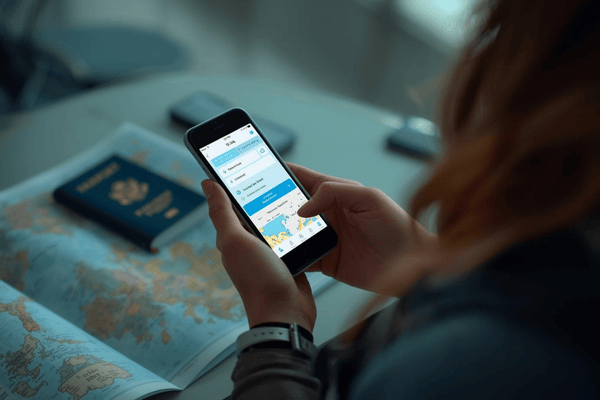
For years, travelers had two bad options: pay expensive fees to keep their home number active or hunt down a plastic SIM card at an airport kiosk in a foreign language. Neither was ideal.
Fortunately, technology has evolved. The embedded SIM, or eSIM, has completely changed how we stay connected across borders. It allows you to download a digital data plan instantly, often before you even leave your house. But with so many providers popping up, how do you know which one to trust?
In this guide, we will walk you through exactly how to choose the right plan for your specific needs. We will cover the technology behind it, what features actually matter, and how to save money on your next trip.
Understanding the Shift to Digital Connectivity
Before you purchase a plan, it helps to understand what you are actually buying. An eSIM is not a physical card. It is a tiny chip already soldered into your smartphone’s motherboard by the manufacturer. It serves the exact same function as a traditional SIM—authenticating your identity to a carrier network—but it does so through software rather than hardware.
From Plastic to Software
The evolution of the Subscriber Identity Module (SIM) has been a race toward miniaturization. We went from credit-card-sized SIMs in the early 90s to the Mini, Micro, and Nano SIMs. The eSIM is the logical next step: zero physical footprint.
This shift is significant for travelers because it removes the physical barrier to entry. You no longer need a paperclip to eject a tray, nor do you risk losing your tiny home SIM card on the floor of a crowded train.
Why This Matters Now
The travel industry is currently undergoing a massive digital transformation. Smartphone manufacturers are pushing this change aggressively. For example, iPhone 14 models sold in the United States removed the physical SIM tray entirely. This means if you are traveling with a newer device, you might not even have the option to buy a local plastic SIM at your destination. You have to use digital connectivity.
Furthermore, the infrastructure has improved. In the early days of this technology, switching carriers was clunky. Today, with platforms like Terminal eSIM, you can browse plans for over 150 countries, purchase one, and activate it via QR code in under five minutes. This seamless integration is why digital plans are rapidly becoming the standard for global tourism.
Practical Guide: How to Pick an eSIM for International Travel
Choosing a plan isn’t just about finding the cheapest price. A low-cost plan is useless if it has spotty coverage or throttled speeds. When evaluating an eSIM for international travel, you need to look at four specific criteria to ensure you aren’t left stranded without Maps or Google Translate.
1. Check Device Compatibility First
Before you spend a dime, verify your hardware. While most flagship phones from Apple, Samsung, and Google released in the last four years are compatible, it is not universal.
- iPhone: iPhone XR, XS, and newer.
- Samsung: Galaxy S20 and newer (mostly).
- Google: Pixel 3 and newer.
- Carrier Lock: This is the most important step. Your phone must be “unlocked.” If you are still paying off your phone specifically through a carrier contract, they may have locked the device to their network. Call them to confirm before you fly.
2. Regional vs. Global vs. Local Plans
Providers usually offer three tiers of coverage. Choosing the wrong one is a common waste of money.
- Local Plans: These cover a single country (e.g., “Japan 10GB”). These are usually the cheapest and offer the fastest speeds because they connect directly to local networks.
- Regional Plans: These cover a specific area, such as “Europe” or “Asia-Pacific.” These are perfect for backpackers hopping across borders (e.g., taking the train from France to Germany).
- Global Plans: These cover 80+ countries. They are convenient for long-term digital nomads but often come at a higher price point per gigabyte.
3. Data Estimation
Travelers often underestimate how much data they need. Running out of data mid-trip is frustrating, especially if you can’t find Wi-Fi to top up.
- Light User (1-3GB): Mostly uses Wi-Fi at the hotel. Needs data only for Maps, Uber, and WhatsApp text messages.
- Medium User (5-10GB): Scrolls social media occasionally, posts photos, uses Maps heavily, and streams music.
- Heavy User (20GB+): Streams video, works remotely, uses phone as a hotspot for a laptop.
4. The “Top-Up” Feature
Always check if the provider allows you to “top up” (add more data) to your existing plan. Some budget providers force you to buy a brand-new eSIM and install a new profile if you run out of data. This is a technical headache you want to avoid. Premium services allow you to simply click “Add 1GB” in their app or portal to keep the same connection running.
Comparison: Roaming vs. Local SIM vs. Terminal eSIM
To make an informed decision, let’s look at how a dedicated digital travel plan stacks up against the old-school methods of staying connected.
| Feature | Home Carrier Roaming | Local Plastic SIM | Terminal eSIM |
| Cost | Very High ($10-$15/day) | Low ($10-$30 total) | Affordable ($5-$40 total) |
| Convenience | High (Automatic) | Low (Must visit a shop) | High (Download instantly) |
| Keep Home Number? | Yes | No (Number changes) | Yes (Dual SIM capability) |
| Setup Time | None | 30-60 Minutes | 5 Minutes |
| Coverage | Depends on roaming agreements | Single Country | 150+ Countries |
| Risk | Bill Shock | Losing your original SIM | None |
Key Insights
Home Carrier Roaming is the easiest option but financially dangerous. A two-week trip could cost you upwards of $150 in roaming fees just to access data you already pay for at home.
Local Plastic SIMs are cheap, but they require you to navigate foreign kiosks, potentially deal with language barriers, and swap out your physical card. If you lose your home SIM, you lose access to Two-Factor Authentication (2FA) for your banking apps.
Terminal eSIM offers the middle ground. You get the low pricing similar to local SIMs with the convenience of carrier roaming. Plus, because modern phones support “Dual SIM” standby, you can keep your home number active for emergency calls and texts while using Terminal for affordable data.
Trends, FAQs, and Common Concerns
The landscape of travel connectivity is moving fast. We are seeing a surge in “hyper-regional” plans and 5G accessibility for travelers. However, despite the popularity, many travelers still have valid concerns about switching to a digital-only format.
Emerging Trends
Travelers are increasingly demanding 5G speeds. In the past, travel SIMs were often relegated to 3G or slow 4G networks. Now, providers are partnering with top-tier local networks to ensure travelers get the same speeds as locals.
Another trend is flexible duration. Instead of rigid 30-day contracts, we are seeing plans that last for 7 days, 15 days, or even just 24 hours, catering to layovers and short business trips.
Frequently Asked Questions
- Will using an eSIM drain my battery faster?
Generally, no. It uses the same amount of power as a physical SIM. However, if you are in an area with a very weak signal, your phone works harder to maintain a connection, which drains the battery. This happens regardless of whether the SIM is digital or plastic. - Can I use WhatsApp and iMessage with an eSIM?
Yes, absolutely. This is one of the biggest benefits. You can set your phone to use the travel plan for data, while keeping your WhatsApp and iMessage linked to your original phone number. Your contacts won’t even know you are away; you just keep messaging as usual. - Is it safe to use public Wi-Fi instead?
We advise against relying solely on public Wi-Fi. Aside from being unreliable, public networks in airports and cafes are often unsecured, making you vulnerable to data theft. Using cellular data is significantly more secure for checking bank accounts or emails. - What happens if I delete my eSIM by mistake?
Most providers allow you to reinstall the plan, but usually only on the same device. However, it is best to never delete the plan until you are safely home and sure you no longer need it.
Summary: The Smart Traveler’s Checklist
Choosing the right connectivity solution doesn’t have to be complicated. By moving away from expensive roaming passes and inconvenient plastic cards, you gain freedom and security.
To recap, here is your checklist for a smooth experience:
- Verify Compatibility: Ensure your device is unlocked and supports the technology.
- Assess Your Needs: Decide between a local, regional, or global plan based on your itinerary.
- Calculate Data: Be realistic about your data usage. 5GB is usually a safe sweet spot for a 1-2 week trip.
- Check Features: Look for providers that offer top-ups and instant delivery.
- Keep Your Number: Utilize Dual SIM settings to stay reachable via your home number while saving money on data.
The technology is mature, the coverage is global, and the savings are real. There is simply no reason to pay $10 a day for slow data anymore.
Stay Connected Anywhere with Terminal eSIM
Travel is about freedom—the freedom to explore, to get lost, and to find your way back again. But finding your way back is a lot harder without a reliable internet connection.
At Terminal eSIM, we believe staying connected should be the easiest part of your trip. Whether you are a digital nomad working from a cafe in Bali, a family navigating the streets of Rome, or a business traveler on a quick layover in Dubai, we have a plan tailored for you.
Our plans are designed for high-speed connectivity without the high-speed price tag. You get instant access to top-tier local networks in over 150 countries, transparent pricing with no hidden fees, and the ability to keep your home number active.
Don’t wait until you land to figure out your phone situation. Secure your connection now and land ready.