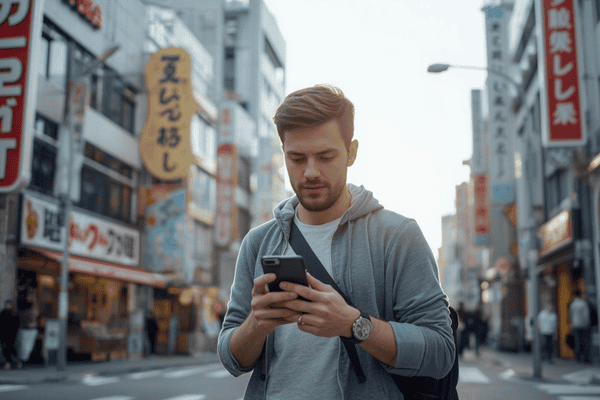
However, there is one thing that can quickly dampen your adventure: getting lost in a Tokyo subway station with no internet connection.
In the past, travelers had to rely on expensive international roaming, hunt for elusive public Wi-Fi, or carry around a bulky “Pocket Wi-Fi” device that required constant charging. As we move into 2026, the game has changed entirely. The best eSIM for Japan now allows you to activate a high-speed data plan instantly on your phone, ensuring you can navigate Google Maps, translate menus, and share your journey on Instagram the moment you land.
In this guide, we will walk you through everything you need to know about choosing the perfect digital SIM for your 2026 trip, comparing the top options, and showing you why Terminal eSIM is the preferred choice for modern travelers and digital nomads alike.
What is an eSIM and Why is it Essential for Japan in 2026?
Before we dive into the “how-to,” it is important to understand what makes an eSIM (Embedded SIM) so revolutionary for international travel. Unlike the traditional plastic SIM card you swap out with a paperclip, an eSIM is a small chip already built into your smartphone. It allows you to download a cellular data profile digitally.
The Evolution of Travel Connectivity
For decades, Japan was famous for its “Pocket Wi-Fi” rentals. While reliable, these devices were another gadget to carry, charge, and eventually return at the airport. Physical SIM cards were another option, but they often required tedious ID verification processes at Japanese kiosks.
By 2026, the best eSIM for Japan has effectively replaced these outdated methods. With the rise of the Japan Digital Nomad Visa and the surge in “Entertainment Tourism” (like the new PokéPark Kanto or teamLab Biovortex Kyoto), the demand for seamless, high-bandwidth data has never been higher. By using an eSIM, you enjoy:
- Instant Activation: No waiting in line at Narita or Haneda airport. You can buy and install your plan before you even board your flight.
- Dual-SIM Functionality: Keep your primary home number active for important texts (like bank 2FA codes) while using your eSIM for all your data needs.
- 5G as Standard: In 2026, 5G coverage in Japan is nearly universal in urban areas, making eSIMs faster than most hotel Wi-Fi.
Why Japan Demands Reliable Data
Japan’s infrastructure is incredibly advanced, but it can be complex. Navigating the intricate train networks of the Shinkansen or the Tokyo Metro requires real-time data for apps like Google Maps or Japan Transit by Navitime. Furthermore, with Japan implementing new digital tax-refund systems in late 2026, having a reliable data connection to manage digital receipts and customs forms is no longer a luxury—it’s a necessity.

How to Choose the Best eSIM for Japan: A Practical Guide
Finding the best eSIM for Japan isn’t just about finding the lowest price—it’s about balancing speed, coverage, and data limits. Here is a step-by-step checklist to ensure you get the best value for your trip in 2026.
1. Check Your Device Compatibility
First and foremost, your phone must be carrier-unlocked and eSIM-compatible. Most iPhones (from the XS/XR onwards), Google Pixels (from the 3 onwards), and recent Samsung Galaxy models support eSIM technology. By 2026, almost all mid-range and flagship smartphones sold globally are eSIM-ready.
2. Identify the Local Network Provider
Not all eSIMs are created equal. In Japan, there are three major carriers: NTT Docomo, KDDI (au), and SoftBank.
- NTT Docomo: Generally considered the best for rural areas and hiking in places like Hokkaido or the Japan Alps.
- KDDI (au) & SoftBank: Excellent for urban centers like Tokyo, Osaka, and Fukuoka.
When looking for the best eSIM for Japan, check if the provider uses one of these “Tier 1” networks to ensure you don’t suffer from “deprioritized” data speeds during peak hours in busy districts like Shibuya.
3. Evaluate Your Data Needs
Are you a “Minimalist” or a “Power User”?
- Light User (1GB–3GB): Best for a 3–5 day trip where you only use maps and occasional messaging.
- Moderate User (5GB–10GB): Ideal for a 7–10 day trip involving social media posting and restaurant searches.
- Power User (20GB–50GB): Essential for digital nomads, families sharing a hotspot, or travelers streaming high-definition video on the Shinkansen.
4. Look for Hotspot Support
If you plan to work from your laptop or share data with a travel partner, ensure your eSIM allows “Tethering” or “Personal Hotspot.”
Pro Tip: For a seamless experience, Terminal eSIM offers a range of plans specifically optimized for the Japanese network, providing a balance of high-speed 5G data and easy setup.
Comparison of Top Japan eSIM Options for 2026
To help you decide, we have compared the most popular plan types available for travelers in 2026.
| Feature | Budget / Light Plans | Mid-Range Plans | Terminal eSIM Japan |
| Data Allowance | 1GB – 3GB | 10GB – 20GB | Flexible (1GB to 50GB+) |
| Validity | 7 Days | 15 – 30 Days | Up to 30 Days |
| Network | SoftBank / MVNO | KDDI / Docomo | Premium Tier 1 (Docomo/KDDI) |
| Speed | 4G LTE | 4G / 5G | Ultra-Fast 5G Priority |
| Best For | Weekend city trips | 2-week vacations | All travelers & Nomads |
| Average Price | $4 – $9 | $18 – $35 | Competitive Local Rates |
Summary of Insights:
- Budget plans are great for those who will mostly be on hotel Wi-Fi. However, once you hit the cap, speeds are often throttled to 128kbps—too slow for modern maps.
- Mid-range plans are the “sweet spot” for most tourists. 10GB is usually sufficient for a 10-day trip if you aren’t streaming Netflix.
- Terminal eSIM provides the most versatility for 2026, allowing you to choose the exact data amount you need without paying for “unlimited” data that often comes with hidden speed “Fair Usage” caps.
2026 Japan Travel Connectivity: Trends and FAQs
The landscape of travel tech is changing rapidly. One of the biggest trends in 2026 is the shift toward Connectivity-as-a-Service. Travelers no longer want to buy a new SIM for every country; they want a single digital wallet where they can add data as they go.
The Rise of the Digital Nomad in Japan
With Japan’s 6-month Digital Nomad Visa now fully established in 2026, more travelers are staying longer and heading to “secondary” cities like Fukuoka or Sapporo. For these long-term stays, the best eSIM for Japan must offer high-volume data packages and reliable “work-from-anywhere” speeds.
Common Problems and Solutions
- Problem: My eSIM isn’t connecting after I land.
- Solution: Ensure “Data Roaming” is turned ON for the eSIM profile in your phone settings. Most travel eSIMs require roaming to be active to tap into the local Japanese network.
- Problem: I ran out of data in the middle of a trip.
- Solution: Choose a provider like Terminal eSIM that allows for easy top-ups. You can simply purchase more data through the portal without needing to scan a new QR code.
Frequently Asked Questions (FAQs)
Q: Does a Japan eSIM come with a Japanese phone number?
A: Most travel eSIMs are data-only. This means you won’t have a local number for traditional calls or SMS. However, you can use WhatsApp, FaceTime, or LINE to make calls over data.
Q: Can I use my eSIM in multiple cities like Tokyo and Osaka?
A: Yes! Your eSIM will automatically switch between local towers as you move across the country.
Q: Is 5G included in 2026 eSIM plans?
A: Yes, most premium providers now include 5G access at no extra cost, though speeds depend on your specific device and local signal strength.
New for 2026: Sustainable and Smart Travel
As Japan pushes for more sustainable tourism, travelers are encouraged to reduce physical waste. Using an eSIM is an eco-friendly choice that eliminates the plastic waste of SIM cards and the electronic waste of rented Wi-Fi routers. Furthermore, in 2026, many Japanese tourist attractions now require digital “timed-entry” tickets via apps, making a constant, reliable data connection essential for entry to places like Ghibli Park or Super Nintendo World.
Summary of the Best eSIM for Japan
To wrap up, finding the best eSIM for Japan in 2026 comes down to three factors: Network, Data, and Ease of Use.
- Skip the Airport Queues: Avoid the stress of physical SIMs and Pocket Wi-Fi rentals.
- Choose Quality Networks: Look for providers that utilize NTT Docomo or KDDI for the most reliable coverage across the islands.
- Tailor Your Data: Don’t overpay for data you won’t use. Estimate about 1GB per day for a standard “social” traveler.
- Install Early: Have your QR code ready and your profile installed before you leave the tarmac.
By following these steps, you ensure that your focus remains on the incredible sights and flavors of Japan, rather than troubleshooting your internet connection.
Stay Connected with Terminal eSIM
If you want a stress-free journey, Terminal eSIM offers premium connectivity solutions designed specifically for the 2026 international traveler. Whether you are a solo backpacker exploring the shrines of Nara or a digital nomad working from a café in Daikanyama, we provide the reliable, high-speed data you need.
Why choose Terminal eSIM for your Japan trip?
- No Hidden Fees: Transparent pricing with no shock roaming bills.
- Global Support: We understand the needs of the modern nomad and provide clear, expert assistance.
- Instant Delivery: Get your QR code via email immediately after purchase and be ready to go in minutes.
Ready to experience Japan with the best connection possible? Browse our plans today and take the first step toward a smarter, more connected adventure.