
If you’ve traveled internationally in the last few years, you know the drill. You land, scramble for airport Wi-Fi, and spend twenty minutes trying to buy a local eSIM package. Then, you stress about whether 5GB is enough for a week, only to realize on the flight home that you wasted $15 on data you never touched.
I’ve been there—staring at my phone in a cafe in Lisbon, realizing my 7-day “Europe Regional” plan expired at midnight even though I had 2GB left. That’s why Roamless has become such a hot topic in the travel community lately. It doesn’t work like the “big names” we’re used to, and for a specific type of traveler, it’s a total game-changer.
What Exactly is Roamless?
Unlike Airalo or Holafly, which typically sell you a fixed “bucket” of data for a specific timeframe (like 3GB for 30 days), Roamless operates more like a digital wallet.
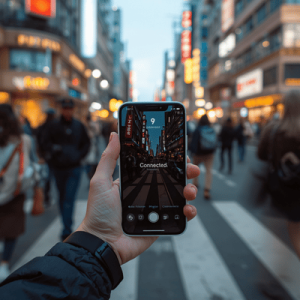
You install one Roamless eSIM on your phone—just once—and it stays there. Instead of buying a new plan for every country, you just add money to your account balance. As you move from the UK to France or Thailand, the eSIM automatically connects to a local network, and you’re charged per megabyte used.
The “Single eSIM” Concept
This is the part that usually wins people over. Most eSIM providers require you to download a new “profile” for every single trip. If you’re a digital nomad hopping through the Balkans, your settings menu ends up looking like a graveyard of expired eSIMs. With Roamless, you download it once, and you’re set for 200+ destinations.
Why Travelers Are Switching to Roamless
After testing this out on a multi-leg trip through Southeast Asia and Europe, a few things stood out that make it feel different from the traditional options.
1. The “Never Expiring” Balance
This is the biggest selling point. If you top up $20 and only use $5 worth of data in London, that remaining $15 stays in your account. You could go home, stay there for six months, fly to Tokyo, and that $15 is still there waiting for you. For occasional travelers or people who take short weekend trips, this is huge.
2. No More Guesswork
With Nomad or Saily, you have to guess your usage. “Will I use 1GB or 3GB?” If you guess wrong, you’re either topping up at a higher price or losing money on unused data. Roamless removes that anxiety. You pay for the exact MBs you consume.
3. In-App Calling
Most travel eSIMs are “data-only.” If you need to call a local restaurant or your bank, you’re usually out of luck unless you use WhatsApp. Roamless includes an in-app calling feature using your balance. It’s not a traditional phone line, but it’s a reliable way to make international calls without the $3/minute roaming fees from your home carrier.
Honest Pros and Things to Know
No travel tool is perfect, and Roamless is no exception. It’s important to know where it shines and where it might fall short compared to competitors.
The Pros
- Ultimate Flexibility: No expiration dates on your “Flex” balance.
- One-Time Setup: No need to constantly delete and add new eSIM profiles.
- Fast Speeds: In my experience, they often land on 5G or high-speed 4G networks (like Vodafone in the UK or MEO in Portugal).
- Low Entry Point: You can top up with as little as $1 to test it out.
Things to Know (The “Cons”)
- Not Always the Cheapest per GB: If you are staying in one country for a month and plan to use 50GB of data, a fixed plan from Terminal eSIM or a local SIM will likely be cheaper. Roamless charges a slight premium for the convenience of pay-as-you-go.
- No Unlimited Options: If you want to stream Netflix for 6 hours a day on the beach, Holafly’s unlimited plans are a safer bet for your wallet.
- App-Dependency: You have to manage everything through their app, which requires a quick account setup before you can get moving.
Roamless vs. The Competition: A Quick Look
How does it actually stack up when you’re standing in the terminal trying to decide?
| Feature | Roamless | Airalo / Nomad | Holafly |
| Model | Pay-as-you-go / Fixed | Fixed Bundles | Unlimited Data |
| Expiration | Balance Never Expires | Usually 7–30 Days | 1–90 Days |
| Setup | One eSIM for all countries | New eSIM per trip | New eSIM per trip |
| Best For | Frequent/Multi-country | Predictable users | High data users |
Practical Scenarios: Is it Right for You?
Scenario A: The Multi-Country Hopper
Imagine you’re doing a 10-day trip: 3 days in Paris, 2 days in Brussels, and 5 days in Amsterdam. Usually, you’d have to buy a “Europe Regional” plan or three separate eSIMs. With Roamless, you just land, turn on your data, and it works in all three. No wasted data when you cross the border.
Scenario B: The Emergency Backup
I always keep a Roamless eSIM active on my phone with a $5 balance. If my primary SIM fails or I run out of data on a fixed plan from Terminal eSIM, I have an instant backup that I know hasn’t expired. It’s like having a spare tire in the trunk of your car.
Scenario C: The Data-Heavy Streamer
If you’re a YouTuber uploading 4K video on the go, Roamless might get expensive. In this case, I’d recommend looking at a high-volume fixed package. You can find massive data bundles for specific countries through Terminal eSIM that will give you a better price-per-gigabyte for heavy lifting.
Things to Check Before You Go
- Check Device Compatibility: Ensure your phone is eSIM compatible (most iPhones from the XR onwards and modern Androids are).
- Verify Your “Home” SIM Settings: Make sure your “Data Roaming” is OFF for your home SIM to avoid “bill shock” from your local provider, but ON for the Roamless eSIM.
- Top Up Before You Land: While you can top up anywhere, it’s always easier to do it on your home Wi-Fi before you head to the airport.
FAQ
Does my Roamless balance really never expire?
Yes. As of 2026, the “Flex” balance stays in your account indefinitely. Only their “Fix” (30-day) bundles have an expiration date.
Can I use my phone as a hotspot?
Yes, tethering is fully supported. Just keep an eye on your balance, as laptop background updates can eat through data quickly!
Will I get a local phone number?
Roamless recently introduced “Roamless Numbers” for specific regions like the UK and USA, allowing you to receive SMS and calls, though this is an additional subscription feature.
The Verdict
Roamless is the ultimate tool for the “low-maintenance” traveler. If you hate managing multiple eSIMs and you’re tired of losing money on expired data, it’s arguably the most user-friendly option on the market.
However, if you’re looking for the absolute rock-bottom price for a 20GB chunk of data in a single country, compare their rates with Terminal eSIM or Ubigi first. Sometimes a specialized local plan is still the way to go for long-term stays.
For most of us who just want to land, order an Uber, and check Google Maps without a headache? Roamless is a fantastic addition to your travel toolkit.