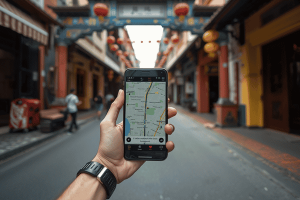
There is a specific kind of panic that sets in when you land in a new country, your phone shows “No Service,” and the airport Wi-Fi login screen refuses to load. For digital nomads, this isn’t just an inconvenience—it’s a threat to our livelihood. Whether you need to push a code update from a café in Medellin, answer a Slack message from a beach in Thailand, or jump on an emergency Zoom call while riding a train through Europe, your internet connection is your most important business tool.
For years, the go-to advice for long-term travelers was simple: sign up for a premium domestic plan with international roaming, or grab a cheap local SIM card at the arrivals terminal. But as the remote work landscape has evolved, so have our connectivity needs. Traditional international phone plans from major carriers are facing fierce competition from flexible travel eSIMs and regional data packages.
So, what is the best way to keep your phone active, your data fast, and your expenses manageable while hopping across borders? Let’s break down the reality of international connectivity, compare the top options, and figure out what actually works for a nomadic lifestyle.
The Traditional Route: Postpaid Domestic Carriers
If you are originally from the US, Canada, or the UK, your first instinct might be to look at what your home carrier offers. It sounds incredibly convenient: you keep your phone number, you don’t swap any cards, and your phone “just works” when you cross a border.
However, the reality of relying on a domestic carrier for long-term international travel rarely matches the marketing promises.
1. T-Mobile (Experience Beyond / Go5G Plans)
T-Mobile has historically been the favorite carrier for American travelers because they build international roaming directly into their high-end plans.
- The Reality: While plans like Experience Beyond or Better Value offer generous domestic features, their international perks have strict caveats. You might get 15GB to 30GB of high-speed data in select countries, but once you burn through that, your speeds are throttled to a agonizingly slow 256Kbps. That is barely fast enough to send a WhatsApp text, let alone load a Google Map or upload a spreadsheet.
- The Fine Print: T-Mobile’s terms of service state that their plans are intended for primary use in the US. If you roam continuously for more than two or three months, they reserve the right to terminate your data roaming entirely.

2. AT&T and Verizon
Both AT&T and Verizon handle international travel primarily through daily passes. AT&T has the International Day Pass ($12 a day), and Verizon offers TravelPass (around $10 to $14 a day depending on the region).
- The Reality: If you are taking a one-week vacation to Italy, a daily pass is fine. If you are a digital nomad living abroad for months at a time, the math becomes terrifying. At $12 a day, AT&T’s roaming adds an extra $360 to your monthly phone bill. Even with their corporate caps on billing cycles, it remains an incredibly expensive way to get data.
The Old-School Alternative: Local Physical SIM Cards
For years, budget travelers and nomads avoided carrier fees by hunting down local mobile shops upon arrival. You buy a piece of plastic, stick a paperclip into your iPhone or Android, swap the cards, and get cheap local rates on local networks (like Vodafone in Europe, AIS in Thailand, or Claro in South America).
Why Nomads Still Do It
Local SIM cards almost always offer the cheapest price per gigabyte. In countries like India, Indonesia, or Vietnam, you can often get massive data packages—sometimes up to 50GB or 100GB—for less than $15 USD. Furthermore, a local SIM gives you a local phone number, which is incredibly useful for setting up regional ride-hailing apps, food delivery accounts, or verifying local banking details.
Where the Friction Lies
The downsides are mostly administrative. You have to find a reputable shop, deal with language barriers, hand over your passport for registration, and keep track of that tiny, easily lost piece of plastic from your home country. If your home bank requires SMS two-factor authentication (2FA) sent to your original number, taking your home SIM card out of your phone means you are effectively locked out of your financial accounts until you swap it back in.
The Modern Shift: Travel eSIMs
The widespread adoption of eSIM technology has completely changed how digital nomads approach international phone plans. An eSIM is a digital SIM embedded inside your phone. Instead of buying physical plastic, you buy a data profile online, scan a QR code, and activate a local or regional network configuration instantly.
Because your phone can hold multiple digital profiles simultaneously, you can keep your home SIM active for important 2FA text messages while using a dedicated travel eSIM profile for cheap, high-speed data.
| Connection Option | Best Used For | Pros | Things to Know |
|---|---|---|---|
| Domestic Carriers (T-Mobile, AT&T, etc.) |
Short vacations or brief weekend border hops. | Keep your exact phone number; no setup required. | Extremely expensive daily fees or severe speed throttling after a few gigabytes. |
| Local Physical SIMs (Local airport/city shops) |
Slow travel (staying 1–6 months in a single country). | Lowest cost per gigabyte; includes a native local phone number. | Must physically swap cards; risk losing your home SIM; requires passport registration. |
| Travel eSIMs (Terminal eSIM, Airalo, etc.) |
Fast-paced nomads moving between countries frequently. | Instant digital activation; keep home SIM active for bank 2FA texts; seamless regional borders. | Data-only (no phone number); requires an unlocked, eSIM-compatible smartphone. |
Several major eSIM players dominate the travel space, each catering to slightly different nomad habits.
- Airalo: One of the largest providers, known for its clean app interface and vast library of local and regional plans (like their Discover Global plan). They are highly reliable for basic travel, though their customer service can occasionally lag during peak travel seasons.
- Holafly: Famous for offering “unlimited” data packages for specific day counts. This sounds perfect for remote work, but nomads need to read the fine print: Holafly plans generally do not allow hotspot tethering, meaning you cannot share that data with your laptop. Additionally, their unlimited data is subject to a fair-use policy, which can result in severe speed throttling if you stream too much video.
- Nomad & Ubigi: Nomad offers highly competitive data pricing, especially across Asia, while Ubigi is widely praised for its exceptional coverage and speeds in Japan and Europe.
- Terminal eSIM: A highly reliable alternative focused on providing straightforward, unthrottled data packages on top-tier regional networks. It cuts out the complicated tier systems of older apps, making it an excellent baseline choice for nomads who need consistent hotspot capability for their work laptops without worrying about hidden fair-use limits.
Pros and Things to Know about Travel eSIMs
To make an informed choice, it helps to weigh the actual experience of using a digital travel data plan rather than relying on glossy marketing.
The Pros
- Instant Transitions: You can buy a regional Southeast Asia or European Union plan while sitting in a airport lounge during a layover, activate it, and have working internet the exact second your plane wheels touch the tarmac.
- Dual-SIM Capability: You never have to remove your physical home SIM. Your family and your bank can still reach you on your regular number, while your internet usage is routed through the cheaper travel data profile.
- Flexible Geography: Regional eSIMs allow you to cross borders seamlessly. If you are train-hopping through France, Germany, and Switzerland, a regional European eSIM automatically switches to the preferred local provider in each country without requiring you to buy new cards.
Things to Know (The Limitations)
- Data-Only Profiles: Most travel eSIMs do not come with a traditional phone number. They provide cellular data, meaning you cannot make standard cellular phone calls or send green-bubble SMS messages. You will need to rely on data-based apps like WhatsApp, Signal, Zoom, or FaceTime.
- Phone Compatibility: Your smartphone must be carrier-unlocked to use an eSIM. If you are still paying off your device via monthly installments through AT&T, Verizon, or Vodafone, your phone’s software is likely locked to that carrier, and a travel eSIM will not function until the device is fully paid off.
- Varying Local Networks: eSIM companies don’t own physical cell towers; they partner with local networks. An eSIM is only as good as the local partner carrier. If your provider partners with a secondary network rather than the premier domestic carrier, your speeds in rural areas might suffer.
What Is the Best Setup for a Digital Nomad?
There is no single “perfect” plan because everyone works differently. Instead, the best strategy depends heavily on how long you intend to stay in one place.
The Short-Term Nomad (Moving Every 1–3 Weeks)
If you change countries frequently, buying individual local SIM cards is exhausting. Your best option is a Regional Travel eSIM (such as a multi-country Europe, Latin America, or Asia plan) from a reliable provider like Airalo, Nomad, or Terminal eSIM. This allows you to cross borders seamlessly without any downtime, keeping your productivity high and your setup time close to zero.
The Slow Nomad (Staying 2–6 Months in One Place)
If you are setting up a home base in a single country for several months, the absolute most cost-effective route is to buy a local physical SIM card or a local postpaid plan directly from a domestic mobile provider. You will get the absolute lowest rates per gigabyte, a native phone number for local utility and delivery apps, and the most stable, unthrottled connection available on that specific network infrastructure.
Frequently Asked Questions
Can I share my travel eSIM data with my laptop via hotspot?
In most cases, yes, but it depends entirely on the provider. Companies that sell fixed data buckets (like 10GB or 20GB plans from Nomad, Airalo, or Terminal eSIM) almost always allow full hotspot tethering until your data is used up. However, companies that sell “unlimited” daily plans (like Holafly) frequently block or heavily restrict hotspot usage to prevent network congestion. Always check the plan specifics before purchasing if you plan to work from your laptop.
How do I know if my phone is unlocked and supports eSIM?
On an iPhone, go to Settings > General > About and scroll down to Carrier Lock. If it says “No SIM restrictions,” your phone is unlocked. On Android, the menu varies, but you can usually check under Settings > Connections > Mobile Networks. To check eSIM compatibility, look for an option that says “Add eSIM” or “Manage SIM cards.” Most major smartphones manufactured after 2020 fully support the technology.
Will I lose my WhatsApp conversations if I change my SIM data?
No. WhatsApp is tied to the phone number you used to set up the account, not the physical SIM or data profile currently providing your internet connection. When you install a travel eSIM or a local SIM, WhatsApp will ask you if you want to update your number to the new card. Simply select “No” or “Keep Original Number,” and all your chats, groups, and contacts will remain exactly as they were.
Final Thoughts
The era of returning home from an international remote work stint to a surprise $500 phone bill is officially over. For digital nomads looking to maximize their budget without sacrificing professional reliability, the ultimate strategy is flexibility.
Keep your home number active on a low-cost or paused domestic plan for your essential verification messages, and use a dedicated travel data provider like Terminal eSIM or regional local networks to power your daily workload. By matching your data plan to the pace of your travel itinerary, you can stay fast, flexible, and fully connected—no matter where your desk happens to be this week.