However, the cost of staying online abroad can quickly add up, with unexpected roaming fees turning a dream vacation into a financial headache. Many travelers return home to shocking phone bills simply because they underestimated the cost of data. The good news is that with a little planning, you can find affordable and dependable internet for travel without breaking the bank.
This guide is designed to help you navigate the world of international connectivity. We will explore the evolution of travel internet, from expensive roaming to modern solutions like eSIMs. You will discover ten practical tips for managing data usage and cutting costs, compare the most popular connectivity options, and get answers to common questions. By the end, you’ll have the knowledge to choose the best internet solution for your needs, ensuring you stay connected affordably wherever your adventures take you.
The Evolution of Staying Connected Abroad
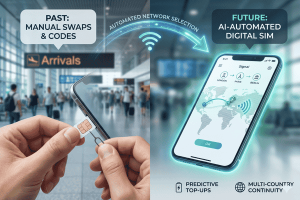
Not long ago, the options for internet for travel were limited and often expensive. The default for most travelers was to use their home mobile provider’s international roaming plan. While convenient, this method was notorious for its high costs. A few minutes of map usage or a quick social media check could result in hefty charges, a phenomenon known as “bill shock.” Travelers often had to meticulously track their data or turn off their mobile data entirely, leaving them disconnected at critical moments.
As the demand for constant connectivity grew, other solutions emerged. One popular alternative was purchasing a local physical SIM card upon arrival. This allowed travelers to access local data rates, which were significantly cheaper than roaming. However, this approach came with its own set of challenges. It required finding a store, dealing with potential language barriers, and physically swapping out the tiny SIM card, risking the loss of your primary one. Moreover, your phone had to be “unlocked” by your home carrier, an extra step many people overlooked.
Another option was relying on public Wi-Fi at cafes, hotels, and airports. While free, these networks are often slow, unreliable, and pose significant security risks. Unsecured public Wi-Fi can expose your personal information to hackers, making it unsafe for sensitive activities like online banking or logging into private accounts. The inconvenience of constantly hunting for a stable connection also eats into valuable travel time. This history of complicated and costly options highlights the need for a more modern, streamlined solution for today’s traveler.

10 Practical Tips for Affordable Internet for Travel
Finding affordable internet for travel is easier than you think. By adopting a few smart habits and choosing the right tools, you can stay connected without worrying about excessive costs. Here are ten actionable tips to help you manage your data and save money on your next trip.
- Switch to an eSIM: The most significant game-changer in travel connectivity is the eSIM (embedded SIM). An eSIM is a digital SIM that allows you to activate a cellular plan without a physical SIM card. With providers like Terminal eSIM, you can purchase and install a data plan for your destination before you even leave home. This gives you instant internet access upon arrival at local rates, avoiding roaming fees entirely.
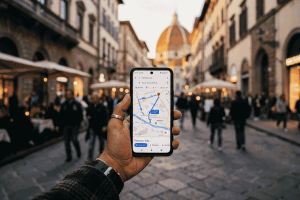
- Download Maps and Content Offline: Before you travel, use your home Wi-Fi to download Google Maps for your destination, as well as any playlists, podcasts, or movies you want. This saves a massive amount of data you would otherwise use for streaming and navigation.
- Monitor Your Data Usage: Keep a close eye on which apps are consuming the most data. Both iPhone and Android devices have built-in settings that show data usage per app. Identify data-hungry apps and restrict their background data usage.
- Disable Automatic App Updates: App updates can consume a large amount of data without you even noticing. Go to your phone’s settings and set app updates to “Wi-Fi only.” This ensures updates only happen when you are connected to a trusted Wi-Fi network.
- Use Wi-Fi for Heavy Tasks: Save data-intensive activities like video calls, streaming high-definition videos, and uploading large files for when you have a secure Wi-Fi connection at your hotel or accommodation.
- Compress Data with a Browser: Some mobile browsers, like Google Chrome, have a “Lite” or “Data Saver” mode. This feature compresses web pages before they load on your phone, reducing the amount of data needed to browse the internet.
- Adjust Social Media Settings: Social media apps are notorious for auto-playing videos, which quickly eats up data. Go into the settings of apps like Instagram, Facebook, and X (formerly Twitter) and disable video auto-play or set it to “Wi-Fi only.”
- Be Wary of Free Public Wi-Fi: While tempting, unsecured public Wi-Fi can be a security risk. If you must use it, avoid accessing sensitive information like bank accounts or entering passwords. For better security, use a VPN (Virtual Private Network).
- Choose the Right Data Plan: Don’t just buy the cheapest or largest data plan available. Estimate your needs based on the length of your trip and your typical usage. An eSIM provider often offers flexible plans, from a few gigabytes for a short trip to larger packages for digital nomads.
- Turn Off Mobile Data When Not in Use: It’s a simple but effective habit. When you’re not actively using the internet, turn off your mobile data to prevent background apps from consuming it. This gives you complete control over your usage.
Comparing Your Connectivity Options
Choosing the right way to get internet for travel depends on your destination, trip duration, and personal needs. Each option has its pros and cons. Understanding these differences will help you make an informed decision. Here’s a comparison of the most common methods for staying connected abroad.
| Feature | eSIM (e.g., Terminal eSIM) | Local Physical SIM | International Roaming | Portable Wi-Fi Hotspot |
| Convenience | High: Purchase and install before travel. Instant connection on arrival. | Medium: Must find a store, purchase, and install upon arrival. | Very High: Works automatically with your home plan. | Medium: Need to carry and charge an extra device. |
| Cost | Low: Competitive local rates, transparent pricing. | Low to Medium: Generally affordable, but can have hidden activation fees. | Very High: Extremely expensive per MB/GB, risk of bill shock. | Medium to High: Requires upfront device purchase plus data plan costs. |
| Flexibility | High: Easily switch between plans and countries. Keep your primary number. | Low: Tied to one carrier in one country. Need a new SIM for each new country. | Low: Limited to your home carrier’s partner networks. | Medium: Can be used with multiple devices, but tied to one data plan. |
| Security | High: Secure connection directly through a cellular network. | High: Secure connection through a local cellular network. | High: Secure connection, but cost is a major drawback. | Low to Medium: Can be secure, but adds another potential point of failure. |
| Best For | Frequent travelers, multi-country trips, digital nomads, and anyone seeking convenience. | Single-country, long-stay travelers who don’t mind the setup process. | Short business trips where convenience outweighs cost. | Groups or families traveling with multiple devices. |
After reviewing the options, eSIMs clearly stand out as the superior choice for most modern travelers. They combine the low cost of a local SIM with even greater convenience than traditional roaming. The ability to set everything up from the comfort of your home and land with a ready-to-use data plan is a significant advantage. For travelers visiting multiple countries, the hassle of buying a new physical SIM at every border is eliminated. With a global or regional eSIM from a provider like Terminal eSIM, you can travel seamlessly across different regions on a single plan.
Answering Your Top Travel Internet Questions
Navigating the options for internet for travel can bring up a lot of questions. From concerns about device compatibility to worries about hidden fees, it’s important to have clear answers before you go. Here, we address some of the most common questions and concerns travelers have about staying connected abroad.
Frequently Asked Questions (FAQs)
- Is my phone compatible with an eSIM?
Most smartphones manufactured since 2018 are eSIM-compatible. This includes iPhone models from the XR/XS onwards, Google Pixel 3 and later, and many recent Samsung Galaxy devices. The easiest way to be sure is to check your phone’s settings. On an iPhone, go to Settings > Cellular. If you see an option to “Add eSIM” or “Add Cellular Plan,” your phone is compatible. On Android, the path is usually Settings > Network & Internet > SIMs, where you’ll find a similar option. - How much data do I actually need for my trip?
Data needs vary greatly depending on your usage habits. For a one-week trip with moderate use (maps, social media, light browsing, and occasional video calls), a 3-5 GB plan is usually sufficient. If you are a heavy user or a digital nomad who needs to work, a larger plan of 10-20 GB or more might be better. A great strategy is to start with a smaller plan from an eSIM provider, as you can easily top up your data online if you start running low. - Can I still use my regular phone number with an eSIM?
Yes, absolutely! This is one of the biggest advantages of using an eSIM for data. Your primary physical SIM card remains active in your phone, so you can still receive calls and SMS texts on your regular number. You can configure your phone to use the eSIM exclusively for mobile data while keeping your primary line active for voice and text. This dual-SIM functionality gives you the best of both worlds: affordable data and uninterrupted access to your main phone number. - What happens if I use up all the data on my eSIM plan?
Running out of data mid-trip is not a problem with a flexible eSIM provider. Unlike some physical SIM cards that require you to buy a whole new card, most eSIM services allow you to easily top up your existing plan. With Terminal eSIM, for example, you can simply log into your account or use the app to purchase more data. The new data package is activated on your eSIM instantly, so you can get back online in minutes without any interruption.
Your Summary for Smarter Travel Connectivity
Staying connected while traveling doesn’t have to be complicated or expensive. By understanding your options and adopting a few smart habits, you can enjoy seamless and affordable internet access anywhere in the world. We’ve seen how connectivity has evolved from costly roaming and inconvenient physical SIMs to the streamlined, modern solution of eSIMs. An eSIM offers the perfect blend of affordability, convenience, and security, making it the top choice for today’s traveler.
Remember the ten key tips for saving data: use an eSIM, download content offline, monitor your usage, disable auto-updates, reserve heavy tasks for Wi-Fi, compress browser data, adjust social media settings, be cautious with public Wi-Fi, choose the right plan, and turn off data when not in use. By comparing different methods, it becomes clear that for most people, the benefits of eSIMs far outweigh other options. They eliminate the fear of bill shock and the hassle of physical setup, allowing you to focus on what truly matters: enjoying your journey.
Get Connected Instantly with Terminal eSIM
Are you ready to travel without worrying about finding Wi-Fi or paying outrageous roaming fees? The future of travel connectivity is here, and it’s simpler and more affordable than ever. Terminal eSIM provides reliable, high-speed data plans for over 190 countries, ensuring you’re connected the moment you land. Whether you’re a digital nomad hopping between continents, a family on vacation, or a frequent business traveler, there’s a perfect plan waiting for you.
Forget swapping tiny plastic SIM cards or hunting for a local carrier store. With Terminal eSIM, you can buy, install, and activate your data plan in minutes, all from your phone. Enjoy the freedom to navigate, share, and work from anywhere with complete price transparency and no hidden costs. It’s time to make connectivity the easiest part of your travel planning.
Explore our flexible data plans today and experience the future of internet for travel. Visit https://terminalesim.com to get started.