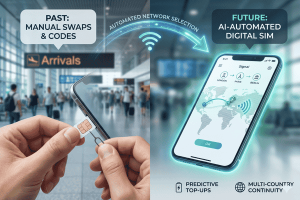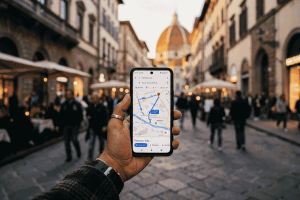
Forget scrambling for local SIM cards, dealing with language barriers in obscure phone shops, or wrestling with slow, unsecured public Wi-Fi. In today’s hyper-connected world, especially for the remote worker, an efficient and dependable internet solution isn’t a luxury—it’s a lifeline. And for China, that lifeline is increasingly found in the form of an eSIM.
This comprehensive guide will unravel why the best eSIM for China isn’t just a convenient gadget but an indispensable tool for digital nomads. We’ll explore how eSIM technology bypasses traditional hurdles, keeps you connected to your clients, family, and social media, and ultimately simplifies your life while exploring one of the world’s most fascinating countries. From understanding the basics to choosing the right plan, get ready to transform your China travel experience from digitally constrained to flawlessly connected.
Understanding the Digital Landscape: Why China is Different
China’s internet ecosystem is distinct from much of the rest of the world, primarily due to its sophisticated national internet censorship system, colloquially known as the “Great Firewall.” This system filters and blocks access to numerous foreign websites, apps, and services that are standard elsewhere. For a digital nomad, this presents a significant challenge. Imagine trying to conduct business, collaborate with colleagues, or even simply access your banking app, only to find it inaccessible.
Historically, travelers to China relied on several methods to stay connected, each with its own set of drawbacks. Traditional physical SIM cards from Chinese carriers often require registration with local ID, and even then, they operate within the confines of the Great Firewall. This means no Google, no Facebook, no Instagram, no WhatsApp, and often no access to many cloud services crucial for remote work. Virtual Private Networks (VPNs) became the go-to solution for bypassing these restrictions, but even VPNs in China are a cat-and-mouse game. Free VPNs are often unreliable, slow, or insecure, while paid ones require constant updates and can still be detected and blocked, leading to frustrating downtime.
Public Wi-Fi, while seemingly convenient, is often slow, requires local phone number verification, and is inherently less secure, posing risks to sensitive work data. Portable Wi-Fi hotspots, though an option, mean carrying an extra device, managing another battery, and often come with daily limits or high rental fees. These solutions, while once necessary, are increasingly outdated and inefficient for the demands of modern digital nomadism. The need for a more seamless, secure, and reliable connectivity solution has never been more pressing. This is where the advent of eSIM technology offers a game-changing alternative, providing a direct, often less-restricted path to global connectivity from the moment you land.

Navigating China with the Best eSIM: A Practical Guide for Digital Nomads
For digital nomads, efficiency and reliability are paramount. The ability to land in a new country and immediately have secure, unrestricted internet access is invaluable. This is precisely what an eSIM, particularly the best eSIM for China, delivers. It eliminates many of the traditional headaches associated with international connectivity, allowing you to focus on your work and travel experiences rather than connectivity woes.
What exactly is an eSIM?
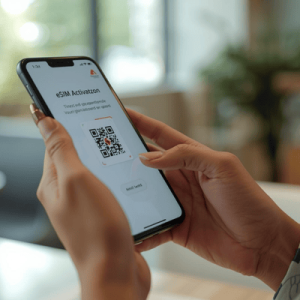
An eSIM, or embedded SIM, is a small chip built directly into your smartphone or other compatible device. Unlike a physical SIM card, you don’t need to insert or swap anything. Instead, you activate a data plan digitally by scanning a QR code or entering details provided by your eSIM provider. This means you can store multiple eSIM profiles on a single device, switching between them as needed.
Why is an eSIM particularly advantageous for China?
- Instant Activation: No need to find local stores, queue up, or deal with language barriers. Purchase your eSIM online before your trip, activate it instantly upon arrival, and you’re good to go.
- Bypassing the Great Firewall: Many international eSIMs, especially those designed for global travel, route your data traffic outside of China. This often means you can access services like Google, WhatsApp, Facebook, Instagram, and your essential work tools without needing a separate VPN. This is a monumental advantage for digital nomads.
- Cost-Effectiveness: eSIM plans are often more economical than international roaming rates from your home provider and can offer better value than purchasing multiple local SIMs or renting hotspots for extended stays.
- Flexibility: Easily switch between different data plans or providers without swapping physical cards. If one plan isn’t working for your needs, you can quickly purchase and activate another.
- Security: Using your own dedicated data connection is generally more secure than relying on public Wi-Fi networks, which are often targets for cybercriminals.
Choosing and Activating Your eSIM for China:
Here’s a step-by-step guide to ensure you pick the best eSIM for China and get connected smoothly:
- Check Device Compatibility: Ensure your smartphone (or tablet/laptop) supports eSIM technology. Most newer models from Apple (iPhone XR and later), Samsung (Galaxy S20 and later), Google Pixel (3 and later), and others are compatible.
- Research Providers: Look for reputable eSIM providers that specifically cater to China or offer global plans with good coverage there. Prioritize those known for reliable connectivity and firewall bypass capabilities. Terminal eSIM, for instance, offers robust plans designed for travelers to China.
- Select a Plan: Consider your data needs. How much data do you anticipate using for work, browsing, and communication? Do you need calls/texts, or just data? Opt for a plan with sufficient data to avoid unexpected top-ups. Look for plans that specify access to international services.
- Purchase Your eSIM: Once you’ve chosen a plan, purchase it online. You’ll typically receive an email with a QR code or activation details.
- Installation:
- Before You Go: It’s often best to install your eSIM before you leave for China. This ensures you have everything set up.
- Scan QR Code: On your compatible device, go to Settings > Cellular/Mobile Data > Add Data Plan (or similar). Scan the QR code provided by your eSIM provider.
- Follow Prompts: Your device will walk you through the installation process. You might need to label your eSIM for easy identification (e.g., “China eSIM”).
- Activation and Usage:
- Upon Arrival: Once you land in China, simply turn on your device, enable your new eSIM profile for cellular data, and ensure data roaming is ON for that profile (this is crucial for international eSIMs to function).
- Test Connectivity: Open a browser and try accessing a blocked site (like https://www.google.com/search?q=Google.com) or an app like WhatsApp. If it works, you’re successfully connected!
- Manage Data: Keep an eye on your data usage through your phone settings or the eSIM provider’s app to avoid running out.
By following these steps, you can ensure a hassle-free connection from the moment you step off the plane, giving you immediate access to all the digital tools and platforms you need to thrive as a digital nomad in China.
Comparing Your eSIM Options for China
Choosing the best eSIM for China involves sifting through various providers and plans, each offering different features, coverage, and pricing structures. For digital nomads, the decision often boils down to a balance of reliable connectivity, adequate data, and overall value. While specific plans and prices are subject to change, here’s a general framework and a hypothetical comparison table to help illustrate what to look for.
Key Factors to Compare:
- Data Allowance: How much data do you get? Is it enough for your work, streaming, and social media habits?
- Validity Period: How long does the plan last (e.g., 7 days, 15 days, 30 days)? This needs to align with your trip duration.
- Network Coverage: Which local networks does the eSIM partner with? Look for major carriers known for good coverage in urban and rural areas.
- Speed: Does the plan offer 4G or 5G speeds? Speed is crucial for video calls and large file transfers.
- Firewall Bypass: Does the eSIM explicitly state it allows access to international services (Google, WhatsApp, etc.) without a separate VPN? This is a deal-breaker for China.
- Pricing: Compare the cost per GB and the total cost of the plan.
- Top-Up Options: Can you easily top up data if you run out?
- Customer Support: Is reliable customer support available in your language?
Hypothetical eSIM Comparison Table for China
| Feature/Provider | Terminal eSIM (Example) | Nomad eSIM (Example) | Airalo (Example) | Holafly (Example) |
| Data Plans | 1GB, 3GB, 5GB, 10GB | 2GB, 5GB, 10GB | 1GB, 3GB, 5GB | Unlimited Data |
| Validity | 7, 15, 30 Days | 7, 15, 30 Days | 7, 15, 30 Days | 5, 10, 15, 20 Days |
| Network | China Unicom, China Mobile | China Unicom | China Mobile | China Unicom |
| Speed | 4G/5G | 4G | 4G | 4G |
| Firewall Bypass | Yes (International Routing) | Yes (International Routing) | Yes (International Routing) | Yes (International Routing) |
| Voice/SMS | Data Only | Data Only | Data Only | Data Only |
| Approx. Price | Starts from $5.00 (1GB/7 Days) | Starts from $7.00 (2GB/7 Days) | Starts from $5.00 (1GB/7 Days) | Starts from $19.00 (5 Days Unlimited) |
| Top-Up | Easy in App | Easy in App | Easy in App | No (New Plan Req.) |
| Key Benefit | Excellent value, robust international connectivity, dedicated support | Good coverage, flexible plans | Broad global reach, user-friendly app | Unlimited data for worry-free usage |
Insights from the Comparison:
When evaluating providers, notice that many offer similar data allowances and validity periods. The distinguishing factor often lies in their network partners, the reliability of their firewall bypass, and their pricing structure. For a digital nomad, an eSIM that explicitly confirms international routing is non-negotiable.
Terminal eSIM, for instance, aims to provide not just data but also the crucial connectivity to global services, understanding that productivity relies on access to tools like Google Workspace, Slack, and social media platforms. While unlimited data plans might seem appealing (like Holafly’s offering), always check if there’s a fair usage policy that could throttle speeds after a certain threshold. For consistent work, a generous, high-speed tiered data plan with reliable firewall bypass, like those offered by Terminal eSIM, often proves to be the best eSIM for China for many digital nomads. It balances cost-effectiveness with the essential unrestricted access needed for remote work.
Addressing Common Concerns & FAQs About China eSIMs
The shift to eSIM technology, especially for a complex destination like China, can bring up several questions. Digital nomads need clarity and solutions to potential problems before they even arise. This section addresses common concerns and provides answers to frequently asked questions about using an eSIM in China.
Common Concerns & Solutions:
- “Will my international eSIM work reliably for bypassing the Great Firewall?”
This is the most critical question for digital nomads. The good news is that many international eSIM providers, including Terminal eSIM, utilize roaming agreements that route your internet traffic outside of China. This means your data often appears as if it’s coming from another country, effectively bypassing the Great Firewall’s restrictions on many common services. However, it’s essential to verify this capability with your chosen provider before purchasing. While generally reliable, occasional disruptions can occur due to China’s evolving censorship technologies. Having a backup VPN installed and configured before you enter China is always a wise precaution, even if your eSIM claims firewall bypass. - “What if I run out of data in the middle of a project?”
Running out of data is a nightmare for a digital nomad. Most reputable eSIM providers offer easy top-up options directly through their app or website. You can purchase additional data packages as needed. It’s smart to monitor your usage and consider purchasing a plan with a slightly higher data allowance than you think you’ll need, especially for critical work periods. - “Is my data secure when using an eSIM?”
Using a dedicated international eSIM connection is generally more secure than public Wi-Fi networks, which are often unencrypted and vulnerable to snooping. However, for highly sensitive work or transactions, always use a reputable VPN as an additional layer of security, regardless of your connection type.
Frequently Asked Questions (FAQs):
Q1: What devices are compatible with eSIMs for China?
A1: Most newer smartphones from major manufacturers support eSIMs. This includes iPhone XS/XR and newer, Samsung Galaxy S20 series and newer, Google Pixel 3 and newer, and many iPads and smartwatches. Always check your specific device’s specifications before purchasing an eSIM.
Q2: Can I use my home country’s physical SIM card and an eSIM for China simultaneously?
A2: Yes, absolutely! Most modern dual-SIM devices (which support one physical SIM and one eSIM, or two eSIMs) allow you to use both. You can keep your home SIM active for calls/texts (if you have international roaming enabled) and use the eSIM purely for data in China. This is ideal for managing personal and work communications.
Q3: Do eSIMs for China include a local Chinese phone number?
A3: Generally, no. Most international eSIMs are data-only or offer a foreign phone number for calls/texts, not a local Chinese one. If you specifically need a Chinese phone number for local services (e.g., setting up local delivery apps, WeChat Pay requiring local number verification), you might still need to consider a local physical SIM card in addition to your eSIM, or rely on a friend’s local number.
Q4: What if I have connectivity issues or problems installing my eSIM?
A4: Most eSIM providers offer customer support. Before you travel, make sure you know how to contact them (e.g., through their app, email, or website chat). Having a screenshot of your order details and any error messages can speed up the resolution process. It’s also wise to test the installation process in a familiar environment before you embark on your journey to China.
Q5: Are there any specific settings I need to adjust on my phone for the eSIM to work in China?
A5: Once installed, ensure your cellular data is switched to the eSIM profile. Crucially, turn on “Data Roaming” for the eSIM. While this might sound counter-intuitive for an international plan, it’s often necessary for the eSIM to connect to partner networks outside your home country and to utilize its international routing features to bypass the firewall.
By understanding these points and addressing these FAQs, digital nomads can confidently choose and deploy the best eSIM for China, minimizing digital stress and maximizing productivity and enjoyment during their stay.
Summarizing Your Digital Life in China: The eSIM Advantage
For the modern digital nomad, connectivity isn’t just about convenience; it’s the very backbone of their livelihood. Navigating China’s unique digital environment has traditionally posed significant challenges, from the frustrating limitations of the Great Firewall to the logistical hurdles of acquiring local SIMs or managing unreliable VPNs. However, the advent of eSIM technology has dramatically simplified this landscape, offering a streamlined, efficient, and often unrestricted path to global connectivity.
We’ve explored how an eSIM bypasses many of the traditional issues, providing instant internet access upon arrival, often without the need for a separate VPN to reach essential international services. We discussed the practical steps of choosing, installing, and activating your eSIM, emphasizing the importance of device compatibility, plan selection, and understanding data routing. Through a hypothetical comparison, we highlighted key factors like data allowance, validity, network coverage, and critically, the ability to circumvent the Great Firewall, pointing towards solutions like Terminal eSIM as prime choices for seamless work and communication. Finally, we addressed common concerns and FAQs, empowering digital nomads with the knowledge to troubleshoot and optimize their connectivity experience.
The bottom line is clear: for any digital nomad venturing into China, a reliable eSIM isn’t merely an option—it’s an indispensable tool. It transforms potential digital chaos into uninterrupted workflow, allowing you to stay connected with clients, collaborate with teams, access your cloud services, and share your incredible journey with friends and family, all while navigating the wonders of China.
Unlock Seamless Connectivity: Your China Adventure Awaits with Terminal eSIM
The demands of digital nomadism require tools that are not only powerful but also intuitive and reliable. In a country like China, where connectivity can make or break your productivity and peace of mind, choosing the right solution is paramount. You need a partner who understands the unique challenges and provides a robust answer. That partner is Terminal eSIM.
Terminal eSIM is meticulously designed to meet the rigorous demands of global travelers and digital nomads. Our plans for China are engineered to deliver not just data, but reliable, high-speed access to the international internet, allowing you to sidestep the Great Firewall and maintain uninterrupted access to all your essential apps and services – Google, WhatsApp, social media, your productivity suites, and more. Forget the anxiety of being disconnected; with Terminal eSIM, your office travels with you, fully operational.
Why choose Terminal eSIM for your China journey?
- Guaranteed Global Access: Our plans are structured to ensure you can access the worldwide web without a separate VPN in most cases, making your digital life in China as seamless as at home.
- Flexible Data Plans: Whether you’re on a short trip or an extended stay, we offer a range of data packages to fit every need and budget, ensuring you only pay for what you use.
- Effortless Activation: Purchase online, scan a QR code, and you’re connected. No physical SIM cards, no hidden fees, no hassle.
- Dedicated Support: Our expert customer service team is ready to assist you, ensuring a smooth experience from activation to usage.
Don’t let connectivity concerns be the barrier to your next great adventure. Empower your digital nomad lifestyle with the confidence of knowing you’ll always be connected, always productive, and always in touch. Experience China without digital limitations. Your seamless journey starts here.
Explore the best eSIM for China plans and unlock your unrestricted digital freedom today! Visit https://terminalesim.com to find your perfect plan.