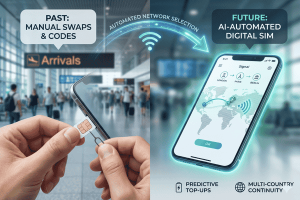
Traditional roaming can be expensive, and hunting for a local physical SIM card after a long flight is often a hassle. This is where an eSIM (embedded SIM) changes the game.
An eSIM provides a seamless, digital solution to get online the moment you land. It eliminates the need to swap tiny plastic cards and helps you avoid unexpected roaming charges. This guide will walk you through everything you need to know about using an eSIM in South Africa. We will compare plans, look at network coverage, and break down the costs to help you find the perfect connectivity solution for your adventure. Get ready to explore the Rainbow Nation with reliable, affordable mobile data.
What is an eSIM and Why Use One in South Africa?
Before diving into the specifics for South Africa, let’s cover the basics. An eSIM is a digital SIM card that is embedded directly into your device’s hardware. Unlike a physical SIM card that you must insert and remove, an eSIM can be activated remotely by scanning a QR code or through a provider’s app. Most modern smartphones, tablets, and smartwatches are now eSIM-compatible.
The primary advantage of an eSIM is convenience. Instead of searching for a local telecom shop at the airport, you can purchase and activate your data plan from anywhere, even before you leave home. This means you have internet access as soon as your plane touches down in Johannesburg or Cape Town. It’s perfect for booking a ride, checking your hotel reservation, or letting family know you’ve arrived safely.
For travelers to South Africa, using an eSIM offers several key benefits:
- Cost Savings: eSIM plans are often more affordable than international roaming packages offered by your home carrier. You can choose a data plan that fits your specific needs and trip duration, avoiding surprise bills.
- Flexibility: Many eSIM providers offer plans for multiple countries, which is ideal if your African adventure includes neighboring nations like Botswana or Namibia. You can manage multiple plans from a single device.
- Security: An eSIM cannot be physically lost or stolen like a traditional SIM card. This adds a layer of security, as your mobile plan is tied directly to your device.
- Dual SIM Functionality: Using an eSIM allows you to keep your primary phone number active for calls and texts while using the eSIM for affordable local data. This dual SIM capability gives you the best of both worlds without needing two separate phones.
Whether you’re a tourist on a two-week safari, a digital nomad working from a cafe in Durban, or a business traveler attending meetings, an eSIM provides reliable and hassle-free connectivity across South Africa.


How to Choose the Best eSIM for South Africa
Finding the right eSIM for your trip involves more than just picking the cheapest option. To ensure you have a smooth and connected experience, consider these key factors. A little research upfront can help you select the best eSIM for South Africa based on your travel style and data needs.
First, identify how much data you’ll realistically need. Are you a light user who just needs maps and messaging? Or are you a heavy user who will be streaming videos, uploading high-resolution photos, and video calling family back home? Data plans can range from 1GB for a few days to 20GB or more for a month-long stay. Overestimating is always safer than running out of data mid-trip.
Next, examine the network coverage offered by the eSIM provider. South Africa is a large country with varied terrain. While major cities like Cape Town, Johannesburg, and Pretoria have excellent 4G/LTE coverage, service can be less reliable in remote rural areas or national parks. Reputable eSIM providers partner with major local networks like Vodacom, MTN, or Telkom to offer the best possible coverage. Check the provider’s coverage map before you buy.
Here are a few practical steps to guide your choice:
- Check Device Compatibility: Before anything else, confirm that your smartphone is unlocked and supports eSIM technology. You can usually find this information in your phone’s settings under “Cellular” or “Mobile Data.”
- Compare Plan Validity: eSIM plans come with a validity period (e.g., 7 days, 15 days, 30 days). Choose a plan that aligns with the length of your trip to avoid paying for unused days or having your data expire too soon.
- Look for Top-Up Options: What happens if you run out of data? Some eSIM providers, like Terminal eSIM, make it easy to top up your plan through an app or website. This flexibility is a huge plus.
- Read Customer Reviews: See what other travelers have said about the provider’s service in South Africa. Reviews can offer valuable insights into activation ease, network speeds, and customer support quality.
- Consider Voice and SMS Needs: Most travel eSIMs are data-only. If you need to make traditional phone calls or send texts, confirm if the plan includes these features or if you will need to rely on apps like WhatsApp or FaceTime.
By evaluating these points, you can confidently choose an eSIM that keeps you connected without hassle.
Comparing Top eSIM Plans for South Africa
To make your decision easier, it’s helpful to see how different eSIM providers stack up. The right plan will depend on your budget, data requirements, and the length of your stay. Below is a comparison of typical eSIM offerings for South Africa. This table highlights common plan structures to give you a clear overview of what to expect. Terminal eSIM focuses on providing a balance of generous data allowances, fair pricing, and excellent coverage by partnering with leading local networks.
| Feature | Provider A | Provider B (e.g., Terminal eSIM) | Provider C |
| 1GB Plan | $5 for 7 days | Not Offered | Not Offered |
| 3GB Plan | $18 for 30 days | $15 for 30 days | $20 for 15 days |
| 5GB Plan | $25 for 30 days | $22 for 30 days | $30 for 30 days |
| 10GB Plan | $45 for 30 days | $40.40 for 30 days | $50 for 30 days |
| Network(s) | Vodacom | Vodacom, MTN | MTN |
| Top-Up? | No | Yes | Yes |
| 5G Access | Limited | Yes, where available | No |
Key Insights from the Comparison:
As you can see, pricing and data allowances can vary significantly between providers. Terminal eSIM often stands out by offering competitive pricing across all data tiers, ensuring you get great value. Furthermore, partnering with multiple top-tier networks like Vodacom and MTN provides a significant advantage, as your device can automatically switch to the strongest signal available. This ensures more reliable coverage, whether you are exploring the urban sprawl of Johannesburg or the scenic Garden Route.
The ability to top up your data is another crucial feature. Imagine running out of data while trying to navigate to your safari lodge. With a provider like Terminal eSIM, you can quickly add more data through the app without needing to purchase an entirely new plan. This flexibility is invaluable for travelers whose plans might change. Finally, access to 5G networks, where available, ensures you get the fastest speeds possible for streaming and downloads.
Common Questions and Traveler Concerns
Switching to a new technology like eSIM can bring up some questions. Addressing these concerns upfront can ensure you have a stress-free experience. Here are some frequently asked questions about using an eSIM in South Africa, along with clear answers to help you prepare for your trip.
FAQs About South Africa eSIMs
- Can I install my eSIM before I travel to South Africa?
Yes, absolutely! This is one of the biggest benefits. You can purchase and install your eSIM from home before you even pack your bags. Most providers will send you a QR code via email. Simply scan it and follow the on-screen instructions. Just be sure to wait until you arrive in South Africa to activate the data plan to ensure the validity period starts upon arrival, not before. - What happens if I run out of data on my eSIM plan?
This depends on your provider. With some, you would need to purchase a new plan entirely. However, traveler-friendly providers like Terminal eSIM allow you to easily “top up” your existing plan with more data. This is typically done through their website or a mobile app and is much more convenient than starting over with a new installation. Always check the top-up policy before you buy. - Will my phone be unlocked to use an eSIM?
Your phone must be “carrier-unlocked” to use an eSIM from a different provider. If you bought your phone directly from the manufacturer (like Apple or Samsung), it is likely unlocked. If you purchased it through a mobile carrier on a contract, it might be locked. You can contact your carrier to ask them to unlock it. It’s crucial to confirm this before your trip. - Can I make phone calls and send SMS messages with my eSIM?
Most travel eSIMs are “data-only.” This means they provide internet access, but not a local phone number for traditional calls and texts. However, you can easily use data-based apps like WhatsApp, Telegram, FaceTime Audio, or Skype to make calls and send messages over the internet. If you need a local number, you will have to look for a more specialized (and often more expensive) plan. - Which networks does an eSIM use in South Africa?
eSIM providers do not have their own physical networks. Instead, they partner with local mobile operators. In South Africa, the major networks are Vodacom, MTN, Telkom, and Cell C. The best eSIM providers will have roaming agreements with one or more of the top networks (Vodacom and MTN) to ensure broad and reliable coverage across the country.
Summary: Your Key to Seamless Connectivity
Traveling to South Africa should be about creating lasting memories, not worrying about mobile data. An eSIM offers a modern, efficient, and cost-effective solution to stay connected from the moment you arrive. By eliminating the need for physical SIM cards and protecting you from high roaming fees, an eSIM simplifies your travel experience.
We’ve explored how an eSIM works and highlighted its key advantages for travelers, including convenience, cost savings, and security. We also provided a practical guide on how to choose the best eSIM for South Africa by considering factors like data needs, network coverage, and plan validity. Comparing different providers reveals that looking beyond just the price to features like top-up capabilities and multi-network partnerships is essential for a reliable connection.
Ultimately, an eSIM empowers you to take control of your mobile data. You can purchase and set up your plan before you leave home, giving you one less thing to worry about upon arrival. With the right eSIM, you can navigate with Google Maps, share your safari photos on Instagram, and stay in touch with loved ones effortlessly.
Explore South Africa with Terminal eSIM
Your South African adventure deserves a connection you can count on. Whether you’re capturing a sunset over the Drakensberg mountains, exploring the vibrant Bo-Kaap neighborhood in Cape Town, or closing a business deal in Johannesburg, a reliable internet connection is non-negotiable. Terminal eSIM is designed for modern travelers like you who demand convenience, affordability, and performance.
Forget about bill shock from expensive roaming or wasting precious vacation time searching for a local SIM. With Terminal eSIM, you can get online in minutes. Our flexible, data-only plans for South Africa are built to fit any trip, from a short city break to an extended cross-country journey. We partner with the top local networks to provide you with the best possible coverage, so you stay connected where it matters most.
Ready to travel smarter? Choose a plan that’s right for you, install your eSIM in just a few taps, and enjoy seamless connectivity throughout your trip.