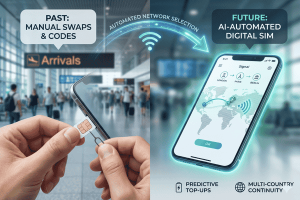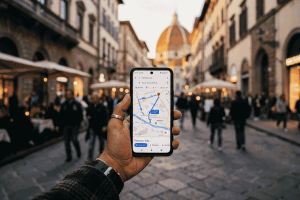
For years, this meant searching for a local SIM card, navigating language barriers, and dealing with complex registration processes. The stress of being disconnected, even for a few hours, is a familiar pain point.
Fortunately, there’s a better way. The rise of the digital SIM, or eSIM, has transformed global travel, offering instant connectivity without the physical hassle. An eSIM is a virtual SIM embedded directly into your phone, allowing you to activate a data plan from anywhere with just a few taps. This guide is your key to understanding and mastering this technology. We’ll explore how a digital SIM works, how to choose the right one, and why it’s the ultimate tool for a seamless, connected life on the move. Say goodbye to airport SIM card kiosks and hello to effortless global living.
What Is a Digital SIM and Why Is It a Nomad’s Best Friend?
At its core, a digital SIM—or eSIM, short for embedded Subscriber Identity Module—is the next evolution of the traditional plastic SIM card. Instead of a physical chip that requires insertion and swapping, an eSIM is a small, programmable chip built directly into your device’s hardware during manufacturing. This fundamental difference is what makes it a game-changer for anyone who travels frequently.
Think of it like this: your physical SIM card is like a hard-coded key for a specific mobile network. To switch networks, you need to physically swap the key. An eSIM, on the other hand, is like a universal, reprogrammable key. You can download and install “profiles” from different mobile carriers directly onto your device. This means you can hold multiple cellular plans from various countries simultaneously and switch between them effortlessly through your phone’s settings.
For a digital nomad, the benefits are immediate and profound. Imagine landing in Thailand after a long flight. Instead of searching for a “true” or “AIS” mobile store, you can simply activate a pre-purchased Thai data plan from your phone the moment the plane’s wheels hit the tarmac. You can book a Grab, message your Airbnb host, and let your family know you’ve arrived safely, all before you even get to baggage claim. This technology eliminates the “connectivity gap”—that stressful period of being offline in a new and unfamiliar place. It provides freedom, security, and the peace of mind that comes with knowing you’re always just a few taps away from being connected.
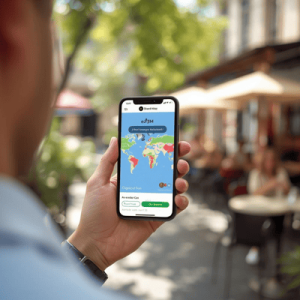
Your Practical Guide to Using a Digital SIM for Travel
Making the switch to a digital SIM is simpler than you might think. It streamlines your travel logistics and keeps you connected without the fuss of traditional SIM cards. Here’s a step-by-step guide to get you started on your eSIM journey, ensuring you have data доступ in your next destination.
Step 1: Check Your Device’s Compatibility
Before you do anything else, confirm that your smartphone, tablet, or smartwatch is eSIM-compatible. Most newer models from major manufacturers support this technology.
- For iPhones: iPhone XS, XR, and all later models.
- For Android: Google Pixel 3 and later, Samsung Galaxy S20 series and later, and many other flagship devices.
A quick search for “[Your Phone Model] eSIM compatibility” will give you a definitive answer. You can also check your phone’s settings, usually under “Cellular” or “Mobile Network,” for an option like “Add eSIM” or “Add Data Plan.”
Step 2: Choose and Purchase Your eSIM Plan
Once you’ve confirmed compatibility, it’s time to select a plan. This is where providers like Terminal eSIM shine. You can browse plans based on your destination.
- Single-Country Plans: Perfect if you’re staying in one country for an extended period.
- Regional Plans: Ideal for backpacking through a continent, like Europe or Southeast Asia, as they cover multiple countries under one plan.
- Global Plans: The ultimate choice for frequent jet-setters, offering coverage across dozens of countries worldwide.
Consider the amount of data you’ll need and the duration of your stay. It’s often more cost-effective to buy a slightly larger data package than to top up frequently. Purchase your plan online before you even leave home.
Step 3: Install and Activate Your eSIM
After purchasing, you’ll receive a QR code or manual activation details via email.
- Connect to Wi-Fi: You’ll need an internet connection to install the eSIM profile.
- Scan the QR Code: Go to your phone’s settings, find the option to add a cellular plan, and use your camera to scan the QR code.
- Follow the Prompts: Your phone will guide you through the installation. You can label your new eSIM (e.g., “Spain Data”) to easily distinguish it from your primary SIM.
- Activate Upon Arrival: It’s best to wait until you land at your destination to activate the plan and turn on data roaming for your eSIM. This ensures your plan’s validity period startscorruption upon use and you don’t incur unexpected charges.
Once activated, you’re online! You can keep your primary SIM active for calls and texts from home while using the eSIM for affordable local data.
Comparing Your Connectivity Options: eSIM vs. Local SIM vs. Roaming
For digital nomads, choosing how to stay connected abroad involves weighing cost, convenience, and reliability. An eSIM is a powerful tool, but how does it stack up against the old-school methods? Let’s break down the options.
The table below compares the three main choices: using a digital SIM from a provider like Terminal eSIM, buying a physical local SIM card upon arrival, and using your home provider’s international roaming service.
| Feature | Digital SIM (e.g., Terminal eSIM) | Local Physical SIM | International Roaming |
| Convenience | Excellent: Purchase and install anytime, anywhere. Activate on arrival. | Fair: Requires finding a store, registration, and physical installation. | Excellent: Works automatically without any setup. |
| Cost | Good to Excellent: Very competitive pricing, especially for short-to-medium stays. | Excellent: Often the cheapest option for long-term stays in one country. | Poor: Typically the most expensive option, with high per-MB or daily rates. |
| Flexibility | Excellent: Store multiple plans and switch between them digitally. | Poor: Locked to one carrier. Switching requires buying a new SIM. | Fair: Works in many countries, but you’re tied to your home provider’s partners. |
| Immediacy | Excellent: Instant connectivity soluções upon landing. No waiting. | Poor: Must find a vendor after arrival, creating a connectivity gap. | Excellent: Connection is instant as soon as you land. |
| Number Management | Excellent: Keep your primary number for calls/texts while using eSIM for data. | Fair: You get a new, local number, which can be inconvenient. | Excellent: You keep your existing phone number for all services. |
In summary, while international roaming offers unbeatable convenience, its high cost makes it unsustainable for nomads. Local SIM cards provide great value for long-term stays but come with the initial hassle and downtime. The digital SIM strikes the perfect balance. It delivers the instant connectivity of roaming at a price point that is often close to local SIM rates, all while letting you keep your primary number active. For nomads hopping between countries, the ability to switch plans digitally makes eSIM the clear winner for modern, flexible travel.
Common Questions and Future Trends for Global Connectivity
As eSIM technology becomes more mainstream, it’s natural for travelers to have questions. At the same time, the landscape of global connectivity is constantly evolving. Let’s address some common concerns and look at what the future holds for the digitally-enabled nomad.
Frequently Asked Questions (FAQs) About Digital SIMs
- Can I still use my regular phone number with an eSIM?
Absolutely. This is one of the biggest advantages of a digital SIM. Most modern phones are Dual SIM, meaning you can have your physical SIM (or primary eSIM) activeAlongside a secondary eSIM for data. This setup allows you to continue receiving calls and texts on your home number while using the affordable data from your travel eSIM. You simply designate the travel eSIM as your source for mobile data in your phone’s settings. - What happens if I use up all my data on my eSIM plan?
Running out of data is simple to solve. With providers like Terminal eSIM, you can easily top up your existing plan or purchase a new one directly through the app or website. The process is instant, and you won’t need a new QR code. You can be back online in minutes, without needing to find a physical store. - Is my data secure when using a travel eSIM?
Yes, your data is just as secure as it would be with a traditional SIM card. An eSIM connects you to reputable local carrier networks (like Vodafone, Orange, or TIM, depending on the country). The connection is a standard cellular one, which is inherently more secure than public Wi-Fi. You are using the same secure infrastructure that local residents use.
The Future of Nomad Connectivity
The move toward eSIM is just the beginning. The next frontier is iSIM (Integrated SIM), which integrates SIM functionality directly into a device’s main processor. This will make devices even smaller, more power-efficient, and more secure.
Furthermore, we’re seeing the rise of “smart” connectivity apps that can automatically switch you to the best-performing or most cost-effective network in your area. As 5G networks expand globally, eSIMs will provide nomads with access to ultra-fast speeds, making remote work from anywhere smoother than ever. The trend is clear: connectivity is becoming more seamless, integrated, and traveler-friendly, empowering a new generation of global citizens.
The Digital SIM: Your Ticket to a Borderless Lifestyle
In review, the journey of a digital nomad is one of freedom, flexibility, and adventure. However, true freedom is impossible without reliable, accessible, and affordable connectivity. We’ve seen how the old methods of staying online—hunting for local SIM cards or paying exorbitant roaming fees—are filled with friction and unnecessary stress. These outdated approaches create a “connectivity gap” that can disrupt your workflow and add anxiety to your travels.
The digital SIM has emerged as the definitive solution to this long-standing problem. It offers the best of all worlds: the convenience of instant connection upon arrival, the affordability of near-local data rates, and the unparalleled flexibility of managing multiple plans digitally. By allowing you to prepare your connectivity before you even leave home, the eSIM transforms a point of stress into a seamless part of your travel preparations.
Whether you’re exploring the ancient streets of Rome, working from a café in Buenos Aires, or island-hopping in the Philippines, a digital SIM ensures you’re always just a tap away from the digital world. It’s not just a piece of technology; it’s an enabler of the modern nomadic lifestyle.
Embrace Seamless Travel with Terminal eSIM
You’re a global citizen, and your connectivity should be as borderless as your ambitions. Stop wasting precious time and energy on outdated solutions. With a digital SIM, you can step off the plane and be instantly connected, ready to navigate, work, and share your journey without missing a beat. It’s the smarter, simpler, and more efficient way to travel.
For digital nomads, frequent flyers, and world explorers, Terminal eSIM offers reliable, high-speed data plans for destinations across the globe. Our platform is designed for travelers, by travelers, with a focus on simplicity and performance. Forget about contracts, hidden fees, and the hassle of physical SIM cards. Choose your destination, pick your plan, and install your eSIM in minutes.
Experience the freedom of staying connected effortlessly, no matter where your work or wanderlust takes you.