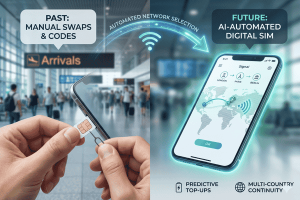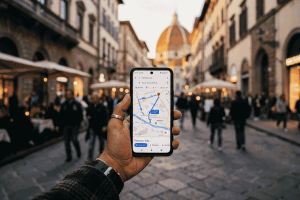
But in a world where traditional SIM cards are slowly becoming a relic of the past, how do you ensure seamless connectivity without breaking the bank or wrestling with tiny plastic cards? Enter the eSIM.
For anyone traveling to France, the concept of an eSIM might seem a bit daunting at first. What exactly is it? How does it work? And most importantly, how can it make your French adventure even better? This comprehensive guide will demystify the eSIM experience specifically for France, providing you with all the insights, tips, and comparisons you need to make an informed decision. Forget about roaming charges, hunting for local SIM cards, or being tethered to unreliable Wi-Fi hotspots. With an eSIM, your connectivity in France will be as effortless as savoring a freshly baked croissant. Let’s dive into everything you need to know about eSIM France before you even pack your bags.
Understanding the eSIM Revolution: Your Digital Gateway to France
The world of mobile connectivity has seen a significant evolution, and the embedded SIM, or eSIM, stands at the forefront of this change. Unlike the physical SIM cards we’ve grown accustomed to, an eSIM is a small chip already built into your smartphone or other compatible devices. Instead of swapping out physical cards, you simply download a digital “profile” from your chosen network provider, effectively giving your device a new identity on the network.
Think of it like this: your phone comes with a tiny, rewritable hard drive dedicated solely to network information. When you purchase an eSIM plan, you’re essentially downloading the operating instructions for that particular network onto this digital drive. This means no more fiddling with ejector tools, no more worrying about losing your home SIM card, and no more searching for local vendors upon arrival.
The technology behind eSIMs has been around for a while, primarily in smartwatches and other connected devices. However, its widespread adoption in smartphones has truly revolutionized international travel. Major phone manufacturers like Apple, Samsung, Google, and Huawei have integrated eSIM capabilities into many of their newer models, making it accessible to a growing number of travelers.
For a destination like France, where you might want to switch between different data plans, perhaps for a short city break versus an extended rural stay, the flexibility of an eSIM is unparalleled. It allows you to have multiple profiles stored on your device and switch between them as needed, making it an incredibly versatile tool for modern globetrotters. Moreover, it often provides access to local network speeds and data allowances without the hefty price tag associated with international roaming. This not only saves you money but also ensures you have reliable access to maps, translation apps, restaurant reviews, and all the digital tools that enhance your travel experience.


Your Practical Guide to Using eSIM France
Getting connected with an eSIM in France is surprisingly straightforward, turning a potentially stressful travel preparation step into a seamless process. Follow these practical steps to ensure you’re ready to go from the moment you land.
1. Check Device Compatibility
First things first: verify if your smartphone or tablet supports eSIM technology. Most newer models from Apple (iPhone XS and later), Samsung (Galaxy S20 and later), Google (Pixel 3 and later), and other manufacturers are eSIM compatible. A quick search for “eSIM compatibility [your phone model]” should give you a definitive answer. Ensure your device is unlocked, as carrier-locked phones might restrict eSIM activation with other providers.
2. Choose Your eSIM Provider and Plan
This is where Terminal eSIM comes in! There are many eSIM providers, but choosing one that offers reliable coverage and competitive plans for France is crucial. Consider factors like:
- Data Allowance: How much data do you anticipate needing? Are you a heavy streamer or just need occasional map access?
- Validity Period: How long will you be in France? Plans typically range from a few days to several weeks.
- Coverage: Ensure the provider offers robust coverage across the regions you plan to visit in France.
- Pricing: Compare costs and ensure there are no hidden fees.
You can explore various options and find the perfect plan for your trip to France at Terminal eSIM. We offer a range of flexible and affordable data plans designed specifically for travelers.
3. Purchase Your eSIM Plan
Once you’ve selected your plan, purchasing it is usually an online process. You’ll typically receive an email with a QR code or manual activation details. Do not activate your eSIM until you are ready to use it. If you activate it before leaving for France, your validity period will start ticking down immediately.
4. Install Your eSIM
There are generally two ways to install your eSIM:
- QR Code Scan (Easiest):
- Ensure you have an internet connection (Wi-Fi is best).
- Go to your phone’s Settings > Mobile Data (or Cellular) > Add Data Plan (or Add eSIM).
- Scan the QR code provided by your eSIM provider.
- Follow the on-screen prompts to label your new data plan (e.g., “France Travel”).
- Manual Installation: If you can’t scan the QR code, you’ll enter the SM-DP+ Address and Activation Code manually. This information is also provided by your eSIM provider.
5. Activate and Configure Your eSIM
Once installed, you’ll typically see the new eSIM profile listed in your mobile data settings. Before arriving in France, you can:
- Label your eSIM: Name it something clear like “France Data” so you can easily identify it.
- Set as default for Mobile Data: Once you land in France, switch your mobile data to your new eSIM. Make sure “Data Roaming” is turned ON for your eSIM profile if required by the provider (some eSIMs are local and don’t technically “roam”).
- Keep your primary SIM active for calls/texts (optional): If you still want to receive calls or texts on your home number, you can designate your physical SIM for calls/texts and your eSIM for data. This is a huge advantage of eSIMs!
Pro Tip: Download any offline maps (Google Maps, HERE WeGo) for France before you go. While your eSIM will provide data, having offline backups is always a smart move, especially if you venture into areas with weaker coverage.
eSIM France: A Comparison Table of Connectivity Options
When planning your trip to France, understanding your connectivity choices is key to making the best decision for your needs and budget. While we naturally advocate for the convenience of an eSIM, it’s helpful to see how it stacks up against traditional options. Here’s a comparison to guide your choice for your eSIM France experience:
| Feature | eSIM for France (e.g., Terminal eSIM) | Local Physical SIM Card (in France) | International Roaming (Home Carrier) | Wi-Fi Hotspots (Public/Portable) |
| Convenience | High. Purchase & activate before travel. No physical swap. | Medium. Must purchase upon arrival (airport, store). Setup required. | High. Automatic connection with existing SIM. | Varies. Public Wi-Fi unreliable; portable requires charging/carrying. |
| Cost | Low-Medium. Specific travel plans, often competitive rates. | Low-Medium. Good local rates, but might require local currency/ID. | High. Very expensive data charges, bill shock risk. | Varies. Free public Wi-Fi (limited); portable hotspot rental fees. |
| Setup Process | Digital installation (QR code/manual). Quick and easy. | Physical insertion, registration, potentially activation delays. | None. Automatically connects to partner networks. | Connect to network, input password. Portable requires separate setup. |
| Flexibility | High. Multiple eSIM profiles, easy switching between plans/regions. | Low. Tied to one physical card; changing plans means new SIM. | Medium. Often limited data bundles or high pay-as-you-go rates. | Low. Dependent on availability; limited range for portable devices. |
| Data Speed | Excellent. Connects to local high-speed networks. | Excellent. Connects to local high-speed networks. | Good. Dependent on roaming agreements and network congestion. | Varies greatly. Public Wi-Fi often slow/unsecure; portable can be good. |
| Security | Good. Encrypted connections, dedicated network. | Good. Encrypted connections, dedicated network. | Good. Encrypted connections, dedicated network. | Low. Public Wi-Fi is often unencrypted and vulnerable to attacks. |
| Keeping Home # | Yes. Can use home physical SIM for calls/texts while eSIM handles data. | No. Replaces home SIM; must swap back to receive calls/texts. | Yes. All services on your home number. | Yes. Uses home number for calls/texts; Wi-Fi for data apps. |
| Coverage | Excellent. Leverages major French networks. | Excellent. Leverages major French networks. | Good. Dependent on roaming agreements. | Limited to hotspot locations. |
Key Insights:
The comparison clearly shows that an eSIM offers a compelling blend of convenience, cost-effectiveness, and flexibility for travelers to France. While a local physical SIM can be cost-effective, the hassle of acquiring one upon arrival, especially if you don’t speak French or are in a hurry, can be significant. International roaming is a trap for the unwary, leading to exorbitant bills. Public Wi-Fi is convenient for quick checks but unreliable and insecure for sustained use.
Terminal eSIM specifically targets these pain points by offering a hassle-free, pre-paid, and reliable data solution. You can arrive in France with your connectivity sorted, allowing you to focus on enjoying the sights, sounds, and tastes of this incredible country rather than worrying about data plans.
Addressing Traveler Concerns: eSIM France FAQs and Solutions
Even with the clearest explanations, travelers often have specific questions and concerns about adopting new technology like eSIMs. Here are some frequently asked questions and their concise answers to help you navigate your eSIM France experience with confidence.
1. Will my phone be locked if I use an eSIM from a different provider?
No, using an eSIM from a different provider will not lock your phone. Your phone’s locked/unlocked status refers to its compatibility with different physical SIM cards from various carriers. An eSIM operates independently of this and simply adds a digital data plan to your device. If your phone is carrier-locked, you might not be able to activate an eSIM from a different network, so ensure your device is unlocked before your trip.
2. Can I make calls and send SMS with an eSIM in France?
Most travel-focused eSIM plans, including many offered by Terminal eSIM, are primarily data-only. This means they provide internet access, allowing you to use voice and messaging apps like WhatsApp, FaceTime, Skype, or Viber to communicate. If you need traditional call and SMS services on a local French number, you would typically need a physical local SIM or a specific eSIM plan that includes these features. However, for most modern travelers, data-based communication is sufficient.
3. What happens if I run out of data on my eSIM plan?
If you exhaust your data allowance, your internet connection will typically slow down significantly or stop completely, depending on the provider’s policy. The good news is that most eSIM providers, including Terminal eSIM, allow for easy top-ups directly from their app or website. You can usually purchase additional data packages quickly, ensuring you remain connected without interruption. Always monitor your data usage through your phone’s settings or the eSIM provider’s app.
4. Is eSIM reliable for navigation and emergencies in France?
Absolutely. eSIMs connect to the local mobile networks in France, which are generally very robust and widespread. This means you’ll have reliable access to GPS for navigation, emergency services (like calling 112, the pan-European emergency number, via a calling app or your home SIM), and critical information. Having a consistent data connection via eSIM provides peace of mind, especially when exploring unfamiliar areas or if unexpected situations arise.
5. Can I use my home SIM and an eSIM simultaneously?
Yes, this is one of the biggest advantages of eSIM technology! Most modern dual SIM (eSIM + physical SIM) phones allow you to keep your home physical SIM active for calls and texts (often on a pay-as-you-go roaming rate for these specific services, or free for receiving texts) while using your eSIM for all your data needs. This means you can receive important calls or messages on your familiar number without incurring huge data roaming charges, providing the best of both worlds.
Maximizing Your French Adventure with Terminal eSIM
As you prepare for your unforgettable journey to France, remember that seamless connectivity is more than just a convenience—it’s an enabler for deeper exploration, easier navigation, and effortless sharing of your incredible experiences. From checking train schedules for a trip to Bordeaux to translating a menu in a charming Parisian bistro or sharing a breathtaking view of the Eiffel Tower with loved ones back home, a reliable internet connection is your constant companion.
The traditional hassles of travel connectivity—exorbitant roaming fees, the scavenger hunt for local SIM cards, or relying on spotty public Wi-Fi—are relics of the past thanks to innovations like eSIM technology. By choosing an eSIM for your French travels, you’re opting for a modern, efficient, and cost-effective solution that puts you in control of your connectivity. You arrive prepared, connected, and ready to immerse yourself fully in the magic of France, rather than spending precious travel time troubleshooting your phone.
Terminal eSIM is committed to enhancing your travel experience by providing robust, flexible, and affordable eSIM data plans tailored for destinations like France. We understand the needs of contemporary travelers, digital nomads, and frequent flyers who demand reliable connectivity without compromise. Our plans are designed to give you peace of mind, allowing you to focus on creating lasting memories.
Imagine landing at Charles de Gaulle Airport, and before you even collect your luggage, your phone is already connected to a high-speed local network, ready for your ride-share app, map navigation, or a quick message to your Airbnb host. No more scrambling, no more unexpected costs. Just smooth, uninterrupted connectivity from the moment you touch down.
Don’t let connectivity concerns be a footnote in your French adventure. Empower your trip with the simplicity and reliability of an eSIM. Explore our wide range of data plans today and find the perfect fit for your unforgettable journey.
Start your seamless French adventure with Terminal eSIM today!
Click here to find your perfect eSIM France plan: https://terminalesim.com