Singapore is arguably one of the easiest cities in the world to navigate, but that ease depends heavily on one thing: having a working data connection. Whether you’re trying to figure out which MRT exit leads to the Shoppes at Marina Bay Sands or you’re summoning a Grab car in the middle of a sudden tropical downpour, your phone is your lifeline.
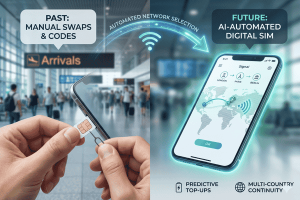
In the past, we all did the “airport shuffle”—landing at Changi, hunting for a Currency Exchange booth that sold physical SIM cards, and fumbling with a tiny metal pin to swap out our home SIM. Today, the eSIM in Singapore has completely changed the game.
I’ve spent plenty of time roaming the streets of Tiong Bahru and Orchard Road, and I’ve tried almost every way to stay connected. Here is the honest, no-fluff guide to getting your data sorted before you even touch down in the Lion City.
Why You Actually Need Data in Singapore
You might think, “Singapore is a modern tech hub; won’t there be free Wi-Fi everywhere?”
Technically, yes. There is “Wireless@SGx,” but the registration process can be a headache for tourists, and the connection often drops just when you’re trying to load a map. More importantly, you’ll need data for:
- Grab & Gojek: These are the Uber equivalents here. You can’t book a ride without a stable connection.
- Public Transport: Apps like Citymapper or MyTransport.SG are essential for timing the buses and trains.
- Food: From checking menus at Newton Food Centre to using Chope for restaurant reservations.
- Digital Payments: While cash is still used in hawker centers, many places prefer PayNow or contactless payments which often require you to be online.

How Does an eSIM Work in Singapore?
An eSIM (embedded SIM) is a digital version of the physical SIM card already built into most modern phones. Instead of putting a plastic chip into your phone, you simply download a profile.
The beauty of using an eSIM in Singapore is that you can keep your home SIM card in your phone to receive important “One-Time Password” (OTP) texts from your bank, while using the eSIM for all your “heavy lifting” like Google Maps and Instagram.
Comparing the Best eSIM Options for Singapore
Not all eSIMs are created equal. Some offer massive amounts of data you’ll never use, while others have “unlimited” plans that throttle your speed after just 500MB. Here is how the big players stack up in 2026.
1. Terminal eSIM (Our Top Pick for Balance)
I prefer Terminal eSIM because it hits the “Goldilocks” zone—it’s not the most expensive, but it doesn’t compromise on speed. They use Tier-1 networks (like Singtel or StarHub), so you’re getting the same priority as a local resident.
- The Vibe: Simple, reliable, and no weird “hidden” activation fees.
- The App: You can download the Terminal eSIM app before you leave home, pick your plan, and install it in about two minutes. It’s great for topping up your data if you realize you’ve spent too much time uploading 4K videos of the Jewel Changi waterfall.
2. Airalo
Airalo is the “old reliable” of the eSIM world. Their Singapore plan (often called “Lycra”) is very popular.
- Pros: Very cheap entry-level plans (1GB).
- Cons: Once you get into higher data amounts (10GB+), they can actually be pricier than local-based providers.
3. Holafly
If you are a data hog who plans to stream Netflix on the MRT, Holafly is the go-to for unlimited data.
- Pros: Truly unlimited data.
- Cons: You generally cannot “hotspot” or tether your data to a laptop or a friend’s phone. It’s also significantly more expensive if you’re only staying for a few days.
4. Nomad & Ubigi
Nomad is great if you are doing a multi-country trip (e.g., Singapore -> Malaysia -> Thailand). Ubigi is fantastic for iPad users or those who want a more “global” feel, though their Singapore-specific rates are sometimes a bit higher.
Pros and Things to Know
The Pros
- Instant Activation: You can buy your plan while waiting for your luggage at Changi and be online by the time you hit the taxi stand.
- Keep Your Number: You don’t lose your WhatsApp account or home phone number.
- Eco-Friendly: No plastic waste, no shipping.
- 5G Access: Most reputable eSIMs in Singapore now offer 5G, which is blisteringly fast in the CBD and Marina Bay areas.
Things to Know (The Honest Truth)
- No Local Phone Number: Most travel eSIMs (including Terminal eSIM and Airalo) are data-only. You won’t get a +65 phone number to make traditional voice calls. However, in 2026, everyone in Singapore uses WhatsApp or Telegram anyway.
- Compatibility: If you’re using an older phone (pre-2019), it might not support eSIM. Always check your settings before buying.
- One-Time Use: Most eSIM profiles cannot be moved from one phone to another. Once you install it on your iPhone, you can’t “give” the remaining data to your partner’s Android.
Practical Travel Scenarios: Which Plan Should You Get?
Scenario A: The 3-Day Stopover
If you’re just here for a few days to see the Gardens by the Bay and eat some Satay, you don’t need much. A 3GB or 5GB plan is plenty. You’ll mostly be using it for maps and the occasional social media post.
- Recommendation: Grab a small plan via the Terminal eSIM app before you board your flight. It’s cheaper than any “Tourist SIM” you’ll find at the airport.
Scenario B: The Two-Week Digital Nomad
If you’re working from cafes in Duxton Hill, you need stability. You’ll want at least 20GB or an unlimited plan.
- Recommendation: Look for 5G-enabled plans. Singapore’s 5G coverage is 100% nationwide, and the speeds often beat hotel Wi-Fi.
Scenario C: The SE Asia Backpacker
Going from Singapore to Kuala Lumpur by bus?
- Recommendation: Don’t buy a Singapore-only eSIM. Look for a “Regional Asia” plan that covers both countries so you don’t have to switch settings at the border.
How to Install Your eSIM in Singapore
The process is much less intimidating than it sounds. Here is the workflow I recommend:
- Before You Leave: Download the Terminal eSIM app and purchase your Singapore plan while you still have your home Wi-Fi.
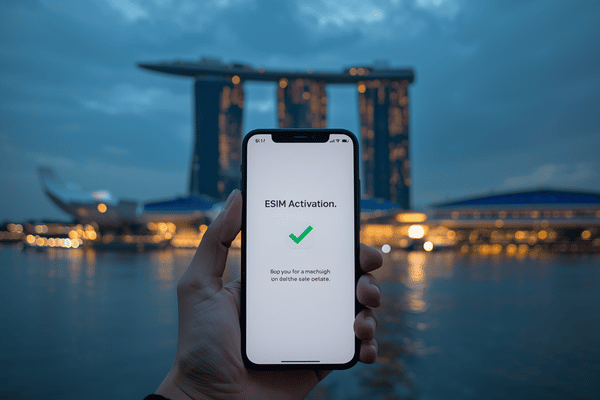
- The Installation: Follow the prompts to “Add Cellular Plan.” Your phone will ask if you want to label it; I usually label mine “Travel” or “Singapore.”
- The “Off” Switch: Keep the eSIM turned OFF until you are actually on the plane or landing.
- Arrival: Once the plane lands at Changi, go to your Settings > Cellular, turn the Singapore eSIM ON, and ensure “Data Roaming” is toggled ON for that specific line.
- Top Up: If you’re halfway through your trip and realize you’ve used 90% of your data, just jump back into the app and add another 5GB. It takes seconds.
Frequently Asked Questions
Can I use an eSIM and my regular SIM at the same time? Yes! This is the “Dual SIM” feature. Your home SIM stays active for texts/calls (be careful of roaming charges from your home provider!), while the eSIM handles all the data.
Does Singapore have 5G for tourists? Absolutely. If your phone is 5G-capable and your eSIM provider supports it (Terminal eSIM does), you will see that glorious 5G icon almost everywhere on the island, even underground in the MRT.
What happens if I run out of data? With a physical SIM, you’d have to find a 7-Eleven. With an eSIM, you just open the app you used to buy it and “Top Up.” The extra data is usually added to your account instantly.
Are local SIM cards cheaper? Sometimes. If you go to a local M1 or StarHub shop, you might get 100GB for $12 SGD. However, you have to stand in line, show your passport, and let them register your details. For most travelers, the $2–$3 “convenience tax” of an eSIM is well worth avoiding the airport queue.
Final Thoughts
Singapore is a city that rewards the “connected” traveler. Having a reliable esim in singapore means you can focus on the important stuff—like deciding whether to have Hainanese Chicken Rice or Laksa for lunch—rather than hunting for a Wi-Fi password.
If you want a stress-free experience, I suggest setting up your data before you fly. It’s one less thing to worry about when you’re navigating the beautiful chaos of Changi Airport.
Safe travels, and enjoy the Lion City!