For years, that signal came with a sense of dread—the inevitable text message from your home carrier welcoming you to a new country and outlining the steep costs of staying connected.
For decades, travelers had few choices. You either paid exorbitant fees to your home provider, hunted down a local SIM card shop at the airport with your luggage in tow, or resigned yourself to the unreliable whims of hotel Wi-Fi. But the landscape of travel connectivity has shifted dramatically with the adoption of embedded SIM (eSIM) technology.
Today, the debate isn’t just about finding coverage; it’s about finding the smartest way to stay online. As digital nomads and vacationers alike demand seamless connectivity, the battle between modern digital solutions and legacy international phone plans has heated up. Is sticking with your carrier convenient, or is it costing you a fortune? Is an eSIM really as easy as they say? Let’s dive deep into the pros, cons, and hidden details to help you decide which option deserves a spot on your packing list.
The Evolution of Connectivity: From Roaming to Digital Freedom
To understand why eSIMs are revolutionizing travel, we first need to look at how we got here. Historically, staying connected abroad relied on “roaming agreements.” Your domestic carrier would negotiate deals with foreign networks to allow your phone to piggyback on their towers. Because your carrier had to pay the foreign network for this privilege, they passed that cost—plus a significant markup—onto you.
For a long time, these costs were astronomical. Tales of travelers returning home to four-figure phone bills became urban legends, scaring many into keeping their phones permanently in airplane mode. In response, major carriers introduced “Day Pass” models. These international phone plans typically charge a flat daily fee (often between $10 and $15) to use your domestic data allowance abroad. While this capped the potential for financial disaster, it was still expensive. A two-week trip could easily add $150 or more to your monthly bill just for basic access.
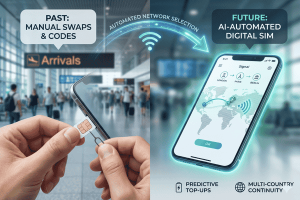
Then came the physical local SIM workaround. Savvy travelers learned to unlock their phones and swap out their plastic chips for local ones upon arrival. This saved money but came with logistical headaches: tiny SIM ejector tools, the risk of losing your original SIM, and the inability to receive calls on your home number.
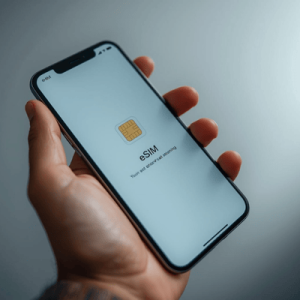
Enter the eSIM. Embedded directly into the device’s motherboard, an eSIM allows you to download a digital data plan without inserting a physical card. It bridged the gap between the convenience of roaming and the affordability of local SIMs. You could now keep your home number active for emergencies while routing expensive data traffic through a cheap, downloadable travel plan. This shift from physical hardware to software has fundamentally changed the economics of travel, handing power back to the consumer.
How to Evaluate International Phone Plans for Your Next Trip
Before you book your next flight, you need a strategy for your smartphone. Not all trips are created equal, and neither are the connectivity requirements. While an eSIM is often the superior choice for cost and flexibility, understanding how to compare it against traditional carrier offerings is crucial.
Here is a practical guide to determining if your current carrier’s international phone plans are worth the cost, or if you should make the switch to digital.
1. Audit Your Carrier’s “Fine Print”
Most travelers assume their domestic “unlimited” plan extends overseas. It rarely does. Even if you have a “global” plan, check the data speeds. Many carriers offer free international data, but throttle the speed to 2G or 3G levels. This renders modern apps like Instagram, Google Maps, and Uber practically useless. If you need high-speed LTE or 5G, you are likely paying extra for it.
2. Check Your Device Compatibility
The biggest hurdle for eSIM adoption is hardware. Most flagship phones manufactured after 2018 support eSIM technology (including iPhone XR and newer, Samsung Galaxy S20 and newer, and Google Pixel 3 and newer). Before relying on this tech, check your settings.
- iPhone: Settings > Cellular. If you see “Add eSIM,” you are good to go.
- Android: Settings > Network & Internet > Mobile Network. Look for “Download a SIM instead.”
3. Calculate the “Break-Even” Point
Do the math on your trip duration. If your carrier charges $10/day for a roaming pass:
- A 3-day weekend trip costs $30.
- A 14-day vacation costs $140.
In contrast, a regional eSIM might cost a flat fee of $15–$20 for the entire month. The longer you travel, the less sense a traditional daily pass makes.
4. Setup Your “Dual SIM” Strategy
The “killer feature” of using an eSIM alongside your regular plan is Dual SIM standby. You can configure your phone to:
- Use your Home Carrier for voice and SMS (so you get 2FA codes and emergency calls).
- Use your Travel eSIM for all mobile data.
This setup prevents you from paying data roaming fees while ensuring you aren’t completely cut off from your life back home.
5. Download Before You Depart
Don’t wait until you land to figure this out. The best practice is to purchase and install your eSIM while you are still on your home Wi-Fi. You can leave the plan turned “off” in your settings until you arrive at your destination, ensuring you have connectivity the second you land.
Comparing the Options: Data, Speed, and Cost
To make an informed decision, it helps to see the numbers side-by-side. Below is a comparison of the three main ways travelers stay connected: sticking with their home carrier, buying a local physical SIM, or using a travel eSIM like Terminal.
| Feature | Home Carrier Roaming (International Phone Plans) | Local Physical SIM Card | Travel eSIM (e.g., Terminal eSIM) |
| Cost | High ($10–$15/day or expensive pay-per-MB) | Low (Local market rates) | Low to Medium (Competitive, near-local rates) |
| Convenience | High (Automatic, but costly) | Low (Requires visiting a store, swapping tiny chips) | High (Instant download, no physical swap) |
| Setup Time | None | 30–60 mins (Finding a store, waiting in line) | 5 mins (Scan QR code or app install) |
| Keep Home Number? | Yes | No (Unless you have a dual-slot phone) | Yes (Dual SIM allows home number to stay active) |
| Data Speed | Often throttled after a daily cap | Full local speed | Full local speed (Usually 4G/5G) |
| Coverage | Dependent on partner networks | Single country only (usually) | Single country, Regional, or Global options |
Key Insights from the Comparison
The data clearly shows that traditional international phone plans charge a premium for convenience. You are paying for the luxury of doing nothing. However, that luxury fades quickly when you realize your “unlimited” data is throttled to unusable speeds after 500MB of usage—a common restriction on daily passes.
Local physical SIMs are the cheapest option financially but the most expensive in terms of time and hassle. Wasting the first hour of your vacation standing in line at a kiosk in a foreign airport is rarely how anyone wants to start a trip.
The eSIM sits in the “Goldilocks” zone. It offers the price point of a local SIM with the convenience of a roaming plan. You get high-speed data immediately upon arrival without the fear of bill shock.
Trends, FAQs, and Common Traveler Concerns
As travel technology evolves, so do the questions travelers have. We are seeing a massive shift in how hardware manufacturers approach connectivity, which is forcing the hand of many consumers.
The Death of the SIM Tray
A major trend driving eSIM adoption is hardware design. In the United States, Apple removed the physical SIM tray entirely starting with the iPhone 14. Users with these devices literally cannot use a physical local SIM card when they travel. They must use an eSIM or rely on their carrier’s roaming. This trend is expected to spread to other regions and manufacturers, eventually making physical SIM cards obsolete.
Frequently Asked Questions
- Will using an eSIM mess up my WhatsApp or iMessage?
No. This is a common fear, but unfounded. Apps like WhatsApp, iMessage, and FaceTime are linked to your phone number or Apple ID, not the specific data line you are using. When you switch your data source to a Terminal eSIM, your WhatsApp will continue to work with your original number and chat history intact. - Can I make phone calls with a data-only eSIM?
Most travel eSIMs are data-only, meaning they don’t come with a local phone number for traditional voice calls. However, you can still make calls using VoIP apps like WhatsApp, FaceTime Audio, Skype, or Zoom. If you absolutely need to receive traditional calls on your home number, you can leave your home SIM active for voice only (just be aware of potential per-minute roaming charges for incoming calls). - Is an eSIM slower than a local carrier?
Generally, no. Premium eSIM providers partner with top-tier local networks. For example, if you buy a plan for France, your eSIM will connect to major French networks like Orange or SFR at 4G or 5G speeds. You aren’t getting “second-class” data; you are accessing the same towers as the locals. - Can I use a hotspot/tethering with an eSIM?
This depends on the provider, but with Terminal eSIM, tethering is supported on most plans. This is a huge advantage for digital nomads who need to get some work done on a laptop or share data with a travel companion. - What happens if I run out of data?
Unlike international phone plans that might automatically charge you for overages, prepaid eSIMs simply stop working or slow down. You are in control. If you need more data, you can usually “top up” instantly via the app or website without needing to install a new profile.
Summary: The Verdict on Connectivity
After analyzing the costs, convenience, and technical capabilities, the verdict is clear for the vast majority of travelers. While traditional international phone plans offer a seamless experience for those who don’t care about cost, they are rarely the best value. They often hide speed caps behind high daily fees and lack the flexibility modern travelers need.
On the other hand, swapping physical SIM cards is becoming an archaic practice—tedious, risky for your hardware, and increasingly impossible on newer devices.
An eSIM offers the best of both worlds. It provides:
- Cost Savings: No hidden daily fees or surprise bills.
- Flexibility: Buy plans for 7 days, 30 days, or by the GB.
- Connectivity: Keep your original number active for safety while using cheap data for maps and social media.
- Instant Access: Get connected the moment you land.
Unless you are on a corporate expense account with zero budget restrictions, the eSIM is the superior choice for staying connected abroad.
Stop Overpaying for Roaming—Fly Smarter with Terminal
Travel should be about exploration, new foods, and unforgettable sights—not stressing over how many megabytes of data you have left or fearing your next phone bill.
At Terminal eSIM, we believe connectivity should be simple, transparent, and affordable. Whether you are a digital nomad hopping from café to café in Bali, a business traveler attending conferences in London, or a family on a dream vacation in Tokyo, we have a plan that fits your itinerary.
Don’t let your carrier’s outdated international phone plans eat into your travel budget. With Terminal, you get instant access to high-speed networks in over 150 countries. You can install your plan from the comfort of your couch before you even pack your bags.
Ready to upgrade your travel experience? Check out our global and regional plans today and stay connected on your terms.