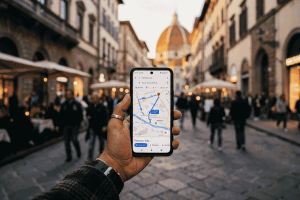
You can’t access maps, call a ride, or let your family know you’ve arrived safely. This digital silence is a common source of travel anxiety, turning a thrilling adventure into a stressful scramble for a spotty Wi-Fi connection.
For decades, travelers have juggled expensive roaming charges, hunted for local SIM card vendors, and fumbled with tiny plastic chips. This process is often a trip’s first, and most frustrating, hurdle. What if you could land and be instantly connected, just like at home? This is where the magic of an eSIM international plan comes in. An eSIM, or embedded SIM, is a digital SIM card built directly into your device. It allows you to download a data plan for your destination before you even leave home, ensuring seamless connectivity the moment you touch down. It’s the modern solution to an age-old travel problem, keeping you connected, in control, and ready for whatever your journey holds.
From Physical to Digital: The Evolution of Global Connectivity
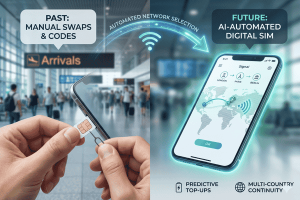
To understand the revolutionary nature of an eSIM, it helps to look back at how we’ve tried to stay connected while abroad. For years, the default option was international roaming offered by our home carriers. While convenient, it often came with a shocking bill at the end of the trip. Stories of travelers returning to hundreds, or even thousands, of dollars in unexpected data charges became cautionary tales. The high costs made using your phone for anything beyond an emergency a risky proposition. This forced travelers to become masters of “data rationing,” constantly turning cellular data on and off to avoid financial ruin.
The next evolution was the local physical SIM card. This approach offered a more affordable way to get data by purchasing a SIM from a local provider upon arrival. While cheaper, it presented its own set of challenges. First, you had to find a reputable vendor at the airport or in the city, often after a long and tiring flight. This could involve language barriers, confusing plan options, and the risk of being overcharged. Next came the physical act of swapping the SIM cards. You’d need a paperclip or a special tool to eject the tiny SIM tray, carefully remove your home SIM (and hope you didn’t lose it), and insert the new one. If your phone was locked to your home carrier, the local SIM wouldn’t work at all, adding another layer of potential frustration. This process had to be repeated for every new country on a multi-destination trip.
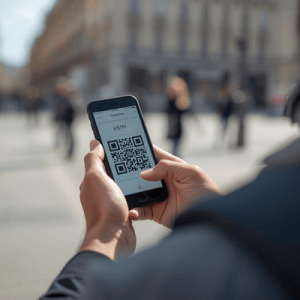
The eSIM changes everything. It digitizes the entire process, eliminating the need for physical cards and the hassles that come with them. An eSIM is a small chip already embedded in your smartphone, tablet, or smartwatch by the manufacturer. Instead of buying a plastic card, you purchase a data plan online and receive a QR code. Scanning this code with your device’s camera installs a digital “SIM profile,” effectively giving you a local data plan without any physical swapping. This technology offers unparalleled flexibility, allowing you to store multiple eSIM profiles on a single device and switch between them with a few taps. It’s a seamless, secure, and cost-effective leap forward, transforming a major travel headache into a simple, pre-trip task.
Your Guide to Getting Started with an eSIM International Plan
Ready to ditch physical SIM cards and embrace seamless global connectivity? Making the switch to an eSIM international plan is simpler than you might think. It puts you in complete control of your data, saving you time, money, and stress on your next trip. Follow this straightforward guide to get set up for your adventure.
Step 1: Check Your Device for eSIM Compatibility
Before you do anything else, you need to ensure your device supports eSIM technology. Most modern smartphones from major manufacturers are eSIM-compatible.
- For iPhone users: Go to Settings > General > About. Scroll down to see if there is a section for “Digital SIM” or “eSIM.” If you see an “Add eSIM” option under Settings > Cellular, your phone is compatible. Most iPhones from the XR/XS models onward have this feature.
- For Android users (Samsung, Google Pixel, etc.): The path can vary slightly. Typically, you can go to Settings > Connections > SIM Card Manager. If you see an option to “Add eSIM” or “Add mobile plan,” you’re good to go. A quick online search for your specific model and “eSIM compatibility” will also give you a definitive answer.
- Other Devices: Many tablets (like iPads) and even some laptops and smartwatches are also eSIM-enabled.
Step 2: Choose and Purchase Your eSIM International Plan
Once you’ve confirmed your device is ready, it’s time to pick a plan. This is where the freedom of eSIM truly shines. You are no longer tied to whatever your home carrier offers. Companies like Terminal eSIM provide a wide range of flexible, affordable plans tailored to your specific travel needs.
- Select Your Destination: Browse plans by country or region. Are you heading to a single country like Japan, or backpacking across Southeast Asia? Choose a plan that covers your entire itinerary.
- Pick Your Data Amount: Consider how you’ll use your phone. If you just need maps and messaging, a smaller plan (e.g., 3-5 GB) might suffice. If you plan on streaming videos, making video calls, or working remotely, opt for a larger data package (e.g., 10-20 GB or unlimited).
- Check the Validity Period: Plans are active for a set number of days (e.g., 7, 15, or 30 days). Make sure the plan’s validity covers the duration of your trip.
Purchase your chosen plan online. You’ll receive an email confirmation almost instantly, which includes your all-important QR code.
Step 3: Install and Activate Your eSIM
This is the final step, and it’s best to do it just before you depart while you still have a stable internet connection.
- Scan the QR Code: On your phone, navigate to the “Add eSIM” or “Add Mobile Plan” setting you found earlier. Your phone’s camera will open. Scan the QR code from your confirmation email.
- Follow the On-Screen Prompts: Your device will guide you through the installation. You’ll be asked to label your new eSIM (e.g., “Europe Trip”) to easily distinguish it from your primary SIM.
- Configure Your Settings: You will be prompted to choose which line to use for cellular data. Select your newly installed eSIM for data. You can keep your primary line active for calls and texts if you wish, but be mindful of roaming charges from your home carrier. A common setup is to use the eSIM for all data and your primary SIM for receiving texts.
That’s it! When you land at your destination, your phone will automatically connect to the local network using your eSIM plan. No more airport Wi-Fi hunts or SIM card kiosk lines.
eSIM vs. Traditional Options: A Traveler’s Comparison
Choosing how to stay connected abroad involves balancing cost, convenience, and coverage. An eSIM international plan excels in all three areas, but seeing a direct comparison can help clarify why it’s the superior choice for modern travelers.
Here’s a breakdown of how an eSIM stacks up against traditional options like international roaming from your home carrier and buying a local physical SIM card.
| Feature | eSIM International Plan (e.g., Terminal eSIM) | International Roaming (Home Carrier) | Local Physical SIM Card |
| Cost | Highly affordable, prepaid data packages. No surprise fees. | Very expensive. Often charges per day or per MB/GB, leading to high bills. | Generally affordable, but prices can vary. Risk of tourist-inflated pricing. |
| Convenience | Excellent. Purchase and install from home before you travel. Instant connectivity on arrival. | Good. Activates automatically, no setup needed. | Poor. Requires finding a store, dealing with language barriers, and registration processes. |
| Flexibility | Excellent. Store multiple eSIMs and switch between plans for different countries easily. | Poor. Locked into one provider’s rates and partner networks. | Poor. Requires a new physical SIM card for each new country. |
| Setup Process | Simple and digital. Scan a QR code to install. Takes a few minutes. | No setup required. | Manual and physical. Must eject your home SIM and insert the new one. |
| Phone Number | Keeps your primary phone number for calls and texts (if desired). | Keeps your primary phone number. | You are assigned a new, local phone number, which can be inconvenient. |
| Security | High. No risk of losing your primary SIM card. Digital purchase is secure. | High. Managed by your trusted home carrier. | Moderate. Risk of losing your tiny primary SIM card during the swap. |
| Best For | All travelers: digital nomads, frequent flyers, vacationers, and business travelers. | Casual users who need minimal connectivity for a very short trip and don’t mind the high cost. | Long-term stays in a single country where a local number is beneficial. |
As the table shows, an eSIM international plan offers the best of all worlds. It combines the affordability of a local SIM with the convenience of roaming, but without the significant downsides of either. You get transparent, prepaid pricing, which means you’ll never face a shocking bill when you return home. The ability to set everything up before your trip removes a major point of stress upon arrival. For travelers visiting multiple countries, the ability to switch between regional eSIM plans with a few taps is a game-changer, making it the most efficient and practical solution available today.
Common Questions and Concerns for First-Time eSIM Users
Making the switch to new technology can bring up some questions. From worrying about keeping your phone number to understanding how data works, it’s normal to have a few concerns. Let’s address some of the most common traveler FAQs to demystify the process and show how an eSIM plan is designed to make your life easier.
FAQs About Using an eSIM for International Travel
- Can I still use my regular phone number to receive calls and texts?
Absolutely. This is one of the biggest advantages of a dual-SIM phone with an eSIM. You can designate your eSIM for cellular data and keep your primary physical SIM active for voice and text. This means friends, family, and services like two-factor authentication can still reach you on your regular number. Just be sure to check your home carrier’s roaming rates for incoming calls and texts, as some may still charge a fee. For most users, receiving SMS is free, but it’s always wise to confirm. - What happens if I use up all the data on my eSIM plan?
Running out of data mid-trip is a common worry, but with an eSIM, it’s not a big problem. Most eSIM providers, including Terminal eSIM, make it incredibly easy to top up your plan. You can simply log into your account online or through an app and purchase more data. The new data is added to your existing eSIM profile instantly, so there’s no need to install a new plan or scan another QR code. It’s a seamless process that ensures you’re never left disconnected. - Do I need an internet connection to install my eSIM?
Yes, you do need an internet connection (either Wi-Fi or cellular data) to download and install the eSIM profile onto your device. This is why we strongly recommend you complete the installation process at home before you leave for your trip. By setting it up in advance, you guarantee that your plan is ready to activate the moment you land, allowing you to connect to a local network immediately without needing to search for an airport Wi-Fi hotspot. - Can I use my eSIM as a hotspot for my other devices?
In most cases, yes. The ability to use your eSIM data as a personal hotspot depends on the specific plan you purchase. Many eSIM international plans allow tethering, so you can share your connection with your laptop, tablet, or a travel companion’s phone. Before purchasing, check the plan details to confirm that hotspot functionality is supported. This feature is invaluable for digital nomads or anyone needing to get work done on a laptop while on the go. - Is an eSIM more secure than a physical SIM card?
Yes, an eSIM is inherently more secure. A physical SIM card can be lost, stolen, and cloned. If someone steals your phone, they can remove the SIM and potentially use it to bypass security measures on your accounts. An eSIM is embedded in your device’s hardware and cannot be physically removed. This makes it much more difficult for unauthorized users to take over your line. The entire process is digital, reducing the risks associated with physical cards.
Stay Connected, Travel Smarter
International travel should be about immersion and discovery, not about hunting for connectivity. For too long, travelers have been burdened with complicated and expensive options for staying in touch. From the bill shock of international roaming to the logistical nightmare of swapping physical SIM cards in every new country, the old ways are filled with friction. They add unnecessary stress to a journey that should be focused on the experience itself. A missed turn because your map won’t load or an inability to contact your hotel can quickly sour an otherwise perfect day.
An eSIM international plan completely redefines the experience. It offers a simple, elegant, and powerful solution that puts you back in control. By downloading a data plan before you even pack your bags, you ensure seamless connectivity from the moment you land. Imagine stepping off the plane and instantly being able to call a ride, look up directions to your hotel, or share your arrival with loved ones—all without a second thought. This is the freedom and peace of mind that modern technology provides. It’s about removing barriers and making travel more accessible, intuitive, and enjoyable. With an eSIM, you’re not just buying data; you’re buying a smoother, smarter travel experience.
Unlock the World with Terminal eSIM
Your next adventure is calling. Don’t let the fear of being disconnected hold you back. Whether you’re a digital nomad building a business from a beach in Bali, a family exploring the historic cities of Europe, or a solo traveler backpacking through South America, a reliable internet connection is non-negotiable. It’s your map, your translator, your connection to home, and your lifeline in an unfamiliar place.
With Terminal eSIM, you can pre-purchase affordable, high-speed data for over 190 countries and regions. Our plans are designed for travelers by travelers, offering the ultimate in flexibility and convenience. Forget about surprise roaming fees and hunting for plastic SIM cards. Choose your destination, select a data package that fits your needs, and install it in minutes. Land, connect, and explore with the confidence that you’re always just a tap away. Your journey deserves to be seamless from start to finish.
Ready to travel smarter? Explore our global data plans and find the perfect eSIM for your next trip.