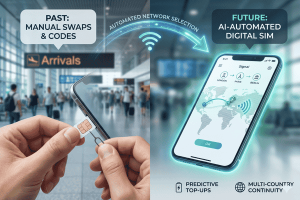
It is a frustrating way to start a trip, but it has been the reality for travelers for decades. Fortunately, technology has finally caught up with our wanderlust. The days of fiddling with tiny paperclips and swapping out microscopic plastic chips are ending.
Enter the eSIM. This digital evolution of connectivity is changing how we stay online abroad. It offers freedom, flexibility, and instant access to data without the physical hassle. If you are planning an upcoming trip, understanding this technology is crucial. By switching to a digital connectivity solution, you save time, money, and stress. In this guide, we will walk you through everything you need to know to make the switch seamlessly.
The Evolution of Connectivity: Understanding the eSIM Revolution
To understand why the eSIM is such a massive leap forward, we first need to look at where we came from. For over thirty years, the Subscriber Identity Module—or SIM card—has been the gatekeeper of mobile connectivity. It started as a credit-card-sized chip in the early 90s, shrinking down to the Mini SIM, then the Micro SIM, and finally the Nano SIM that most of us are familiar with today.
Despite getting smaller, the premise remained the same: a physical piece of hardware that tied you to a specific network. If you wanted to change networks, you had to physically change the hardware. This model worked fine for a stationary life, but in an increasingly globalized world, it became a bottleneck.
What is an eSIM?
The “e” stands for “embedded.” Unlike traditional cards, an eSIM is a tiny chip built directly into your smartphone’s motherboard during manufacturing. You cannot remove it, drop it, or lose it. It works exactly like a traditional SIM but is completely rewritable. This means you can change your carrier or data plan digitally, downloading a new profile over the internet rather than inserting a piece of plastic.
Why This Matters for Travelers
This technology fundamentally shifts power from the carrier to the consumer. In the past, your carrier dictated your roaming terms because switching was inconvenient. With embedded technology, you can browse a marketplace of global providers and download a data plan for France, Japan, or Brazil while sitting on your couch at home. It bridges the gap between the high cost of domestic carrier roaming and the inconvenience of buying local SIM cards upon arrival. It is not just a tech upgrade; it is a travel upgrade.
A Step-by-Step Guide to Finding the Right eSIM Phone Plan
Switching to digital connectivity might feel intimidating if you have never done it before, but the process is surprisingly straightforward. It is actually easier than locating a paperclip to pop open your SIM tray. Here is a practical guide on how to select and activate the best esim phone plan for your next journey.
1. Verify Your Device Compatibility
Before you get excited about digital data plans, you must ensure your phone supports the technology. Most flagship phones manufactured since 2018 are compatible.
- Apple: iPhone XR, XS, and newer models (including SE 2nd Gen).
- Samsung: Galaxy S20 series and newer, plus most Fold and Flip models.
- Google: Pixel 3 and newer.
- Others: Many newer devices from Huawei, Motorola, and Sony also support it.
- Tip: Dial *#06# on your phone. If you see an EID number appear alongside your IMEI, your device is likely eSIM compatible.
2. Ensure Your Phone is Unlocked
This is a critical step many travelers overlook. Even if your phone has the hardware, it must be “carrier unlocked” to use a plan from a different provider. If you bought your phone on a contract or payment plan, it might be locked to your home carrier. Call them to confirm before you travel.
3. Assess Your Data Needs
An esim phone plan usually comes in prepaid data bundles. Ask yourself:
- Light User: Just need maps and messaging apps? (1GB – 3GB per week)
- Medium User: Social media scrolling, photo uploads, and web browsing? (3GB – 5GB per week)
- Heavy User: Streaming video, video calls, and remote work? (10GB+ or Unlimited)
4. Purchase and Installation
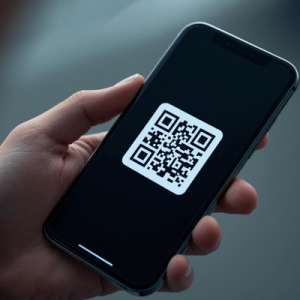
Once you choose a provider, the purchase happens online. You will typically receive a QR code via email or within the provider’s app.
- Scan the QR Code: Go to your phone’s settings (under “Cellular” or “Mobile Data”) and select “Add eSIM.” Scan the code provided.
- Label Your Plans: Your phone will ask you to label the lines. Keep your home number as “Primary” and label the new one as “Travel” or the country name.
5. Activation Upon Arrival
You can install your plan before you leave home (highly recommended!), but it usually won’t activate until it connects to the local network at your destination. When you land:
- Turn ON the “Travel” line.
- Switch “Mobile Data” to the “Travel” line.
- Turn OFF “Data Roaming” for your Primary line (to avoid fees).
- Turn ON “Data Roaming” for your Travel line (to ensure it works).
Comparison: Why the Switch Makes Sense
To truly appreciate the value of switching, let’s look at how a modern digital plan stacks up against the old-school methods of staying connected. Travelers generally have three options: pay their home carrier’s daily roaming rate, hunt for a local physical SIM, or download a travel eSIM.
Here is a breakdown of features, costs, and convenience.
| Feature | Home Carrier Roaming | Local Physical SIM | Travel eSIM Plan |
| Cost | High ($10-$15/day) | Low | Low to Medium |
| Convenience | High (Automatic) | Low (Must find a store) | High (Instant download) |
| Setup Time | None | 30-60 Minutes | 5 Minutes |
| Keep Home Number? | Yes | No (Usually requires swap) | Yes (Dual SIM capable) |
| Coverage Flexibility | Limited by partner networks | Limited to one country | Global/Regional options |
| Physical Swap? | No | Yes (Risk losing original SIM) | No |
Key Insights from the Table
While using your home carrier is easy, the cost is often prohibitive for trips longer than a couple of days. A two-week trip could cost you upwards of $150 in roaming fees alone.
Buying a local physical SIM is traditionally the cheapest option, but it comes with significant friction. You have to find a store, deal with language barriers, show your passport for registration, and physically remove your home SIM card (which puts you at risk of losing it).
The digital alternative sits in the “Goldilocks” zone. It offers the low cost of local data with the high convenience of roaming. Plus, because you don’t remove your physical SIM, you can keep your home number active for incoming texts and 2FA codes while using the eSIM for affordable data.
Trends, FAQs, and Solving Common Traveler Problems
As adoption rates soar, we are seeing interesting trends in how people use this technology. Digital nomads are leading the charge, often keeping three or four different profiles stored on their phones and toggling between them as they cross borders. Another emerging trend is the “Regional Plan.” Instead of buying a plan for France, then Germany, then Italy, travelers are opting for single “Europe” plans that cover 30+ countries instantly.
Despite the popularity, many travelers still have valid concerns about making the switch. Let’s address the most common questions and hesitations.
Frequently Asked Questions
- Will I lose my WhatsApp number if I change my data plan?
No. This is a common myth. When you switch your mobile data to an eSIM, apps like WhatsApp, Telegram, and iMessage will ask if you want to keep using your original number. You simply select “Keep my number,” and all your contacts and chats remain exactly the same. - Does using an eSIM drain my battery faster?
Generally, no. In fact, it can be more efficient than a physical SIM in some cases because the hardware is integrated. However, if you have both your physical SIM and eSIM active simultaneously (Dual SIM mode) and searching for signal in an area with poor coverage, your phone may work slightly harder. - Can I store multiple eSIMs on one phone?
Yes! Most modern iPhones and Androids allow you to store between 5 and 8 digital profiles on your device. However, you can usually only have one or two active at a time. This is perfect for frequent flyers who want to keep a “library” of plans for their favorite destinations ready to go. - Is it secure?
Yes, it is actually more secure than a physical card. A physical SIM can be stolen from your phone and placed in another device to steal your identity or access 2FA codes. An embedded chip cannot be removed, making it much harder for thieves to use your number if your phone is stolen. - What if I run out of data mid-trip?
This is one of the biggest advantages of esim phone plan providers. You rarely need to install a new plan. Most providers allow you to “Top Up” your existing plan through their app. You just buy more GBs, and they are added to your balance instantly.
Summary: The Future of Travel is Cardless
We are witnessing the end of the physical SIM card era, at least for international travel. The benefits of switching to a digital plan are simply too great to ignore.
To recap, making the switch allows you to:
- Save Money: Avoid the dreaded “bill shock” from daily carrier roaming fees.
- Save Time: Skip the airport queues and language barriers involved in buying local cards.
- Stay Secure: Keep your original SIM safe inside your phone so you never lose it.
- Stay Flexible: Purchase and activate plans for over 100 countries from anywhere in the world.
- Keep Connected: Retain your home number for important calls and texts while using cheap data for maps and socials.
The technology is mature, the devices are ready, and the process is easier than ever. There is no reason to tether yourself to outdated, expensive, or inconvenient connectivity methods.
Ready to Connect Freely?
Your next adventure shouldn’t be defined by a search for Wi-Fi or the fear of a massive phone bill. Travel is about freedom, and your phone plan should reflect that. Whether you are backpacking through Southeast Asia, attending business meetings in London, or road-tripping across the United States, seamless connectivity is a necessity, not a luxury.
At Terminal eSIM, we specialize in keeping you connected without the complications. We offer high-speed, reliable data plans for travelers who demand the best. Our plans are designed to be flexible, affordable, and incredibly easy to set up. No hidden fees, no contracts, just pure connection the moment you land.
Stop worrying about roaming charges and start focusing on your journey. Browse our global and regional packages today and see how easy it is to upgrade your travel experience.