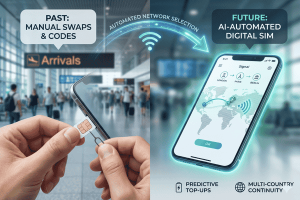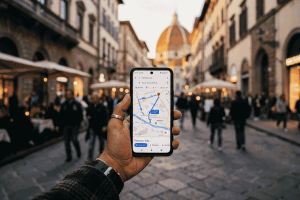
For years, travelers relied on physical SIM cards, often facing long airport queues or hunting down a local store upon arrival. Today, there’s a smarter, more convenient solution: the eSIM.
An eSIM, or embedded SIM, is a digital SIM card built directly into your phone. This technology eliminates the need for a physical card, allowing you to activate a mobile data plan remotely. Imagine landing in Sydney or Melbourne and instantly connecting to the internet, without fumbling with tiny plastic cards or paying exorbitant roaming fees. This guide will explore why an eSIM Australia plan is the superior choice for modern travelers, offering unmatched convenience, flexibility, and cost savings. We’ll cover everything from what an eSIM is to how you can get one set up before you even leave home.
Understanding the Shift: From Physical SIMs to eSIM Technology
To appreciate the benefits of an eSIM, it helps to understand the journey of mobile connectivity. For decades, the physical SIM (Subscriber Identity Module) card has been the standard. This small chip, which you insert into your phone, securely stores information that identifies you to a mobile network. It connects your device to a specific carrier, enabling calls, texts, and data.
Physical SIMs have served us well, but they come with limitations, especially for travelers. When you travel internationally, your home SIM will likely incur expensive roaming charges. The traditional solution was to buy a local physical SIM card upon arrival. This process often involves finding a provider, choosing a plan, and physically swapping out your home SIM—a hassle that can waste precious vacation time. You also risk misplacing your original SIM card, which can be a major inconvenience.
Enter the eSIM. First introduced in 2016, the embedded SIM is a rewritable chip permanently installed inside your smartphone, tablet, or smartwatch. It functions just like a physical SIM but without the physical constraints. Instead of inserting a card, you download and install a digital “eSIM profile” from a provider like Terminal eSIM. This profile contains all the necessary network information to get you connected. The technology has gained widespread adoption, with major manufacturers like Apple, Google, and Samsung including eSIM support in their latest devices. This shift represents a move toward seamless, digital-first connectivity that aligns perfectly with the needs of global travelers.

Your Practical Guide to Getting an eSIM Australia Plan
Making the switch to an eSIM Australia plan is surprisingly simple and can be done in just a few minutes from the comfort of your home. It’s a game-changer for anyone wanting to avoid the stress of finding connectivity upon arrival. Here’s a step-by-step guide to get you connected before you even pack your bags.
Step 1: Check Your Device for eSIM Compatibility
Before anything else, you need to confirm that your smartphone supports eSIM technology. Most flagship phones released since 2018 have this capability.
- For iPhone: Go to Settings > General > About. If you see an “Add eSIM” or “Add Cellular Plan” option, your phone is compatible. You may also find a Digital SIM section with an IMEI number.
- For Android (Samsung, Google Pixel, etc.): The path can vary slightly. Typically, you’ll go to Settings > Network & Internet > SIMs. Look for an option to “Add eSIM” or a plus sign. A quick online search for your specific model and “eSIM compatibility” will also give you a definite answer.
Step 2: Choose and Purchase Your eSIM Australia Plan
Once you’ve confirmed compatibility, it’s time to select a plan. Providers like Terminal eSIM offer a range of data packages specifically for Australia. Consider the length of your trip and your expected data usage. Are you a light user who just needs maps and messaging, or will you be streaming videos and making video calls?
Browse the available plans and select the one that best fits your needs. You can choose from various data amounts and validity periods (e.g., 5GB for 15 days, 20GB for 30 days). Complete the purchase online, and you’ll receive an email with your eSIM activation details almost instantly.
Step 3: Install and Activate Your eSIM
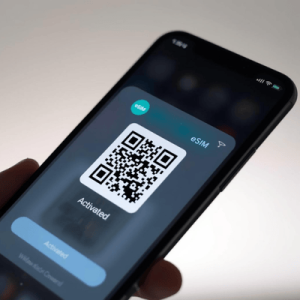
The final step is installing the eSIM on your device. You’ll receive a QR code in your confirmation email.
- Connect to Wi-Fi: You need an internet connection to download the eSIM profile.
- Scan the QR Code: On your phone, go to the cellular or SIM settings where you previously checked for compatibility. Select “Add eSIM” or “Add Cellular Plan.” Your phone’s camera will open.
- Scan the QR code from your email.
- Follow the Prompts: Your phone will guide you through the final setup steps, which include labeling your new plan (e.g., “Australia Data”) and choosing which line to use for data. Set your new eSIM as the primary line for mobile data.
It’s best to complete this setup before you leave for Australia. Once you land, simply switch your data line to your new eSIM, and you’ll be connected to a local network instantly.
eSIM vs. Physical SIM: A Head-to-Head Comparison for Australia
When deciding on your connectivity for Australia, it’s helpful to see a direct comparison. While physical SIMs have been the default for years, eSIMs offer distinct advantages for travelers. The table below breaks down the key differences to help you make an informed choice.
| Feature | eSIM for Australia | Physical SIM for Australia |
| Activation Process | Instant digital activation via QR code before travel. | Must purchase and manually insert a physical card on arrival. |
| Convenience | High. No need to find a store or swap SIM cards. | Low. Requires visiting a store or airport kiosk. |
| Flexibility | Store multiple eSIM profiles and switch between them. | Only one physical SIM can be used at a time (unless dual-SIM phone). |
| Security | Cannot be lost, stolen, or damaged. | Can be easily lost, damaged, or misplaced during swaps. |
| Keeping Your Home Number | Yes. Keep your primary SIM active for calls and texts. | Requires a dual-SIM phone or swapping cards to access your home number. |
| Cost-Effectiveness | Highly competitive data plans, no roaming fees. | Can be affordable, but requires research and purchase locally. |
| Environmental Impact | Zero plastic waste. | Contributes to plastic and electronic waste. |
As the comparison shows, an eSIM is the clear winner for convenience and flexibility. The ability to set up your data plan before leaving home is a significant stress-reducer. You land, turn on your phone, and you are immediately connected. This means you can book a rideshare, check your hotel reservation, or message family without delay.
Furthermore, an eSIM allows you to maintain your primary phone number for calls and important two-factor authentication messages while using the eSIM for affordable local data. With a physical SIM, you either have to constantly swap cards or rely on a dual-SIM phone, which not all travelers have. For the modern, tech-savvy traveler heading to Australia, the benefits of an eSIM are simply too compelling to ignore.
Common Traveler Concerns and eSIM Solutions
Switching to new technology can bring up questions. Let’s address some common concerns travelers have about using an eSIM in Australia and explain how this technology provides a simple and effective solution.
Frequently Asked Questions (FAQs)
- Can I still use my regular phone number with an eSIM?
Absolutely! This is one of the biggest advantages of an eSIM. When you install an eSIM for data, your primary physical SIM (or other eSIM) can remain active. In your phone’s settings, you can designate the eSIM for mobile data and your primary line for voice calls and texts. This dual-SIM functionality means you won’t miss important calls or verification texts sent to your home number, all while enjoying affordable local data in Australia.
- What happens if I use up all my eSIM data?
Running out of data mid-trip is a common worry, but eSIMs make it easy to manage. Most eSIM providers, including Terminal eSIM, allow you to top up your data directly from their website or app. There’s no need to find a physical store or buy a new plan. With just a few taps on your phone, you can purchase more data, and it will be added to your existing eSIM profile, ensuring you stay connected without interruption.
- Is my phone unlocked? Will an eSIM work?
An eSIM will only work on a device that is “unlocked,” meaning it is not tied to a specific carrier. Most phones purchased directly from the manufacturer (like Apple or Samsung) are unlocked. If you purchased your phone through a carrier on a contract, it might be locked. You can check this by contacting your home carrier and asking them to unlock it for international travel. They are often required to do so if your account is in good standing.
- Is it difficult to set up an eSIM? I’m not very tech-savvy.
Not at all! While the technology sounds advanced, the setup process is designed to be user-friendly. It primarily involves scanning a QR code with your phone’s camera. Your phone then handles the rest of the installation with on-screen prompts. The instructions provided by eSIM companies are clear and simple to follow. As long as you can point your camera at a QR code, you can set up an eSIM.
- Are eSIMs more expensive than local physical SIMs?
Not necessarily. While upfront costs for a local SIM at the airport might seem cheap, they can come with hidden fees or limited data. eSIM plans are highly competitive and transparent. You know exactly what you’re getting in terms of data, validity, and price. When you factor in the convenience and time saved, the value of an eSIM often surpasses that of a physical SIM, especially for short to medium-length trips.
The Smart Traveler’s Choice: A Summary
As we’ve explored, the choice between an eSIM and a physical SIM for your trip to Australia is a clear one for the modern traveler. Gone are the days of hunting for Wi-Fi or standing in line for a local SIM card after a long flight. The eSIM offers a streamlined, efficient, and cost-effective way to stay connected from the moment you touch down.
We’ve seen how this technology works by embedding a digital SIM profile directly onto your phone, eliminating the need for a physical card. The practical steps are simple: check your device’s compatibility, purchase a plan online, and activate it with a QR code before you even leave home. This preparation ensures instant connectivity upon arrival.
When compared directly, the eSIM for Australia outperforms its physical counterpart in nearly every aspect crucial to a traveler: unparalleled convenience, the flexibility to keep your home number active, and enhanced security. You no longer need to risk losing your primary SIM card or manage multiple plastic chips. With answers to common questions, it’s clear that eSIM technology is both accessible and reliable, solving old travel problems with a modern solution.
Get Connected Instantly with Terminal eSIM
Your Australian adventure deserves a seamless start. Don’t let connectivity be an afterthought or a source of stress. With Terminal eSIM, you can step off the plane in Sydney, Melbourne, or Perth and be online in seconds. Share your first moments, navigate to your accommodation, and stay in touch with loved ones without missing a beat. Our eSIM Australia plans are designed for every type of traveler, from the weekend explorer to the digital nomad.
Forget about expensive roaming charges and the hassle of physical SIM cards. Embrace the freedom and flexibility of digital connectivity. Our platform makes it easy to choose, purchase, and activate the perfect data plan for your trip. Enjoy high-speed data on Australia’s top networks, with transparent pricing and the ability to top up if you need more.
Ready to make your travel experience smarter and simpler? Explore our range of data plans and join the growing number of travelers who choose the convenience of an eSIM.