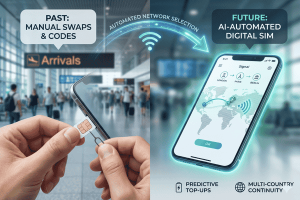
This process often meant losing access to your primary phone number and juggling multiple cards. Fortunately, technology has evolved, and a much simpler, more elegant solution has emerged: the embedded SIM, or eSIM.
An embedded SIM is a digital version of the traditional physical SIM card. Instead of a chip you insert into your phone, it’s built directly into your device’s hardware. This innovation completely changes the game for international travelers, offering unprecedented flexibility and convenience. With an eSIM, you can download a data plan for your destination before you even pack your bags. Imagine landing in a new country and being instantly connected to the local network without ever opening your phone’s SIM tray. This guide will explore why the embedded SIM is not just a passing trend but the definitive future of travel connectivity.
From Physical Chips to Digital Profiles: The Evolution of the SIM Card
To fully appreciate the revolution of the embedded SIM, it helps to understand where we came from. The story of the SIM card began in the early 1990s. The first SIMs (Subscriber Identity Modules) were the size of a credit card. Their primary job was simple: to securely store information that identifies a mobile subscriber on a network. This allowed users to move their phone service from one device to another just by moving the card. Over the decades, as phones became smaller and more powerful, so did the SIM card. It shrank from the mini-SIM to the micro-SIM, and finally to the nano-SIM that is standard in most smartphones today.
Despite these size reductions, the fundamental concept remained the same: a physical token that ties you to a single mobile provider. This model presented significant challenges for travelers. Arriving in a new country meant your home SIM would either not work or would connect you to a partner network at a very high cost—the dreaded roaming charge. The alternative was to hunt down a local SIM card, which involved finding a reputable vendor, dealing with activation procedures that could be complex, and physically swapping the chip. This often left travelers disconnected at the most crucial moments, like when trying to book a ride from the airport or look up directions to their hotel.
The introduction of the embedded SIM marks a fundamental shift away from this physical limitation. First standardized around 2016, the eSIM replaces the need for a physical card with a software-based solution. The “e” in eSIM stands for “embedded,” meaning the SIM is a permanent part of your phone’s motherboard. You don’t add or remove it; instead, you download digital “eSIM profiles” from carriers. This allows a single device to store multiple carrier profiles at once, and you can switch between them with just a few taps in your phone’s settings. For a traveler, this means you can keep your primary number active while simultaneously using a local data plan from a provider like Terminal eSIM for affordable internet access abroad.
Your Guide to Using an Embedded SIM for Seamless Travel
Switching to an embedded SIM for your travels is easier than you might think. The technology is designed for convenience, eliminating the technical and logistical hurdles of traditional SIM cards. If you have a modern smartphone (most models from 2018 onwards are compatible), you likely already have everything you need to get started. Here is a simple, step-by-step guide to making your first trip with an embedded SIM a seamless success.
Step 1: Check Your Device’s Compatibility
Before you do anything else, confirm that your phone supports eSIM technology. This is a quick check.
- For iPhone users: Go to Settings > Cellular (or Mobile Data). If you see an option like “Add eSIM” or “Add Cellular Plan,” your device is compatible.
- For Android users: The path varies by manufacturer, but it’s typically under Settings > Network & Internet > SIMs. Look for an option to add a network via QR code or an “Add eSIM” button. A quick search online for your specific phone model and “eSIM compatibility” will also give you a definitive answer.
Step 2: Choose and Purchase Your eSIM Plan
This is where the magic happens. Instead of waiting until you land, you can buy your data plan from home.
- Visit a global eSIM provider like Terminal eSIM.
- Browse plans by country, region (e.g., Europe, Asia), or on a global scale.
- Select the plan that best fits your trip’s duration and your expected data usage. Plans typically range from 1GB for a few days to 20GB or more for longer stays.
- Complete the purchase online. You will receive a confirmation email almost instantly, which includes your QR code for activation.
Step 3: Install Your Embedded SIM Profile
You can install your eSIM profile either right before you leave or upon arrival. The process takes just a couple of minutes.
- Connect to a Wi-Fi network.
- Go to your phone’s cellular settings where you found the “Add eSIM” option.
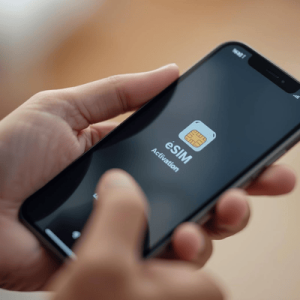
- Select the option to add a plan and choose to use a QR code.
- Scan the QR code from your confirmation email using your phone’s camera.
- Follow the on-screen prompts to label your new plan (e.g., “Italy Data”) and set its role. You can designate it for cellular data only while keeping your primary SIM for calls and texts.
Step 4: Activate and Use Your Data Abroad
Once you land at your destination, all you need to do is switch on your new data plan.
- Go back to your phone’s cellular settings.
- Select the eSIM plan you just installed.
- Turn on the line and ensure “Data Roaming” is enabled for that specific eSIM. (Don’t worry, this won’t incur charges from your home provider, as it only applies to the prepaid eSIM plan).
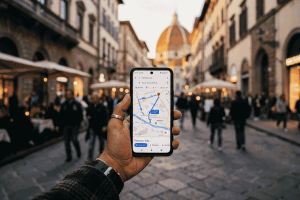
- Your phone will automatically connect to the local network, and you’ll have instant internet access. You can now use maps, browse the web, and use messaging apps without hunting for Wi-Fi.
eSIM vs. Physical SIM vs. Roaming: A Traveler’s Comparison
Choosing the right connectivity option can significantly impact your travel experience in terms of cost, convenience, and reliability. While traditional methods have their place, the advantages of an embedded SIM become clear when compared side-by-side. The table below breaks down the key differences between using an eSIM, buying a local physical SIM, and relying on your home carrier’s roaming plan.
| Feature | Embedded SIM (e.g., Terminal eSIM) | Local Physical SIM | International Roaming Plan |
| Convenience | Excellent. Purchase and install from anywhere before you travel. Instant activation upon arrival. No physical swapping needed. | Fair. Requires finding a local store, potential language barriers, and physically swapping SIM cards. | Good. Automatically activates abroad, but requires pre-trip setup with your home carrier. |
| Cost | Excellent. Highly competitive, prepaid plans with no hidden fees. Pay only for the data you need. | Good. Generally affordable, but prices can vary. May involve minimum top-up amounts. | Poor. Typically the most expensive option, with high daily rates or per-MB charges that can lead to bill shock. |
| Flexibility | Excellent. Store multiple eSIM profiles and switch between them easily. Get plans for single countries or entire regions. | Poor. Locked to one carrier per physical card. Need a new card for each country. | Fair. Often covers multiple countries, but plans can be restrictive and less customizable. |
| Phone Number | Excellent. Keep your primary phone number active for calls and texts while using the eSIM for data. | Poor. You must remove your primary SIM, losing access to your regular number unless you have a dual-SIM phone. | Excellent. You keep your primary phone number for all services. |
| Security | Good. No risk of losing a small, physical SIM card. Digital profiles are securely managed on your device. | Fair. Risk of losing your primary or the new local SIM card during the swap. | Good. Managed by your trusted home carrier. |
The comparison highlights a clear winner for the modern traveler. An embedded SIM offers the cost-effectiveness of a local plan combined with even greater convenience than a roaming package. The ability to prepare in advance, maintain access to your primary number, and enjoy instant connectivity upon landing makes it an unparalleled solution. While local SIMs are still a viable budget option and roaming offers simplicity at a high price, the embedded SIM provides the best of all worlds without the traditional drawbacks.
Common Questions and Future Trends in Travel Connectivity
As more travelers discover the benefits of embedded SIM technology, a few common questions and concerns naturally arise. At the same time, the technology continues to evolve, pointing toward an even more connected future for globetrotters. Here, we address some frequently asked questions and explore the exciting trends on the horizon.
Frequently Asked Questions (FAQs)
- 1. What happens if I use up my eSIM data?
It’s simple and hassle-free. Most eSIM providers, including Terminal eSIM, allow you to easily top up your existing plan or purchase a new one directly from their website or app. You can do this from anywhere as long as you can find a spot with Wi-Fi, ensuring you’re never left disconnected for long. - 2. Can I receive calls on my regular number while using an eSIM for data?
Yes, absolutely! This is one of the biggest advantages of using an embedded SIM. Because the eSIM handles your data, your physical SIM card (or primary eSIM) remains active for calls and texts on your regular phone number. This dual-SIM functionality means you won’t miss important calls or authentication texts from your bank while enjoying affordable local data. - 3. Is my phone unlocked? Do I need it to be for an eSIM?
Yes, your device must be “carrier-unlocked” to use an eSIM from a different provider. A locked phone is restricted to a single carrier’s network. If you bought your phone directly from the manufacturer (like Apple or Samsung), it’s likely unlocked. If you purchased it through a carrier on a payment plan, you may need to contact them to request an unlock once your contract is fulfilled. - 4. Are eSIMs secure?
eSIMs are just as secure, if not more so, than physical SIM cards. The data is digitally provisioned and encrypted on a dedicated, tamper-resistant chip inside your device. Furthermore, since there’s no physical card to lose or be stolen, you eliminate a common security risk associated with traditional SIMs.
Future Trends in Embedded SIM Technology
The world is rapidly moving toward an “eSIM-first” approach. Apple has already released eSIM-only iPhone models in the United States, a clear signal of the industry’s direction. We can expect more device manufacturers to follow suit, eventually phasing out the physical SIM tray altogether. This will drive innovation, making eSIMs even easier to use and more widely available. Look for advancements like iSIM (Integrated SIM), where the SIM functionality is built directly into the device’s main processor, further reducing cost and size while improving power efficiency. For travelers, this means connectivity will become an even more seamless, integrated part of the device experience.
The Clear Choice for Smart, Modern Travel
The evolution from bulky physical SIM cards to the streamlined, digital format of an embedded SIM represents a major leap forward for global connectivity. As we’ve explored, the benefits are too significant for any frequent or even occasional traveler to ignore. The days of stressful airport searches for a SIM vendor, the fear of losing a tiny plastic chip, and the shock of a massive roaming bill are quickly becoming relics of the past.
An embedded SIM offers a perfect trifecta of travel benefits: unparalleled convenience, significant cost savings, and powerful flexibility. The ability to purchase and set up your data plan before your trip provides peace of mind and ensures you’re connected the moment you touch down. This allows you to navigate, communicate, and share your experiences without delay or interruption. Furthermore, the technology allows you to keep your primary phone number active, so you remain reachable for important calls and texts from home.
For digital nomads, business travelers, and vacationers alike, the embedded SIM is not just a novelty; it is an essential tool. It simplifies one of the most persistent challenges of international travel and empowers you to explore the world with confidence and ease. The choice is clear: embracing the embedded SIM is embracing a smarter, more efficient, and more enjoyable way to travel.
Stay Connected Anywhere with Terminal eSIM
Are you ready to transform your travel experience? Say goodbye to high roaming fees and the hassle of physical SIM cards forever. With an embedded SIM, you hold the power of global connectivity right in your phone. Whether you’re a digital nomad working from a cafe in Lisbon, a family exploring the temples of Kyoto, or a backpacker trekking through Patagonia, seamless internet access is no longer a luxury—it’s a necessity.
Terminal eSIM makes it incredibly simple. We offer affordable, reliable data plans for over 190 countries and regions around the world. Our platform is designed for travelers, providing instant activation and top-notch support so you can focus on your adventure, not your phone bill. Stop planning your trips around Wi-Fi hotspots and start exploring with the freedom of constant connectivity.
Check your phone’s compatibility and browse our extensive range of data plans today. Your next journey deserves to be effortless.