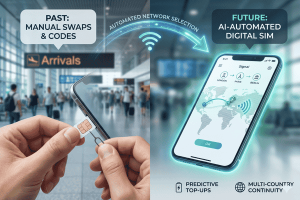
Traditional travel connectivity, with its expensive roaming charges and inconvenient physical SIM swaps, is quickly becoming a thing of the past. As our world becomes more connected, the demand for seamless, affordable, and instant communication has never been higher. eSIM plans are stepping up to meet this demand, fundamentally changing how we stay in touch while exploring the globe. They offer a level of convenience and flexibility that was previously unimaginable, making them an essential tool for the modern traveler. This shift isn’t just a trend; it’s the definitive future of travel connectivity.
The Evolution of the SIM: From Plastic to Pixels
To appreciate the revolution of eSIM technology, it helps to look back at the journey of its predecessor: the physical SIM card. The term “SIM” stands for Subscriber Identity Module, a small chip that has been the heart of mobile communication for decades. It securely stores the information needed to identify and authenticate you on a mobile network. The journey began in 1991 with the first SIM card, which was roughly the size of a credit card. While revolutionary, it was clunky and impractical for the increasingly compact mobile phones being developed.
This led to the creation of smaller versions. First came the Mini-SIM in the mid-90s, which became the standard for many years. As smartphones emerged and device manufacturers sought to save every millimeter of internal space, the Micro-SIM was introduced in 2010, followed by the even smaller Nano-SIM in 2012. Each new iteration required travelers to either get a new card or use a sometimes-finicky adapter. The process of staying connected abroad often involved a familiar ritual: landing in a new country, finding a local carrier’s kiosk, navigating language barriers to purchase a local SIM, and using a special pin tool to eject the tiny tray and swap out the card. This process was not only inconvenient but also meant you couldn’t use your primary phone number until you switched back.
The eSIM, or embedded SIM, eliminates this entire process. Instead of a physical, swappable card, an eSIM is a small, programmable chip built directly into your device’s motherboard. It can be digitally provisioned with new mobile plans from anywhere in the world with an internet connection. This digital nature means you can store multiple eSIM profiles on a single device and switch between them with just a few taps in your phone’s settings. For travelers, this is a game-changer. You can purchase and install affordable esim plans for your destination before you even leave home, ensuring you’re connected the moment you land. This evolution from a physical piece of plastic to a digital profile represents a massive leap forward in user convenience and technological efficiency.
Getting Started with eSIM Plans: A Practical Guide
Making the switch to an eSIM is simpler than you might think. It’s a straightforward process that unlocks a new level of travel freedom. With a provider like Terminal eSIM, you can be ready to connect in just a few minutes. Here’s a step-by-step guide to get you started on your journey with digital connectivity.
Step 1: Check Your Device’s Compatibility
First, you need to ensure your smartphone is eSIM-compatible. Most modern smartphones from major manufacturers like Apple, Samsung, and Google support eSIM technology. A quick way to check is to go into your phone’s settings.
- On iPhone: Go to Settings > Cellular (or Mobile Data). If you see an option like “Add eSIM” or “Add Cellular Plan,” your device is compatible.
- On Android (Samsung/Pixel): Go to Settings > Connections > SIM Card Manager. If you see an “Add eSIM” option, you’re good to go.
You can also find comprehensive lists of compatible devices on your provider’s website, including the support page for Terminal eSIM.
Step 2: Choose and Purchase Your eSIM Plan
Once you’ve confirmed compatibility, it’s time to select the right plan for your trip. This is where the flexibility of eSIMs truly shines. Instead of being locked into a one-size-fits-all plan, you can choose one that perfectly matches your needs.
- Browse Plans by Destination: Head to a provider’s website, like Terminal eSIM, and browse the available esim plans. You can search by country, region (e.g., Europe, Asia), or even select a global plan if you’re a multi-country adventurer.
- Select Data Amount and Validity: Consider how long your trip is and how much data you’ll need. Plans typically range from 1 GB for a short trip to 20 GB or more for longer stays or heavy data users. The validity period (e.g., 7 days, 30 days) should cover the duration of your travel.
Step 3: Install and Activate Your eSIM
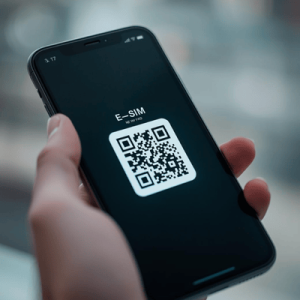
After purchasing your plan, you’ll receive a confirmation email containing a QR code. The installation process is digital and takes only a minute.
- Connect to Wi-Fi: You need an internet connection to download the eSIM profile.
- Scan the QR Code: On your phone, navigate back to the eSIM settings menu mentioned in Step 1 and select the option to add an eSIM. Your phone’s camera will open. Simply scan the QR code from your email.
- Follow the On-Screen Prompts: Your phone will guide you through the final setup steps, which include labeling your new eSIM (e.g., “Spain Travel”) and choosing how you want to use it alongside your primary SIM (e.g., use the eSIM for mobile data and your primary SIM for calls and texts).
You can complete this entire process from the comfort of your home before you depart. Then, once you arrive at your destination, simply switch your mobile data over to your newly installed eSIM, and you’ll be connected instantly.
Comparing Connectivity Options for Modern Travelers
When planning a trip, choosing how to stay connected is a critical decision. While traditional options have served travelers for years, eSIMs offer a distinctly modern advantage. Let’s compare the most common methods to see how they stack up.
| Feature | eSIM Plans | Local Physical SIMs | International Roaming |
| Convenience | Instant digital activation via QR code. Can be purchased and installed before travel. No physical swap needed. | Requires finding a store upon arrival, dealing with paperwork, and physically swapping cards. | Activated by your home carrier. Simple to use but can be difficult to manage costs. |
| Cost | Highly competitive and transparent. Pay only for the data you need for a specific duration. | Generally affordable for local use, but can involve hidden fees or minimum top-up amounts. | Often extremely expensive, with high per-MB data rates and potential for “bill shock.” |
| Flexibility | Store multiple plans on one device and switch between them easily. Ideal for multi-country trips. | Locked to one carrier. A new SIM is needed for each country, making it impractical for multi-destination travel. | Works in many countries, but plan features and costs can vary wildly by location. |
| Phone Number | Keeps your primary number active for calls and texts while using the eSIM for data. | Requires removing your primary SIM, so you can’t receive calls or texts on your regular number. | Your primary phone number remains active, which is a key benefit. |
| Accessibility | Purchase from anywhere with an internet connection, 24/7. | Limited to store hours and availability at airports or in cities. Can be difficult to find in rural areas. | Typically enabled by default or with a quick call to your carrier, but plans may have restrictions. |
In summary, while each option has its place, esim plans offer a superior blend of convenience, cost-effectiveness, and flexibility. International roaming is simple but often prohibitively expensive. Local SIM cards are affordable but come with the significant inconvenience of purchasing and swapping physical cards, especially for travelers visiting multiple countries. eSIMs combine the best of both worlds: the affordability of local rates with the convenience of a digital, pre-trip setup. This allows travelers to land and connect immediately without stress, making it the clear winner for most travel scenarios.
Answering Your Top Questions About eSIMs for Travel
As with any new technology, travelers have valid questions and concerns about making the switch. Understanding the nuances can help you travel with confidence. Here, we address some of the most common issues and provide clear solutions.
Traveler FAQs: eSIMs Unpacked
- Can I still receive calls and texts on my regular phone number?
Yes, absolutely. This is one of the biggest advantages of using an eSIM. Most modern smartphones have Dual SIM, Dual Standby (DSDS) functionality. This means you can keep your primary physical SIM (or eSIM) active for calls and texts while using your travel eSIM for affordable mobile data. In your phone’s settings, you can designate your primary line for voice and your travel eSIM for data. You’ll avoid roaming charges from your home carrier for data use but remain reachable on your main number. - What happens if I use up all my data?
Running out of data mid-trip is a common concern, but with eSIMs, it’s an easy problem to solve. Unlike physical SIM cards that might require you to find a store to top up, you can simply purchase a new eSIM plan or top up your existing one directly from your provider’s website or app. For example, with Terminal eSIM, you can buy another plan for your destination, install it in seconds, and continue your journey without interruption. It’s a seamless process that you can complete from anywhere you have a Wi-Fi connection. - Is my device secure when using an eSIM?
eSIMs are just as secure, if not more so, than physical SIM cards. The “e” in eSIM stands for “embedded,” meaning the chip is an integral part of your device’s hardware. This makes it impossible to be physically stolen or cloned in the same way a removable SIM card could be. The activation process is also secure, relying on encrypted QR codes provided by trusted carriers. You are downloading a certified carrier profile directly to your device, ensuring a safe and authenticated connection to the network. - What if I have a problem with my eSIM while traveling?
Reputable eSIM providers offer robust customer support. Before you travel, it’s a good idea to note the support channels available, such as email, live chat, or a help center. Many common issues, such as incorrect APN settings, can be resolved quickly by consulting the provider’s FAQ section. With Terminal eSIM, our dedicated support team is available to help you troubleshoot any issues, ensuring you’re never left without a connection when you need it most.
A Quick Recap: Your New Travel Essential
We’ve covered a lot of ground, so let’s summarize why esim plans are becoming the non-negotiable standard for savvy travelers. The journey of mobile connectivity has evolved from cumbersome, credit-card-sized SIMs to the tiny, embedded chips in our phones today. This shift from physical to digital has unlocked a new era of convenience.
With an eSIM, you can say goodbye to hunting for local SIM vendors in crowded airports, fumbling with ejector pins, and worrying about losing your tiny home SIM card. Instead, you can purchase an affordable, country-specific data plan before you even pack your bags. Installation is as simple as scanning a QR code, and activation happens the moment you land. You get to keep your primary number for important calls and texts while using the eSIM for cheap, fast local data. This dual-SIM capability, combined with the flexibility to top up or switch plans digitally, offers a travel experience free from the connectivity headaches of the past. It’s simply a smarter, more efficient way to stay online.
Unlock the World with Terminal eSIM
The benefits are clear: esim plans offer unparalleled convenience, cost savings, and flexibility for anyone who travels. Whether you’re a digital nomad hopping between continents, a family on a two-week vacation, or a business traveler on a short trip, the ability to connect instantly and affordably is transformative. No more bill shock from expensive roaming charges. No more wasted time searching for a SIM card. Just seamless, reliable connectivity from the moment you arrive.
The future of travel is about experiences, not logistics. By adopting eSIM technology, you’re simplifying a crucial part of your journey, leaving you with more time and peace of mind to enjoy what truly matters: exploring a new culture, closing a business deal, or making memories with loved ones. It’s time to upgrade your travel toolkit.
Ready to experience the freedom of instant connectivity? Explore the wide range of affordable and reliable esim plans available at Terminal eSIM and make your next trip the most connected one yet.