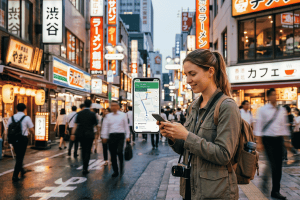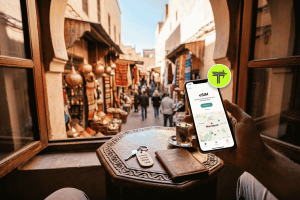
Choosing the right international mobile plan is crucial for a smooth journey, yet many travelers make costly mistakes that leave them with huge bills or no service when they need it most.
This guide will walk you through the five most common pitfalls to avoid when selecting an international mobile plan. We’ll cover everything from underestimating your data needs to overlooking the fine print on fair usage policies. By understanding these potential issues, you can make a smarter, more informed choice. Our goal is to help you stay connected effortlessly and affordably, so you can focus on what really matters: enjoying your trip. With the right knowledge and a modern solution like Terminal eSIM, you can leave connectivity worries behind for good.
The Evolution of Staying Connected Abroad
For decades, international travel meant being cut off from your digital life or facing exorbitant costs. The traditional approach involved contacting your home mobile provider to activate an international roaming package. These plans were often expensive, offering minimal data for a high daily fee. Travelers frequently returned home to “bill shock”—a surprisingly massive phone bill filled with charges for data, calls, and texts made overseas. For example, a simple act like using Google Maps for an hour could eat through an entire day’s data allowance, triggering overage fees that quickly added up.
The alternative was to buy a local physical SIM card upon arrival. This method provides a local number and generally cheaper data rates, but it comes with its own set of challenges. You have to find a store at the airport or in the city, deal with potential language barriers, and go through the hassle of physically swapping out your tiny home SIM card—and trying not to lose it. This process can be time-consuming and inconvenient, especially after a long flight. It also means you temporarily lose access to your primary phone number, which can be an issue for receiving important calls or verification texts.
This complicated landscape is what paved the way for a revolutionary technology: the eSIM (embedded SIM). An eSIM is a digital SIM that allows you to activate a cellular plan from a carrier without having to use a physical nano-SIM. For travelers, this is a game-changer. Instead of juggling plastic cards, you can download and install a data plan directly onto your phone. This innovation offers unparalleled flexibility, allowing you to switch between plans and carriers with just a few taps. Solutions like Terminal eSIM build on this technology, providing access to affordable, high-speed data in hundreds of countries without the need for a physical SIM card swap.

How to Choose the Right International Mobile Plan: A Practical Guide
Selecting the perfect international mobile plan doesn’t have to be complicated. By focusing on a few key areas, you can avoid common mistakes and ensure you have reliable connectivity from the moment you land. Here are actionable tips to guide your decision-making process.
Mistake #1: Ignoring Coverage and Network Quality
Not all plans offer the same level of service in every destination. It’s a huge mistake to assume a plan that works well in France will offer the same performance in Japan.
- Actionable Tip: Before purchasing, check the provider’s coverage map for each country on your itinerary. Look for providers that partner with top-tier local carriers (e.g., T-Mobile, Vodafone, Orange) to ensure you get the best possible signal strength and data speeds. Terminal eSIM, for instance, clearly lists its network partners for each country, giving you transparency and peace of mind.
Mistake #2: Underestimating Your Data Needs
Running out of data mid-trip is a common and frustrating problem. Many travelers buy the cheapest, smallest data package available, only to find it’s gone in a day or two.
- Actionable Tip: Audit your typical data usage at home for a few days before you travel. Go to your phone’s settings and see how much data you use for social media, maps, streaming, and browsing. A good rule of thumb for a moderate user is to budget at least 1GB of data per day. If you plan to work remotely or stream videos, aim for more. It’s often more cost-effective to buy a slightly larger plan upfront than to pay for expensive top-ups later.
Mistake #3: Overlooking the Fine Print
Hidden fees, restrictive “fair usage” policies, and data throttling can turn a great deal into a bad experience. Some plans advertise “unlimited” data but slow your speeds dramatically after you hit a certain threshold.
- Actionable Tip: Always read the terms and conditions. Look for details on data speed throttling, daily usage caps, and whether the plan allows tethering (using your phone as a hotspot). A trustworthy international mobile plan provider will be upfront about these limitations.
Mistake #4: Forgetting to Check Device Compatibility
The latest and greatest international mobile plan is useless if your phone doesn’t support it. This is especially true for eSIMs, which require a compatible, unlocked device.
- Actionable Tip: Before you buy, confirm two things: 1) Is your phone unlocked? If you bought it directly from a carrier, it might be locked to their network. Contact them to request an unlock. 2) Does your phone support eSIM? Most smartphones released since 2018 do, but you can easily check by dialing *#06# on your phone. If an “EID” number appears, your device is eSIM-compatible.
Mistake #5: Waiting Until the Last Minute
Buying a plan at the airport is almost always the most expensive and stressful option. You’ll have limited choices and will likely overpay for a mediocre plan.
- Actionable Tip: Plan ahead. Research and purchase your international mobile plan before you leave home. With an eSIM from a provider like Terminal eSIM, you can install it a day or two before your flight and activate it the moment you land. This way, you’re connected instantly without any hassle.
Comparing Your Options: Traditional vs. Modern Solutions
Choosing the right international mobile plan means understanding the trade-offs between different options. From traditional roaming plans to modern eSIMs, each has its own set of pros and cons regarding cost, convenience, and performance.
To make it clearer, let’s compare the most common choices for a traveler planning a 14-day trip to Europe, visiting three different countries.
| Feature | Home Carrier Roaming | Local Physical SIM | Terminal eSIM |
| Activation Process | Call provider before trip | Find a store, purchase, and swap SIMs upon arrival | Purchase online, scan a QR code, and activate instantly |
| Cost | High (e.g., $10-$15 per day) | Low to Medium (e.g., $20-$40 per SIM) | Low (e.g., $15-$30 for a regional plan) |
| Convenience | Medium (requires pre-planning) | Low (time-consuming, risk of losing home SIM) | High (can be set up before travel, no physical swap) |
| Coverage | Varies by partner network | Limited to one country per SIM | Seamless multi-country coverage with one plan |
| Flexibility | Low (locked into one provider) | Low (requires a new SIM for each country) | High (easily switch plans or top up via an app) |
| Phone Number | Keeps your home number | Provides a new, local number | Keeps your home number for calls/texts, uses eSIM for data |
As the table shows, traditional roaming plans from home carriers are convenient but by far the most expensive option. They can be a decent fallback for very short trips but become financially impractical for longer stays.
Local physical SIM cards offer a more affordable way to get data, but they introduce significant hassle. The need to purchase a new SIM in each country is a major drawback for multi-destination travelers. Furthermore, you lose access to your primary phone number, which can be critical.
Terminal eSIM emerges as the superior choice for the modern traveler. It combines the best of both worlds: affordability that rivals local SIMs and convenience that surpasses even traditional roaming. With a single regional plan, you can travel across Europe without ever thinking about your connection. The ability to set everything up before you leave and activate service instantly upon arrival removes all the stress, making it the clear winner for cost, convenience, and flexibility.
Common Traveler Questions and Emerging Trends
As travel resumes and technology evolves, the way we think about staying connected is changing. Travelers are more tech-savvy than ever, and their expectations for seamless connectivity are high. This has led to the rise of eSIM technology as the new standard for international travel. Let’s address some common questions and trends related to choosing an international mobile plan.
One major trend is the demand for regional and global plans. Instead of buying country-specific packages, travelers want a single plan that covers an entire continent or even the whole world. Digital nomads, backpackers, and business travelers hopping between cities find this incredibly valuable. A regional eSIM for Europe, for example, allows you to cross borders from Portugal to Poland without ever losing service or needing to switch plans.
Another trend is the increasing importance of data security. Public Wi-Fi in cafes, hotels, and airports is notoriously insecure, leaving you vulnerable to data theft. Using a private, secure cellular connection from an eSIM is a much safer way to handle sensitive information like banking or work emails while on the go.
Frequently Asked Questions (FAQs)
- Can I keep my home phone number while using an eSIM?
Yes, absolutely. Most modern smartphones are Dual SIM, meaning you can have your primary physical SIM (or eSIM) active for calls and texts from your home number while using your Terminal eSIM for affordable mobile data abroad. This gives you the best of both worlds. - What happens if I run out of data on my eSIM plan?
With a provider like Terminal eSIM, topping up is simple. You can easily purchase more data directly through the app or website without needing to find a physical store or install a new plan. The process is instant, so you’ll be back online in minutes. - Is my phone compatible with eSIM technology?
Most smartphones manufactured since 2018, including iPhones (XS and newer), Google Pixels (3 and newer), and Samsung Galaxy devices (S20 and newer), are eSIM-compatible. The easiest way to be sure is to check your phone’s settings for an “Add eSIM” or “Add Cellular Plan” option, or by dialing *#06# to see if an EID number is displayed. - How much data do I really need for my trip?
This depends entirely on your usage habits. Light users who only need maps and occasional messaging might be fine with 5GB for a week. Moderate users who browse social media and websites should aim for 10-20GB. Heavy users who stream video, attend video calls, or use a hotspot should consider larger or unlimited plans to avoid running out.
Summary: Making the Smart Choice for Global Connectivity
Choosing the right international mobile plan is a critical part of modern travel planning. Making a mistake can lead to frustrating connectivity issues or a shockingly high phone bill when you return home. We’ve explored the five most common errors travelers make: ignoring network coverage, underestimating data needs, overlooking the fine print, forgetting device compatibility, and waiting until the last minute to make a purchase. By being mindful of these pitfalls, you can approach your decision with confidence.
We’ve seen how the landscape of international connectivity has evolved from expensive roaming packages and inconvenient physical SIM cards to the streamlined, flexible solution offered by eSIM technology. A provider like Terminal eSIM leverages this innovation to deliver affordable, reliable data across the globe. By allowing you to purchase and set up your plan before you even leave home, eSIMs remove the stress and uncertainty of staying connected abroad. The ability to keep your primary number active while using a separate data plan is a significant advantage, ensuring you never miss an important call or text.
Your Adventure Awaits—Stay Connected with Terminal eSIM
The freedom to explore the world shouldn’t come with the anxiety of staying connected. Whether you’re a digital nomad building a business from Bali, a student backpacking across Europe, or a family on a much-needed vacation, reliable mobile data is no longer a luxury—it’s a necessity. It’s your map, your translator, your connection to loved ones, and your source of information. Don’t let an overpriced or unreliable international mobile plan hold you back.
By avoiding the common mistakes we’ve outlined, you’re already on your way to making a smarter choice. The next step is to embrace the future of travel connectivity. With Terminal eSIM, you get instant access to high-speed, affordable data in over 190 countries. There are no hidden fees, no plastic SIMs to lose, and no waiting in line at airport kiosks. Just simple, seamless connectivity that works the moment you land.
Ready to travel smarter? Explore our flexible and affordable plans today and discover how easy staying connected can be.
Visit TerminaleSIM.com to find the perfect plan for your next trip!