
It’s a digital revolution in a tiny embedded chip, and understanding how to leverage it can transform your travel experience.
But what exactly is an eSIM, and how do you navigate the world of eSIM plans to find the right one for your trip? It can seem complex at first, with terms like “digital SIM,” “embedded SIM,” and various data packages. This guide is here to demystify it all. We will walk you through what eSIMs are, how they work, and how to choose the perfect plan for your adventures. By the end, you’ll have the confidence to ditch physical SIMs for good and embrace seamless, affordable connectivity wherever you go.
What is an eSIM and How Does It Work?
At its core, an eSIM—or embedded Subscriber Identity Module—is a digital version of the traditional physical SIM card you’re used to. Instead of a plastic chip that you need to insert into your phone, an eSIM is a small chip that is built directly into your device’s motherboard during manufacturing. This fundamental difference is what makes it so powerful and flexible for travelers.
The concept isn’t entirely new; the GSMA, the organization that sets standards for the mobile industry, began formalizing eSIM specifications around 2013. However, it was Apple’s adoption of the technology in its iPhones starting in 2018 that truly brought eSIMs into the mainstream. Today, most flagship smartphones from major brands like Google, Samsung, and others come equipped with eSIM capabilities.
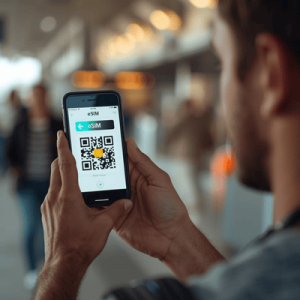
So, how does it function without a physical card to swap? The information that a traditional SIM card holds—your unique mobile identity and network access credentials—is downloaded directly onto the eSIM chip. This is done by installing a “profile” provided by a mobile carrier or a global provider like Terminal eSIM. You typically receive this profile as a QR code or through an app. Once you scan the code or follow the in-app instructions, your phone downloads the plan, and you can connect to the designated network.
The true magic lies in its reprogrammable nature. Your phone’s eSIM can store multiple profiles at once, though you can only use one or two at a time depending on your device model. This means you can have your home plan from Verizon or T-Mobile and simultaneously have a travel eSIM plan for Japan, another for Europe, and another for Mexico, all stored on the same device. You can switch between them with just a few taps in your phone’s settings, making it incredibly convenient to manage connectivity across different regions.
How to Choose the Best eSIM Plans for Your Travels
Choosing the right eSIM plan can feel overwhelming with so many options available. However, by focusing on a few key factors, you can easily find a plan that fits your travel style and budget. The goal is to get the connectivity you need without overpaying for data you won’t use. Here’s a practical guide to help you select the perfect eSIM plans for your next trip.
First, consider your destination and trip duration. Are you visiting a single country, or are you backpacking across a continent? Providers like Terminal eSIM offer country-specific, regional, and even global plans.
- Single-Country Plans: Ideal for trips focused on one destination, like a week in Italy or two weeks in Thailand. These are often the most cost-effective.
- Regional Plans: Perfect for multi-country trips, such as a European tour or a journey through Southeast Asia. A single regional plan from a provider like Terminal eSIM covers dozens of countries, so you don’t have to switch plans every time you cross a border.
- Global Plans: Best for long-term travelers, digital nomads, or business professionals visiting multiple continents. These offer the ultimate convenience, providing coverage in over 100 countries under one plan.
Next, estimate your data needs. This is crucial for avoiding unexpected top-ups. Think about how you use your phone while traveling.
- Light User (1-3 GB per week): You primarily use data for maps, messaging apps (like WhatsApp), and occasional web browsing.
- Medium User (5-10 GB per week): You stream music, use social media frequently, and make video calls in addition to basic navigation and messaging.
- Heavy User (15+ GB per week): You stream high-definition videos, use your phone as a mobile hotspot for work, or upload large files.
Finally, check the plan’s validity period. eSIM plans come with a set duration (e.g., 7 days, 15 days, 30 days). Ensure the validity covers your entire trip. Some plans activate upon installation, while others start when they first connect to a network in the destination country. Reading these details carefully will help you maximize the value of your chosen plan.
Comparing Your Connectivity Options: eSIM vs. Physical SIM vs. Roaming
When planning for international travel, you have several options for staying connected. Each comes with its own set of advantages and disadvantages. Here’s a detailed comparison to help you understand why eSIM plans are often the superior choice for modern travelers.
| Feature | eSIM Plans (e.g., Terminal eSIM) | Local Physical SIM | International Roaming |
| Convenience | Instant activation via QR code before you even leave home. No physical swapping needed. | Requires finding a store, dealing with language barriers, and physical installation. | Activated automatically by your home carrier, but often needs to be enabled. |
| Cost | Highly affordable, with clear upfront pricing. Pay only for the data you need. | Generally cheap for local use, but initial purchase can be inconvenient. | Extremely expensive. Can lead to “bill shock” with surprise charges of hundreds or thousands of dollars. |
| Flexibility | Store multiple plans on one device and switch between them easily. | One plan per SIM slot. Dual-SIM phones can hold two, but it’s still limiting. | Tied to your home carrier’s single plan and their partner networks. No flexibility. |
| Security | More secure. Cannot be physically stolen or cloned like a traditional SIM card. | Can be lost, damaged, or stolen, potentially compromising your number. | Generally secure, as it’s managed by your primary carrier. |
| Coverage | Excellent coverage through partnerships with top-tier local networks in each country. | Limited to the network of the carrier you purchase from. | Varies greatly. Can be unreliable or slow depending on your carrier’s agreements. |
As the table shows, eSIM plans offer a powerful combination of convenience, affordability, and flexibility that other options can’t match. International roaming is prohibitively expensive for most people and should be considered an emergency-only option. While local physical SIMs are cheap, the hassle of acquiring one upon arrival—especially after a long flight—is a significant drawback.
eSIMs, particularly from a dedicated travel provider like Terminal eSIM, eliminate these pain points. You can purchase and install your plan from the comfort of your home, ensuring you’re connected the moment you land. This allows you to immediately order a rideshare, check your hotel booking, or let loved ones know you’ve arrived safely, all without paying a fortune.
Common Traveler Concerns and eSIM FAQs
Switching to a new technology can bring up questions and concerns. Many travelers wonder if eSIMs are reliable, if their phone is compatible, or if they’ll lose their primary phone number. Let’s address these common issues and provide clear answers to frequently asked questions.
One major trend is the move toward eSIM-only devices. Apple’s iPhone 14 and subsequent models sold in the United States are eSIM-only, meaning they have no physical SIM tray. This shift is pushing more travelers to adopt eSIM technology out of necessity, and other manufacturers are expected to follow suit. This makes understanding eSIM plans more important than ever. Travelers are also increasingly seeking longer-term and larger data packages to support remote work and digital nomad lifestyles, a need that flexible eSIM providers are well-positioned to meet.
Frequently Asked Questions (FAQs)
- Is my phone compatible with an eSIM?
Most modern smartphones released since 2018 are eSIM-compatible. This includes iPhone XS and newer, Google Pixel 3 and newer, and Samsung Galaxy S20 and newer models. The easiest way to check is to go to your phone’s settings and look for an option related to adding an “eSIM,” “Cellular Plan,” or “Mobile Plan.” You can also find comprehensive lists of compatible devices on provider websites like Terminal eSIM. - Can I use my regular phone number while using a travel eSIM?
Yes, absolutely! This is one of the best features of dual-SIM technology, which eSIM enables. You can keep your primary line active for receiving calls and texts (be mindful of your home carrier’s roaming charges for this) while using the travel eSIM for all your mobile data needs. This setup gives you the best of both worlds: you stay reachable on your main number while enjoying affordable local data. - What happens if I use up all my data?
With most eSIM providers, running out of data is a simple problem to solve. You won’t be hit with overage charges. Instead, your data will simply stop working. Providers like Terminal eSIM make it easy to top up your plan directly through their website or app. You can purchase another data package for your destination, and it will be added to your existing eSIM profile without needing to install anything new. - Is it difficult to set up an eSIM?
Not at all. The process is designed to be user-friendly. After purchasing a plan, you will receive a QR code via email. On your phone, go to Settings > Cellular (or Mobile Data) > Add Cellular Plan. Scan the QR code with your camera, and your phone will guide you through a few simple steps to label and activate the plan. The entire process usually takes less than two minutes.
Your Summary for Seamless Global Connectivity
Traveling in the 21st century requires reliable and affordable internet access, and eSIM technology has emerged as the definitive solution for the modern traveler. We’ve explored how this embedded digital SIM works, moving beyond the limitations of physical cards to offer unparalleled flexibility and convenience. By downloading a digital profile directly to your phone, you can connect to local networks around the world instantly.
We’ve provided a practical guide to selecting the best eSIM plans, emphasizing the importance of matching your plan to your destination, trip duration, and data usage habits. Whether you need a small data package for a weekend getaway or a comprehensive regional plan for a multi-country tour, providers like Terminal eSIM offer tailored options. The comparison with traditional physical SIMs and exorbitant international roaming charges clearly shows that eSIMs provide a superior balance of cost, convenience, and control.
Furthermore, we’ve addressed common questions and concerns, confirming that most modern phones are compatible, that you can keep your primary number active, and that setup is a quick and straightforward process. With the industry trending toward eSIM-only devices, embracing this technology now will prepare you for the future of travel.
Unlock the World with Terminal eSIM
The days of stressful airport SIM card hunts and shocking roaming bills are over. For the savvy traveler, digital nomad, or frequent flyer, eSIM technology is more than just a convenience—it’s a fundamental upgrade to your travel toolkit. It empowers you to step off the plane with the confidence that you are already connected, ready to navigate, communicate, and share your journey without hesitation. This is the freedom that defines modern travel.
With Terminal eSIM, you gain access to a world of affordable, high-speed data. Our eSIM plans are designed specifically for travelers, offering reliable coverage in over 100 countries. We partner with top-tier network operators to ensure you receive the best possible service, wherever your adventures take you. Forget the hassle of physical SIMs and the fear of roaming fees. Choose a smarter way to stay connected.
Are you ready to transform your travel experience? Explore our wide range of flexible and budget-friendly eSIM plans today. Find the perfect plan for your next destination and join the thousands of travelers who have made the switch to seamless connectivity.