
But what if staying connected abroad was as simple as scanning a QR code? Welcome to the world of eSIM technology.
An eSIM, or embedded SIM, is a digital version of the traditional physical SIM card. It’s built directly into your device, allowing you to activate a cellular plan from a provider without needing to insert anything. This technology is a game-changer for globetrotters, digital nomads, and casual vacationers alike. By choosing one of the many eSIM compatible phones available today, you can switch between mobile networks, enjoy local data rates, and keep your home number active for calls and texts. This guide will walk you through everything you need to know about eSIMs, from how they work to which phones support them, so you can travel smarter and stay connected effortlessly.
What Is an eSIM and Why Is It a Traveler’s Best Friend?
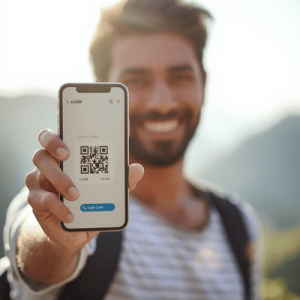
At its core, an eSIM is a small chip embedded inside your phone that functions just like a traditional SIM card. The key difference is that its information is rewritable. Instead of being tied to one carrier, an eSIM can be programmed and reprogrammed with different carrier profiles. Think of it as a digital slate that you can wipe clean and write on again with a new plan whenever you need one. This is all done digitally, usually by scanning a QR code or through a carrier’s app, eliminating the need to physically swap cards.
The journey of the SIM card has been one of constant shrinkage. We went from the credit card-sized SIMs of the early 90s to the Mini, Micro, and finally, the Nano-SIM that most of us use today. Each step made phones slimmer and more efficient, but the fundamental concept remained the same: a physical token to connect you to a network. The eSIM represents the next logical leap in this evolution, moving from physical to purely digital. First introduced in 2016, the technology gained mainstream traction when major manufacturers like Apple and Google began integrating it into their flagship devices.
For travelers, the benefits are immense. Imagine landing in Tokyo and activating a local data plan while you’re still waiting for your luggage. No more searching for a store, struggling to communicate what you need, or paying exorbitant airport prices. With an eSIM, you can purchase a data plan from a provider like Terminal eSIM before you even leave home. This gives you instant connectivity upon arrival, so you can order a ride, check your hotel reservation, or let family know you’ve landed safely. Furthermore, since your phone’s physical SIM slot remains free, you can keep your home number active for receiving calls and important texts, like two-factor authentication codes from your bank. It offers the best of both worlds: affordable local data and the convenience of your primary number.
Your Guide to The Best eSIM Compatible Phones
Ready to embrace the freedom of eSIM technology? The first step is confirming you have one of the many eSIM compatible phones. Since the technology has become more widespread over the last few years, a large number of modern smartphones from major brands now include eSIM support. However, compatibility can sometimes vary by region or carrier model, so it’s always wise to double-check your specific device’s specifications.
You can typically find this information in your phone’s settings.
- On an iPhone: Go to Settings > Cellular (or Mobile Data). If you see an option to “Add eSIM” or “Add Cellular Plan,” your iPhone is compatible.
- On an Android phone: The path can vary, but it’s usually under Settings > Network & Internet > SIMs. Look for an option to “Add eSIM” or a “+” sign to add a new network via QR code.
Top eSIM Compatible Phones by Brand
Here is a breakdown of popular phone models that generally support eSIM technology.
Apple iPhones
Apple has been a major proponent of eSIMs. Most iPhones released since 2018 are compatible:
- iPhone XS, iPhone XS Max, and iPhone XR
- iPhone 11, 11 Pro, and 11 Pro Max
- iPhone SE (2nd and 3rd generation)
- iPhone 12, 12 Mini, 12 Pro, and 12 Pro Max
- iPhone 13, 13 Mini, 13 Pro, and 13 Pro Max
- iPhone 14, 14 Plus, 14 Pro, and 14 Pro Max (Note: US models are eSIM-only)
- iPhone 15, 15 Plus, 15 Pro, and 15 Pro Max (Note: US models are eSIM-only)
- iPhone 16, 16 Plus, 16 Pro, and 16 Pro Max
Google Pixel Phones
Google has also been an early adopter, integrating eSIMs into its Pixel line:
- Google Pixel 3, 3 XL, 3a, and 3a XL
- Google Pixel 4, 4 XL, and 4a
- Google Pixel 5 and 5a
- Google Pixel 6, 6 Pro, and 6a
- Google Pixel 7, 7 Pro, and 7a
- Google Pixel 8, 8 Pro, and Pixel Fold
Samsung Galaxy Phones
Many of Samsung’s flagship devices support eSIMs, but it’s crucial to check your specific model and region:
- Samsung Galaxy S20, S21, S22, S23, S24 series
- Samsung Galaxy Note20 and Note20 Ultra
- Samsung Galaxy Z Fold, Z Fold2, Z Fold3, Z Fold4, Z Fold5
- Samsung Galaxy Z Flip, Z Flip3, Z Flip4, Z Flip5
This list is not exhaustive, as many other brands like Huawei, Motorola, and Oppo also offer eSIM compatible phones. The key is to verify your device before purchasing an eSIM plan.
Comparing eSIM Providers for Your Next Trip
Once you’ve confirmed you have an eSIM compatible phone, the next step is choosing a provider. While your home carrier might offer international roaming packages, dedicated eSIM providers like Terminal eSIM often provide more flexible and affordable options tailored specifically for travelers. These providers focus on delivering data packages for different countries and regions, so you only pay for what you need.
To help you decide, here’s a comparison table looking at what a global eSIM provider typically offers versus a traditional carrier’s roaming plan.
| Feature | Terminal eSIM (Global Provider) | Traditional Carrier Roaming |
| Activation | Instant via QR code or app | Often requires calling customer service or enabling online |
| Cost | Low-cost, prepaid data packages (e.g., $10 for 5GB) | Expensive daily passes (e.g., $10-$15 per day) or high per-MB rates |
| Flexibility | Purchase plans for specific countries or regions as needed | Locked into a single carrier’s network and partners |
| Plan Types | Data-only plans, focused on internet access | Bundled plans that include calls and texts you may not need |
| Validity | Plans range from a few days to a month or more | Typically billed on a 24-hour cycle |
| Transparency | Clear, upfront pricing with no hidden fees | Prone to surprise charges and complex billing terms |
The key insight from this comparison is control. Global eSIM providers empower you to buy data like you buy a coffee—simple, quick, and for a fixed price. You avoid the “bill shock” that many travelers fear after returning from a trip. With Terminal eSIM, you can browse plans for over 100 destinations, choose the data amount and validity that matches your itinerary, and activate it in minutes. This model is perfectly suited for modern travel, where data for maps, translation apps, and sharing experiences is the top priority.
Common Questions and Future Trends for eSIMs
As eSIM technology becomes the new standard, travelers naturally have questions. At the same time, the industry continues to evolve, pointing toward a future where connectivity is even more seamless. Let’s address some common concerns and look at what’s next for eSIMs.
One major trend is the move toward eSIM-only devices. Apple’s decision to remove the physical SIM tray from its iPhone 14 and 15 models in the United States signals a clear shift. This design choice frees up internal space for other components, like a larger battery, and improves water resistance. As more manufacturers follow this trend, understanding how to use an eSIM will become an essential skill for all smartphone users, not just travelers.
Another development is iSIM (Integrated SIM), which integrates the SIM function directly into the device’s main processor. This will make devices even smaller, more secure, and more power-efficient. For travelers, this means future devices will be even better equipped for global connectivity right out of the box.
Frequently Asked Questions (FAQs)
- Can I use my eSIM and my physical SIM at the same time?
Yes, absolutely! This is called Dual SIM, Dual Standby (DSDS) technology. It allows you to have two active plans on one phone. For example, you can use a Terminal eSIM for affordable data abroad while keeping your primary physical SIM active to receive calls and texts on your regular number. - What happens to my eSIM if I lose my phone?
Your eSIM profile is secured on your device. If you lose your phone, no one can remove the eSIM and use it in another device, unlike a physical SIM card. You should contact your eSIM provider to deactivate the plan and then install a new eSIM on your replacement phone. - Can I reuse my eSIM for another trip?
Most prepaid travel eSIMs are data-only and valid for a single purchase. Once the data is used or the validity period expires, you simply purchase and install a new eSIM for your next destination. This ensures you always get the best local rates for the country you are visiting. Providers like Terminal eSIM make it easy to buy a new plan for any country right from their website. - Do I need to be connected to Wi-Fi to install my eSIM?
Yes, you need a stable internet connection to download and install the eSIM profile onto your device. It is highly recommended to do this at home or at your hotel over Wi-Fi before you head out, so your data plan is ready to go the moment you need it.
Your Journey to Seamless Connectivity Starts Here
Navigating international travel has its share of complexities, but staying connected shouldn’t be one of them. We’ve explored how eSIM technology is fundamentally changing the game for travelers, offering a digital-first solution that is convenient, affordable, and secure. By moving beyond the limitations of physical SIM cards, eSIMs give you the power to choose the best data plan for your destination without the hassle of store visits or the fear of massive roaming bills.
The growing list of eSIM compatible phones from top brands like Apple, Google, and Samsung means this powerful technology is more accessible than ever. With the ability to use an eSIM for data while keeping your primary number active, you get the perfect blend of global access and local convenience. This dual-SIM capability ensures you never miss an important call or text while enjoying low-cost data for maps, social media, and staying in touch with loved ones. The future is here, and it’s one where reliable internet is just a QR code away, no matter where your adventures take you.
Unlock the World with Terminal eSIM
Are you ready to say goodbye to expensive roaming charges and hello to effortless connectivity? Whether you’re a digital nomad hopping between continents, a family planning a dream vacation, or a business traveler on a tight schedule, Terminal eSIM has a plan for you. We offer flexible, prepaid data plans for over 100 countries, ensuring you have fast, reliable internet from the moment you arrive.
Don’t let connectivity woes hold you back. With an eSIM compatible phone, you can activate your plan in minutes and travel with the confidence that you’re always just a tap away from what matters most. Experience the freedom and flexibility of modern travel.
Explore Terminal eSIM plans today and find the perfect data package for your next adventure!