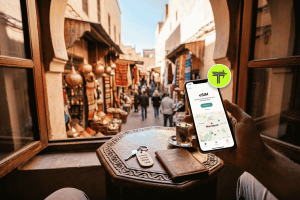
This used to be a common travel headache, forcing globetrotters to hunt for local SIM cards or risk outrageous roaming fees. Today, however, there’s a much smarter way to stay connected: the eSIM.
An embedded SIM, or eSIM, is a digital version of the physical SIM card you’re used to. It’s built right into your phone, allowing you to activate a mobile data plan without needing to swap out a tiny piece of plastic. This technology is a game-changer for travelers, offering instant connectivity in hundreds of countries. But simply having an eSIM isn’t enough. To truly travel smarter, you need to know how to maximize your data usage and get the most value from your plan. This guide will walk you through seven expert tips to help you manage your eSIM data like a pro, ensuring you stay connected without overspending.
Unlocking Global Connectivity: The Rise of eSIM Technology
Before we dive into data-saving strategies, it’s helpful to understand what an eSIM is and why it has become an essential tool for modern travelers. The concept of a SIM (Subscriber Identity Module) card has been around since the early 1990s. It’s a small chip that stores information needed to identify and authenticate you on a mobile network. For decades, using a phone abroad meant physically purchasing and inserting a local SIM card, a process that could be time-consuming and confusing, especially with language barriers.
The evolution began with the introduction of smaller SIM formats—from the original credit-card-sized SIM to the Mini, Micro, and finally, the Nano-SIM. Each iteration made the hardware smaller, but the core function remained the same. The real revolution came with the eSIM. Introduced in 2016, the embedded SIM is a programmable chip that is permanently installed inside your device. Instead of a physical card provided by a carrier, an eSIM profile can be downloaded and activated digitally.
For travelers, the benefits are immense. You can purchase and set up a data plan for your destination country before you even leave home. Upon landing, you simply switch to your eSIM profile and are instantly connected to a local network. This eliminates the need to find a store, negotiate plans, and deal with physical SIM cards. Furthermore, most modern smartphones allow you to store multiple eSIM profiles, giving you the flexibility to switch between plans for different countries or even use your home plan and a travel eSIM simultaneously. This dual-SIM capability is perfect for receiving calls on your primary number while using affordable local data from your travel eSIM. Providers like Terminal eSIM have capitalized on this technology, offering flexible, country-specific, and regional plans that make international connectivity more accessible and affordable than ever.
7 Practical Tips to Maximize Your eSIM Data Plan
Having an eSIM is the first step to smarter travel. The next is managing your data consumption to make your plan last longer. High data usage can quickly deplete your allowance, leaving you disconnected when you need it most. By adopting a few simple habits, you can significantly reduce your data burn and stretch your gigabytes further. Here are seven actionable tips for getting the most out of your travel eSIM.
- Monitor Your Data Usage in Real-Time: Your smartphone has built-in tools to track how much data individual apps are consuming. Check this regularly (Settings > Cellular/Mobile Data) to identify the biggest data hogs. Many eSIM provider apps also offer real-time usage tracking, which is often more accurate for your travel plan.
- Disable Auto-Downloads and Background App Refresh: Many apps refresh their content in the background, consuming data even when you’re not actively using them. Go to your phone’s settings and turn off “Background App Refresh” for non-essential applications. Similarly, disable automatic downloads for app updates, podcasts, and photos across apps like the App Store, Google Play, Spotify, and WhatsApp.
- Use Offline Maps and Content: Before you head out for the day, download maps of the area you’ll be exploring using Google Maps or Apple Maps. This allows you to navigate without an active internet connection. Do the same with entertainment—download playlists, podcasts, and videos on Netflix or YouTube Music while you’re connected to Wi-Fi at your hotel.
- Adjust Your Social Media Settings: Social media apps are notoriously data-intensive, especially with video auto-play. Go into the settings for Instagram, Facebook, TikTok, and other platforms and disable video auto-play or set it to “On Wi-Fi Only.” You can also activate “Data Saver” or “Low Data Mode” within these apps to reduce image quality and further cut down on consumption.
- Leverage Wi-Fi Whenever Possible: This may seem obvious, but make it a habit. Connect to trusted Wi-Fi networks at your accommodation, cafes, and public hubs. Use these opportunities to handle data-heavy tasks like video calls, uploading large files, or downloading content for later. Avoid using unsecured public Wi-Fi for sensitive activities like banking.
- Compress Data with a Data-Saving Browser: Browsers like Google Chrome offer a “Lite” or “Data Saver” mode that compresses web pages before they load on your device. This can significantly reduce the amount of data used while browsing websites. It’s a simple switch in the browser’s settings that can make a big difference over a long trip.
- Choose the Right eSIM Plan for Your Needs: Don’t just buy the cheapest or largest plan available. Estimate your data needs based on the length of your trip and your typical usage. A weekend trip might only require 1-3 GB, while a two-week vacation could necessitate 5-10 GB or more. Providers like Terminal eSIM offer a range of plans, so you can select one that fits your itinerary perfectly without paying for data you won’t use.
Comparing Connectivity Options: eSIM vs. Local SIM vs. Roaming
When traveling, you have three primary options for staying connected: using an eSIM, buying a local physical SIM card, or enabling international roaming with your home provider. Each has its pros and cons, and the best choice often depends on your device, destination, and personal preferences. The table below breaks down the key differences to help you decide.
| Feature | Travel eSIM (e.g., Terminal eSIM) | Local Physical SIM | International Roaming |
| Activation | Instant, digital activation via QR code | In-person purchase and manual installation | Automatic, but may require setup with carrier |
| Convenience | High. Purchase and set up before travel. | Low. Requires finding a store upon arrival. | High. No setup needed upon arrival. |
| Cost | Generally affordable, competitive pricing. | Often the cheapest for long stays. | Very expensive; high daily rates or per-MB charges. |
| Flexibility | High. Store multiple eSIMs and switch easily. | Low. One physical SIM slot per phone. | Low. Tied to your home carrier’s partners. |
| Phone Number | Data-only plans are common. Keep home number active. | Provides a local phone number. | Keeps your home phone number. |
| Best For | Short-to-medium trips, multi-country travel, convenience. | Long stays in a single country, budget travelers. | Very short trips (1-2 days), business travelers. |
As the comparison shows, eSIMs offer a powerful blend of convenience and affordability that is hard to beat. While a local SIM might be slightly cheaper for a month-long stay in one country, the ability to land and be instantly connected with an eSIM is a significant advantage for most tourists and digital nomads. International roaming, while convenient, is almost always the most expensive option and can lead to shocking bills. For the modern traveler, an eSIM from a reliable provider like Terminal eSIM represents the ideal middle ground, balancing cost, ease of use, and flexibility.
Common Traveler Questions and eSIM Solutions
As with any new technology, travelers often have questions and concerns about using an eSIM for the first time. Navigating potential issues is simple once you have the right information. Let’s address some of the most common problems and frequently asked questions to ensure your experience is smooth and stress-free.
One major concern is device compatibility. While most flagship smartphones released since 2018 support eSIM technology, not all do. Before purchasing a plan, it’s crucial to check if your device is on the compatible list. Most eSIM providers, including Terminal eSIM, feature a comprehensive, up-to-date list on their websites. You can usually find this by searching for “eSIM compatible devices.”
Another common worry is what happens if the eSIM doesn’t work upon arrival. This is rare, but it can happen due to incorrect installation or network issues. The solution is preparation. First, always install your eSIM while you still have a stable internet connection (e.g., at home or at the airport before takeoff). Follow the provider’s instructions carefully. Second, save a screenshot of the QR code and manual installation details offline. If you encounter issues, you can refer to these details or contact the provider’s customer support, which is typically available 24/7 via chat or email.
Frequently Asked Questions (FAQs)
- Can I use my eSIM and my regular SIM at the same time?
Yes. This is called Dual SIM, Dual Standby. It allows you to use your travel eSIM for mobile data while keeping your primary physical SIM active for calls and texts on your regular number. This is a major benefit, as you won’t miss important calls or verification codes sent to your home number. - What happens to my WhatsApp account when I use an eSIM?
Nothing at all. WhatsApp is tied to your phone number, not your SIM card. When you switch to your travel eSIM for data, you can continue using WhatsApp with your existing number and all your contacts and chats will remain unchanged. - How do I know how much data I need for my trip?
This depends on your usage habits. Light users (browsing, maps, messaging) may only need 1-3 GB for a week. Moderate users (social media, some music streaming) might use 3-5 GB. Heavy users (video streaming, frequent hotspotting) could need 10 GB or more. It’s often better to start with a slightly smaller plan, as you can usually top up your data easily through the provider’s app or website.
Your Summary for Smarter Travel Connectivity
Staying connected abroad is no longer a luxury—it’s a necessity. From navigating new cities to staying in touch with loved ones, reliable mobile data makes travel safer, easier, and more enjoyable. The shift from physical SIM cards to eSIM technology marks a significant leap forward, putting control directly into the hands of the traveler. An eSIM frees you from the hassle of finding local stores, the confusion of foreign mobile plans, and the fear of exorbitant roaming charges.
By following a few simple data-saving tips, you can make your travel eSIM plan last longer and get exceptional value. Key strategies include monitoring your usage, disabling background app refresh, downloading maps and media on Wi-Fi, and adjusting app settings to reduce data consumption. When you combine these smart habits with the inherent convenience and affordability of an eSIM, you unlock a seamless connectivity experience. Choosing the right plan for your trip duration and destination is the final piece of the puzzle, ensuring you pay only for what you need. Embracing this technology is the definitive way to travel smarter in a connected world.
Stay Connected Effortlessly with Terminal eSIM
Are you ready to say goodbye to international roaming fees and the hunt for local SIM cards forever? Whether you’re a frequent flyer, a digital nomad exploring the globe, or a vacationer planning your next getaway, seamless connectivity is just a few clicks away. Terminal eSIM offers reliable, high-speed data plans for over 190 countries and regions, so you can land and connect instantly. Our plans are designed for every type of traveler, with flexible data packages and transparent pricing.
Imagine stepping off the plane and immediately being able to book a taxi, check your email, or video call your family, all without worry. That’s the freedom and peace of mind that Terminal eSIM provides. Our easy installation process, 24/7 customer support, and wide range of affordable plans make us the perfect travel companion. Stop letting connectivity be a source of stress on your trips. Travel with confidence and stay connected wherever your adventures take you.
Explore our plans today and discover a smarter way to travel.