
Staying connected abroad has traditionally been a hassle, but modern technology offers a seamless solution: the eSIM.
An embedded SIM, or eSIM, is a digital SIM that lets you activate a cellular plan from a carrier without needing a physical nano-SIM. This means you can download a data plan for your destination before you even leave home. But with a growing number of providers, how do you choose the right one? This guide will walk you through everything you need to know to select the best eSIM service for your travels. We’ll cover what an eSIM is, how to compare plans, what factors to consider, and why a reliable eSIM service is the modern traveler’s best friend. Get ready to make connectivity one less thing to worry about on your next adventure.
What Is an eSIM and Why Is It a Game-Changer for Travelers?
Before we dive into choosing a service, let’s clarify what an eSIM is and why it has become so popular. Think of an eSIM as a virtual SIM card that is already built into your device—whether it’s a smartphone, tablet, or smartwatch. Unlike a traditional physical SIM card that you must insert and swap, an eSIM can be programmed remotely. You simply scan a QR code or follow an app’s instructions to install a new cellular plan.
This technology first appeared around 2016, but its adoption has skyrocketed in recent years. Major smartphone manufacturers like Apple, Google, and Samsung have made eSIMs a standard feature in their flagship devices, making global connectivity more accessible than ever. For travelers, the benefits are immense. You no longer have to hunt for a local SIM card vendor at the airport after a long flight, attempt to communicate in a foreign language to buy a plan, or risk losing your tiny home SIM card while abroad.
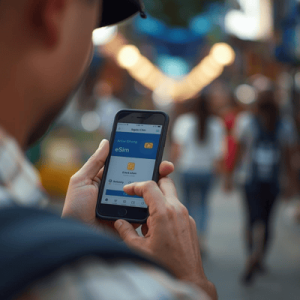
The core advantage is convenience. Imagine landing in Tokyo, and your phone automatically connects to the local network because you installed a Japan eSIM plan a day earlier. You can immediately order a rideshare, check your hotel reservation, or let family know you’ve arrived safely. An eSIM service also allows you to store multiple plans on one device. If you’re on a multi-country European tour, you can switch between a plan for Italy and one for Germany with just a few taps in your phone’s settings. This flexibility eliminates the need to buy a new SIM in every country, saving you time, money, and a lot of frustration.
A Practical Guide to Selecting the Best eSIM Service
With a clear understanding of what an eSIM offers, the next step is finding the right provider. The market is full of options, each with different strengths. Choosing the best eSIM service for your needs comes down to evaluating a few key factors. Following a structured approach will help you avoid common pitfalls and ensure you get reliable, affordable connectivity wherever you go.
1. Check Your Device Compatibility
First things first: is your device eSIM-compatible? Most smartphones released since 2018 support eSIM technology, but it’s always best to verify. You can typically find this information in your phone’s settings under “Cellular” or “Mobile Data.” A quick search online for your specific model and “eSIM compatibility” will also give you a definitive answer. Make sure your phone is also “unlocked,” meaning it is not restricted to a single carrier.
2. Determine Your Data Needs
How much data will you actually use? Think about your travel style. Are you a light user who only needs data for maps and messaging? Or are you a digital nomad who will be working, streaming videos, and uploading high-resolution photos?
- Light Use (1-3 GB): Good for a short trip where you’ll mostly use maps, messaging apps (like WhatsApp), and light browsing.
- Medium Use (5-10 GB): Ideal for a week-long vacation with regular social media use, photo uploads, and some video streaming.
- Heavy Use (20+ GB): Best for long-term travelers, remote workers, or anyone who needs constant, high-speed connectivity without worrying about limits.
Choosing a plan that matches your usage prevents you from overpaying for data you don’t need or running out mid-trip.
3. Evaluate Coverage and Destinations
Where are you going? A great eSIM service provides comprehensive coverage in your destination. If you’re visiting a single country, a country-specific plan is perfect. However, if your itinerary includes multiple stops, a regional or global plan is far more convenient. For example, a “Europe” plan might cover 30+ countries, allowing seamless connectivity as you travel from France to Spain to Italy. Check the provider’s website to see which local networks they partner with to ensure strong signal quality.
4. Compare Pricing and Plan Validity
Price is always a factor. Compare the cost per gigabyte (GB) between different providers. Some may offer a cheap introductory plan that provides very little data, while others offer better value with larger data packages. Also, pay close attention to the plan’s validity period. A 30 GB plan that expires in 7 days is useless if your trip is two weeks long. Look for plans with a validity that comfortably covers your entire travel duration.
Comparing Top eSIM Service Features
To make an informed decision, it’s helpful to see how different aspects of an eSIM service stack up. Not all providers are created equal, and the best choice depends on your priorities—whether that’s price, coverage, or ease of use. This table breaks down the key features to consider when evaluating your options.
| Feature | What to Look For | Why It Matters |
| Data Plans | Variety of options (e.g., 1 GB, 5 GB, 20 GB), country-specific, regional, and global plans. | You need a plan that fits your data consumption habits and travel itinerary perfectly. More choice means better customization. |
| Coverage | Extensive list of supported countries and partnerships with top-tier local network operators. | Good partnerships ensure you get reliable, high-speed service instead of being stuck with a weak or spotty connection. |
| Price | Competitive cost per GB. Transparency with no hidden fees. | Affordability is key. A clear pricing structure helps you budget effectively and avoid surprise charges. |
| Validity Period | Flexible validity options (e.g., 7 days, 15 days, 30 days) that align with your trip length. | A plan that expires too early is a waste of money. Ensure the validity period covers your entire stay. |
| Activation Process | Simple QR code scan or in-app installation. Clear, step-by-step instructions. | The whole point of an eSIM is convenience. A complicated setup process defeats the purpose. |
| Customer Support | 24/7 availability through multiple channels (chat, email). Responsive and helpful agents. | If you run into an issue, you need support you can count on, especially when you’re in a different time zone. |
After reviewing the table, you can see that a superior eSIM service excels across the board. For instance, a provider like Terminal eSIM offers a wide range of plans for over 190 countries, ensuring you can find the exact data package you need. They focus on a simple activation process and provide dedicated support, which is critical when you’re navigating a new place. The goal is to find a balanced provider that delivers on all these fronts, not just one.
Common Traveler Concerns and eSIM Solutions
Switching to a new technology can bring up questions and concerns. Many travelers wonder if an eSIM is truly reliable or if it’s complicated to manage. Let’s address some of these common issues and explore how a quality eSIM service solves them. The trend is clear: eSIMs are becoming the default choice for savvy globetrotters because they directly tackle the pain points of traditional connectivity options.
One major worry is complexity. Is it hard to set up? The reality is quite the opposite. Most eSIM providers have streamlined the process to be incredibly user-friendly. You typically receive a QR code via email upon purchase. On your phone, you go to Settings > Cellular > Add eSIM, and simply scan the code. Your phone does the rest. It’s often easier than finding a paperclip to eject a physical SIM tray.
Another concern is losing your primary phone number. With an eSIM, you don’t have to. Most modern smartphones are Dual SIM, meaning you can keep your home SIM active for calls and texts while using the eSIM for affordable mobile data. This dual functionality is a huge advantage. You remain reachable on your regular number while avoiding your home carrier’s expensive data roaming fees.
Frequently Asked Questions (FAQs)
- Can I make phone calls with an eSIM?
It depends on the plan. Many eSIMs are data-only, which is perfect for using internet-based calling apps like WhatsApp, FaceTime Audio, or Skype. Some providers offer plans that include a phone number and calling minutes, so check the plan details if traditional calls are a priority for you. - What happens if I use up all my data?
Most eSIM providers make it easy to top up your data. You can typically purchase another plan directly through their app or website, and it will be added to your account instantly. There’s no need to find a physical store. - Can I use the same eSIM in multiple countries?
Yes, if you purchase a regional or global plan. For example, an eSIM plan for Asia might cover a dozen countries, allowing you to travel between them without changing your settings. If you have country-specific plans, you can store them on your phone and switch between them as you cross borders. - Is an eSIM service secure?
Yes, eSIMs are very secure. Since the SIM is embedded in your device, it cannot be physically stolen and used in another phone. The activation process is also digitally secured, making it a safer option than a physical SIM card.
Your Ticket to Seamless Global Connectivity
Choosing the right connectivity for your vacation can make all the difference. We’ve explored what an eSIM is, from its technical foundation as an embedded, programmable SIM to its practical benefits for modern travelers. The days of swapping physical SIM cards or dreading exorbitant roaming charges are fading. An eSIM offers unparalleled convenience, flexibility, and control over your mobile data while abroad.
The key to unlocking these benefits is selecting the right eSIM service. By evaluating your personal needs—your device’s compatibility, your expected data usage, and your destinations—you can narrow down the options effectively. Comparing providers based on crucial factors like network coverage, pricing transparency, plan validity, and customer support ensures you find a reliable partner for your travels. Remember to look for a service that offers a straightforward activation process and the flexibility of regional or global plans if your journey takes you across multiple borders. With the right preparation, you can land at your destination, turn on your phone, and be connected instantly.
Experience a New Era of Travel with Terminal eSIM
Your vacation should be about creating memories, not troubleshooting mobile data. A reliable eSIM service empowers you to navigate, share, and stay in touch without a second thought. For travelers, digital nomads, and frequent flyers who demand seamless connectivity, Terminal eSIM offers the perfect solution. Our plans are designed to give you high-speed data in over 190 countries, with flexible options tailored to fit any trip duration or data requirement.
Forget airport SIM card kiosks and confusing local plans. With Terminal eSIM, you can purchase and install your data plan from the comfort of your home before you even pack your bags. Our activation process is as simple as scanning a QR code, and our 24/7 support team is always ready to help. Enjoy the freedom to explore the world with confidence, knowing that fast, affordable internet is just a few taps away.
Ready to travel smarter? Explore our affordable and reliable data plans at Terminal eSIM and make connectivity worries a thing of the past.