
Many travelers simply turn off their data to avoid costs, leaving them without maps, translation apps, or the ability to stay in touch. The good news is that staying connected affordably is easier than ever.
The key is to understand your options and choose a plan that fits your travel style and budget. This guide will walk you through everything you need to know about international phone plans. We’ll explore how they work, compare the different types available, and provide a step-by-step process for selecting the perfect one for your next adventure. By the end, you’ll be equipped to find a cost-effective solution that keeps you online without breaking the bank, so you can focus on making memories, not monitoring your data usage.
The Evolution of Staying Connected Abroad
For decades, staying connected while traveling internationally was a complicated and expensive ordeal. The default option was to use your home carrier’s international roaming service. This often involved activating a pricey daily pass or paying steep per-minute, per-text, and per-megabyte rates. The result was often a multi-hundred-dollar bill that came as a complete surprise. Travelers were left with a choice: pay a premium for convenience or disconnect completely.
To avoid these high costs, savvy travelers developed workarounds. One popular method was buying a local physical SIM card upon arrival. This gave you a local number and access to local data rates, which were almost always cheaper than roaming. However, this approach had its own set of challenges. It required finding a reputable mobile carrier store, navigating language barriers, and physically swapping out the tiny SIM card in your phone. You would also lose access to your primary phone number, which could be inconvenient for receiving important calls or verification texts.
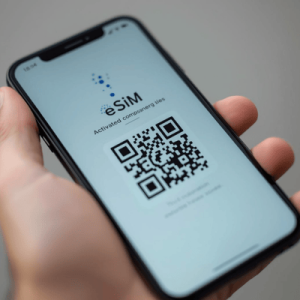
The introduction of eSIM technology has completely changed the game. An eSIM (embedded SIM) is a digital SIM that allows you to activate a cellular plan from a carrier without having to use a physical SIM card. For travelers, this means you can purchase and install an international data plan directly on your phone before you even leave home. This technology combines the cost savings of a local plan with the convenience of instant connectivity, eliminating the need to hunt for a store or fumble with physical cards. It represents the next logical step in global connectivity, offering flexibility and control right from your device.
Your Guide to Choosing Affordable International Phone Plans
Finding the right international phone plan doesn’t have to be complicated. With a clear strategy, you can secure a great deal that keeps you connected without the stress of hidden fees. This practical guide breaks down the process into simple, actionable steps, helping you assess your needs and compare your options effectively.
Step 1: Assess Your Travel and Data Needs
Before you start looking at plans, understand how you’ll use your phone abroad. Ask yourself these questions:
- Destinations: Are you visiting a single country or multiple countries? Some plans are country-specific, while others offer regional or global coverage.
- Trip Duration: How long will you be away? Plans can range from a few days to several months. Buying a 30-day plan for a weekend trip is a waste of money.
- Data Usage: Are you a light user who just needs maps and email, or a heavy user who streams videos and uses social media frequently? Check your phone’s settings to see your average monthly data consumption. This will give you a baseline for choosing a data package.
- Calls and Texts: Do you need to make traditional phone calls, or are you comfortable using apps like WhatsApp or FaceTime? Many modern international phone plans are data-only, which is often sufficient for most travelers.
Step 2: Explore Your Options
Once you know what you need, it’s time to compare the different types of international phone plans available.
- Home Carrier Add-Ons: Check with your current provider. They likely offer international day passes or monthly plans. While convenient, these are often the most expensive options.
- Local Physical SIM Cards: If you’re staying in one country for an extended period, a local SIM can be a cost-effective choice. However, be prepared for the hassle of purchasing and installing it upon arrival.
- eSIM Data Plans: For most travelers, especially those visiting multiple destinations, eSIMs offer the best balance of cost, convenience, and flexibility. Companies like Terminal eSIM provide a wide range of plans that you can activate instantly.
By following these steps, you can confidently select an international phone plan that aligns with your travel habits and budget, ensuring seamless connectivity wherever your journey takes you.
Comparing International Connectivity Options
Choosing how to stay connected abroad involves weighing convenience against cost. Each option—roaming with your home carrier, buying a local SIM, or using an eSIM—has distinct advantages and disadvantages. This table breaks down the key differences to help you decide which is best for your trip.
| Feature | Home Carrier Roaming | Local Physical SIM | eSIM Data Plan |
| Cost | High (Often $10+/day or high per-MB rates) | Low to Medium (Local rates) | Low to Medium (Competitive rates) |
| Convenience | Very High (Works automatically) | Low (Requires finding a store and installation) | Very High (Instant digital installation) |
| Flexibility | Low (Tied to your home carrier’s offers) | Medium (Can switch, but requires a new card) | High (Easily switch between plans and providers) |
| Coverage | Good (Based on partner networks) | Good (Tied to one local carrier) | Excellent (Choose from various regional/global plans) |
| Phone Number | Keep your primary number | Get a new, local number | Keep your primary number for calls/texts; use eSIM for data |
| Setup | None required | Manual installation and activation | Simple QR code scan or app-based setup |
| Best For | Short business trips where convenience is paramount | Long stays in a single country; budget travelers | Most travelers, digital nomads, multi-country trips |
As the comparison shows, while home carrier roaming is the easiest, it comes at a significant price. Local SIM cards offer great value but introduce hassle and the temporary loss of your primary number. eSIM data plans emerge as a powerful middle ground, providing the affordability of local rates with even greater convenience than traditional roaming. You can purchase a plan for Europe, Asia, or over 100 other countries from the comfort of your home and activate it the moment you land. For the modern traveler, this blend of cost-effectiveness and simplicity makes eSIMs an increasingly popular choice.
Common Traveler Concerns and eSIM Solutions
Navigating international connectivity can bring up several questions and concerns. From worrying about the reliability of new technology to managing costs, travelers want assurance that their chosen solution will work flawlessly. Here, we address some of the most common issues and explain how eSIMs provide effective answers.
Frequently Asked Questions about International Plans
- Are eSIMs compatible with my phone?
Most modern smartphones from major manufacturers like Apple, Google, and Samsung support eSIM technology. Generally, iPhones released since 2018 (iPhone XS/XR and newer), Google Pixel 3 and newer, and recent Samsung Galaxy S and Z series models are eSIM-compatible. The easiest way to be sure is to check your phone’s specifications online or in its settings menu under “Cellular” or “Network.” If you see an option to “Add Cellular Plan” or “Add eSIM,” your device is ready. - What happens if I run out of data on my eSIM plan?
This is a common worry, but it’s easily managed. Unlike traditional plans where you might face overage charges, most eSIM providers make it simple to handle your data. With a provider like Terminal eSIM, you can easily monitor your data usage through an app or website. If you’re running low, you can top up your existing plan with more data or purchase a new plan altogether. The process is entirely digital and takes just a few moments, so you can add data on the go without any service interruption. - Is it difficult to set up an eSIM?
Not at all! In fact, it’s far simpler than dealing with a physical SIM card. After purchasing an eSIM plan, you’ll typically receive a QR code via email. On your phone, you just go to your cellular settings, select the option to add a plan, and scan the QR code. Your phone will then guide you through a few simple steps to activate the plan. The entire process takes less than five minutes, and you can do it right before you depart, ensuring your data is ready to use the moment you arrive. - Can I still use my regular phone number?
Yes, and this is one of the biggest advantages of using an eSIM for data. Most phones allow you to have both a physical SIM and an eSIM active simultaneously (a feature known as Dual SIM). You can set your eSIM as your primary source for mobile data while keeping your home SIM active for receiving calls and texts on your regular number. This gives you the best of both worlds: affordable data and the ability to stay reachable on your primary line.
Your Path to Smarter Travel Connectivity
Staying connected while traveling no longer requires a choice between paying exorbitant fees and navigating the complexities of foreign mobile shops. The landscape of international phone plans has shifted dramatically, empowering travelers with more control, flexibility, and affordability than ever before. By understanding the evolution from costly roaming to convenient eSIMs, you can make an informed decision that enhances your travel experience.
We’ve covered the essential steps to find the right plan: assessing your personal travel and data needs, exploring all available options, and comparing them based on cost, convenience, and coverage. For most modern travelers, eSIM data plans stand out as the superior choice. They offer the cost savings of a local plan without the hassle, allowing for instant activation and seamless connectivity across multiple destinations. You can keep your primary number for important calls while enjoying generous data allowances for everything else. This hybrid approach solves the biggest connectivity challenges travelers face, making it a truly modern solution.
Unlock the World with Terminal eSIM
Imagine stepping off the plane in a new country and being instantly connected. No more hunting for Wi-Fi hotspots, no more fumbling with tiny SIM card trays, and absolutely no more fear of bill shock when you get home. This is the freedom that Terminal eSIM offers. Designed for savvy travelers, digital nomads, and frequent flyers, our international phone plans provide reliable, high-speed data in over 100 countries.
We believe that staying connected should be simple and affordable. That’s why our eSIM plans are built for convenience. You can browse, purchase, and install your plan in minutes, right from your phone. Whether you need data for a week-long vacation in Spain or a month-long backpacking trip through Southeast Asia, we have a flexible plan tailored to your journey. Stop overpaying for international roaming and say goodbye to the hassle of physical SIM cards. It’s time to travel smarter.
Explore our affordable, easy-to-use international phone plans and discover a better way to stay connected on your next adventure.