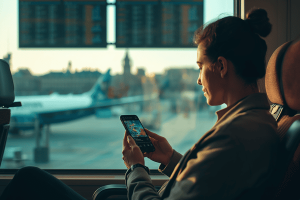
For years, travelers have relied on two main options: pocket Wi-Fi devices and, more recently, the innovative eSIM. Both promise to keep you online abroad, but they work in very different ways. Choosing the right one can significantly impact your travel budget, convenience, and overall experience.
This guide will break down the debate between using an eSIM and renting a pocket Wi-Fi. We’ll explore how each technology works, compare their pros and cons, and help you understand which solution is best suited for your travel style. Whether you’re a casual vacationer, a globetrotting digital nomad, or a business traveler, making an informed choice will ensure you stay connected seamlessly, without the stress of high roaming charges or a spotty connection. Let’s dive into what makes each option unique and find the perfect fit for your next adventure.
Understanding Your Connectivity Options: eSIM and Pocket Wi-Fi
To make the best decision, it’s important to understand the technology behind each option. While both get you online, their approach to connectivity is fundamentally different, offering unique advantages and disadvantages for travelers.
What is a Pocket Wi-Fi?
A pocket Wi-Fi, also known as a mobile hotspot or MiFi, is a small, portable device that creates a private wireless network. It works by using a physical SIM card from a local carrier to connect to a cellular network and then broadcasts that connection as a Wi-Fi signal. You can then connect multiple devices—like your phone, tablet, and laptop—to this personal hotspot, just as you would with your home Wi-Fi.
These devices have been a popular choice for group travelers and families for years. Imagine you’re traveling with friends through Japan; a single pocket Wi-Fi can provide internet for everyone’s phone, saving the hassle of each person getting a separate plan. However, this convenience comes with its own set of responsibilities. You have to rent the device, which often involves a deposit, and you must remember to keep it charged. The biggest drawback is the logistics: you need to pick it up upon arrival and drop it off before you depart, adding another task to your travel itinerary. Plus, if you lose or damage it, you could face hefty fees.
The Rise of the eSIM
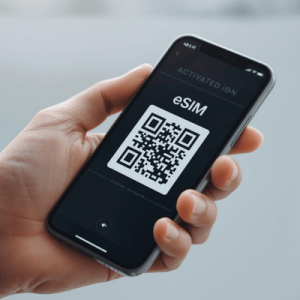
An eSIM, or embedded SIM, is a digital version of the traditional physical SIM card. Instead of a plastic chip you insert into your phone, an eSIM is built directly into your device’s hardware. This technology allows you to activate a cellular plan from a provider without needing a physical SIM. You simply purchase a plan online, scan a QR code or follow an in-app prompt, and your phone is ready to connect to a local network in your destination country.
The primary appeal of an eSIM is its sheer convenience. There is no physical hardware to carry, charge, or return. You can buy and install your data plan before you even leave home. For example, if you’re planning a multi-country trip through Europe, you can purchase a regional eSIM that covers all your destinations. As soon as you land in a new country, your phone automatically connects to the local network. This eliminates the need to hunt for a SIM card vendor at the airport or deal with the language barrier while trying to set up a plan. It’s a streamlined, modern solution for the savvy traveler.
How to Choose and Use Your Travel Internet: A Practical Guide to eSIMs
Deciding between an eSIM and a pocket Wi-Fi comes down to your personal travel needs. An eSIM offers unparalleled convenience and flexibility, making it an excellent choice for most modern travelers. Here’s a practical guide to help you determine if an eSIM is right for you and how to get started.
When is an eSIM the Best Choice?
An eSIM is ideal for a wide range of travelers, but it particularly shines in these scenarios:
- Solo Travelers and Couples: If you only need to connect one or two devices, an eSIM is the most efficient and cost-effective option. You avoid the bulk of a separate device.
- Multi-Country Hoppers: For trips spanning several countries, a regional or global eSIM is a game-changer. You can get a single plan that works across Europe, Asia, or worldwide, eliminating the need to switch SIMs at every border.
- Digital Nomads and Business Travelers: The ability to instantly switch between data plans is invaluable. You can keep your primary number for calls and texts while using an affordable eSIM for data, all from the same phone.
- Last-Minute Planners: Did you forget to arrange for internet access before your trip? You can buy and activate an eSIM in minutes from anywhere with a Wi-Fi connection, even at the airport right after you land.
- Minimalist Packers: If you value traveling light, an eSIM is the ultimate solution. There’s nothing extra to pack, charge, or worry about losing.
Getting Started with an eSIM in 3 Simple Steps
Using an eSIM is incredibly straightforward. Here’s how you can get set up with a provider like Terminal eSIM:
- Check Device Compatibility: First, ensure your smartphone is eSIM-compatible. Most newer models from major brands like Apple, Google, and Samsung support eSIM technology. You can usually find this information in your phone’s settings under “Cellular” or “Mobile Data.”
- Purchase Your Plan: Visit a provider’s website, such as Terminal eSIM, and browse the available plans for your destination. You can choose from local, regional, or global plans based on your itinerary. Select the amount of data you need and the duration of your trip, then complete the purchase.
- Activate Your eSIM: After purchase, you will receive an email with a QR code or instructions for manual activation. On your phone, go to Settings > Cellular > Add eSIM. Scan the QR code, and your phone will guide you through the final steps. You can do this before you travel, and the plan will activate once you connect to a network at your destination.
By following these simple steps, you can enjoy seamless, affordable internet access from the moment you arrive, making your travel experience smoother and more connected.
eSIM vs. Pocket Wi-Fi: A Head-to-Head Comparison
To help you visualize the differences, let’s compare an eSIM and a pocket Wi-Fi across several key factors that matter most to travelers.
| Feature | eSIM | Pocket Wi-Fi |
| Convenience | Instant digital delivery. No physical hardware to carry, charge, or return. Activated via a QR code. | Requires picking up and returning a physical device. Must be carried and kept charged. |
| Device Management | Integrated into your phone. No extra devices or batteries to manage. | A separate device that requires charging. Can be bulky and is another item to potentially lose. |
| Cost | Often more affordable. Pay-as-you-go plans with no rental fees, deposits, or insurance costs. | Daily rental fees, potential security deposits, and high fees for loss or damage. |
| Flexibility | Extremely flexible. Easily switch between plans or top up data online. Regional and global plans available. | Tied to a single device and plan for the rental period. Less flexible for multi-country trips. |
| Sharing | Connection is tied to a single phone. Tethering is possible but can drain the phone’s battery quickly. | Designed for sharing. Can connect multiple devices (5-10) simultaneously, ideal for groups. |
| Reliability | Connects to top-tier local networks, providing strong and stable service. No reliance on a separate device’s battery. | Connection quality depends on the local carrier. The device’s battery life is a limiting factor. |
| Security | A secure connection directly through a cellular network. No risk of an unsecured public Wi-Fi signal. | Creates a password-protected private network, which is more secure than public Wi-Fi. |
After reviewing the table, a clear picture emerges. The eSIM excels in convenience, cost-effectiveness, and flexibility, making it a superior choice for individual travelers and those who value simplicity. You purchase, install, and use it all from your phone without any physical constraints.
A pocket Wi-Fi still holds its ground for specific use cases, primarily for families or large groups traveling together who need to connect many devices to a single source. However, the logistical burdens of rental, charging, and carrying the device often outweigh the benefits for the modern, independent traveler.
Common Traveler Questions and Key Trends
As technology evolves, so do traveler preferences. The shift toward digital-first solutions is undeniable, and understanding the current landscape can help you make a future-proof choice for your connectivity needs.
The Future of Travel Connectivity is Digital
The trend is clear: travelers are moving away from physical hardware and toward integrated digital solutions. Just as digital boarding passes replaced paper tickets, the eSIM is set to replace physical SIM cards and clunky rental devices. This shift is driven by a demand for greater convenience, control, and cost savings. Smartphone manufacturers are increasingly making eSIM a standard feature, which will only accelerate its adoption. For travelers, this means more competition among eSIM providers, leading to better prices and more innovative data plans. In a few years, carrying a separate device for internet may seem as outdated as carrying a portable CD player.
Frequently Asked Questions (FAQs)
Here are answers to some common questions travelers have when choosing between an eSIM and a pocket Wi–Fi.
- Can I use an eSIM and my regular SIM at the same time?
Yes, most modern smartphones are Dual SIM with an eSIM. This allows you to use your primary physical SIM for calls and texts from your home number while using the eSIM for affordable data abroad. You can easily manage which line is used for data in your phone’s settings. - What happens if I use up all my eSIM data?
Running out of data is simple to fix. Most eSIM providers, including Terminal eSIM, allow you to easily top up your plan or purchase a new one directly from their website or app. The process is instant, so you can get back online in minutes without needing to find a physical store. - Is pocket Wi-Fi faster than an eSIM?
No, speed is not determined by the delivery method (eSIM vs. pocket Wi-Fi) but by the underlying cellular network they connect to. Both an eSIM and a pocket Wi-Fi use local 4G/5G networks. Therefore, the connection speed will be comparable as long as they are connected to the same quality of network. An eSIM often has the advantage of connecting to the best available local partner network. - What if my phone doesn’t support eSIM?
If your phone is an older model that doesn’t support eSIM technology, a pocket Wi-Fi or a traditional physical travel SIM card would be your best alternatives. However, as you upgrade your phone in the future, it’s highly likely your new device will be eSIM-compatible.
Summary: Making the Smart Choice for Your Trip
Choosing between an eSIM and a pocket Wi-Fi ultimately depends on your priorities as a traveler. For years, pocket Wi-Fi served as a reliable, if cumbersome, solution for staying connected on the go. It offered a way to bypass exorbitant roaming fees and the hassle of finding local SIM cards, especially for groups needing to connect multiple devices. However, its reliance on physical hardware, the need for constant charging, and the logistics of pickup and return present significant drawbacks.
The arrival of the eSIM has revolutionized travel connectivity. This digital-first technology embeds the solution directly into your phone, offering unparalleled convenience. There is no extra device to carry, no battery to monitor, and no rental process to navigate. You can purchase and activate a plan from anywhere, often at a lower cost and with greater flexibility than a pocket Wi-Fi. For solo travelers, couples, digital nomads, and anyone who values efficiency and minimalism, the eSIM is the clear winner. It simplifies your journey, keeping you connected from the moment you land without any added stress.
Experience the Future of Travel with Terminal eSIM
Your travels deserve to be seamless, spontaneous, and stress-free. The last thing you should worry about is where you’ll find reliable internet or how much it will cost. An eSIM from Terminal eSIM empowers you to explore the world with confidence, knowing that affordable, high-speed data is just a few taps away. Forget about rental deadlines, extra chargers, and the fear of losing another device. With an eSIM, your connectivity is integrated directly into the smartphone you already carry.
Whether you’re a frequent flyer navigating international business deals, a digital nomad working from a café in Lisbon, or a vacationer sharing memories from a beach in Thailand, our plans are designed for you. We offer flexible data packages for over 190 countries, ensuring you’re covered wherever your adventures take you. Embrace the freedom and simplicity of modern travel. Step into a world without boundaries and stay connected effortlessly.
Ready to simplify your travels? Explore data plans for your next destination at Terminal eSIM and travel smarter.