
The digital age has ushered in a new standard for connectivity: the embedded SIM, or eSIM.
For modern travelers, staying connected isn’t just about posting photos to Instagram; it’s about navigation, safety, translation, and keeping in touch with loved ones. However, simply having an eSIM isn’t enough to maximize your experience. To truly travel like a pro, you need to know how to leverage this technology effectively.
This guide will walk you through everything you need to know, from the technical basics to advanced strategies. We will explore nine specific hacks to optimize your next journey using a reliable eSIM service. Whether you are a digital nomad hopping between coffee shops in Bali or a family taking a summer vacation in Europe, these insights will save you time, money, and stress.
Understanding the Evolution of Connectivity
To appreciate why an eSIM service is a game-changer, we first need to look at where we came from. For decades, the physical SIM card was the gatekeeper to cellular networks. It was a tangible piece of plastic that identified you to the network. While revolutionary at its inception, the physical SIM had significant limitations for travelers.
Historically, crossing a border meant losing signal. Your options were grim: pay exorbitant daily roaming rates charged by your domestic provider—often upwards of $10 to $15 a day—or physically swap out your SIM card. The latter option meant losing access to your primary phone number, missing important two-factor authentication (2FA) codes, and risking the loss of that tiny piece of plastic.
The introduction of eSIM technology digitized this entire process. An eSIM is a small chip already soldered inside your device. It allows you to download a digital data plan (a profile) directly to your phone without inserting anything. This shift is comparable to the move from physical DVDs to streaming services. It is instant, flexible, and completely software-based.
For the travel industry, this has democratized access to local data networks. Travelers can now access local rates without being a local resident. It eliminates the friction of language barriers at kiosk counters and the vulnerability of connecting your phone to unsecured public WiFi networks just to call an Uber. Understanding this shift is key to realizing that your phone is no longer just a communication device; it is a global passport to the internet.
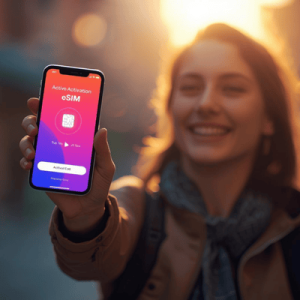
9 Essential Hacks Using an eSIM Service
Once you understand the technology, the next step is mastering it. Most users simply buy a plan and activate it, but power users know there are tricks to get more value out of their purchase. Here are nine travel hacks to elevate your experience with an esim service.
1. The “Pre-Flight” Activation Protocol
Most novice users wait until they land to purchase or activate their eSIM. This is a mistake. The best hack is to purchase and install your eSIM while you are still at home on your reliable, high-speed WiFi. You can usually install the profile days or weeks in advance. Most high-quality providers, like Terminal eSIM, won’t start the timer on your data plan until you actually connect to the supported network at your destination. By setting it up beforehand, you can simply toggle the line “On” the moment your plane touches down, giving you instant connectivity while everyone else is struggling to connect to the airport’s spotty free WiFi.
2. Master the Dual-SIM Setup for 2FA
One of the greatest fears travelers have is losing access to their bank accounts or email because they can’t receive SMS verification codes (OTPs). The hack here is to keep your physical SIM card inside your phone but disable “Data Roaming” on it. Leave the line active for calls and texts (which are usually free to receive or cost very little), and set your eSIM service as the primary source for cellular data. This ensures your banking apps and email verifications still come through your home number, but all your browsing and maps usage runs on the cheap eSIM data.
3. Use Regional Plans for Border Hopping
If you are planning a “Eurotrip” or backpacking across Southeast Asia, buying a single-country plan for every stop is inefficient and expensive. Look for regional eSIMs. These plans cover multiple countries under a single data allowance. The hack is that you don’t need to change settings when you cross borders; the profile automatically latches onto the partner network in the new country. It creates a seamless experience, allowing you to take a train from France to Germany without ever losing your connection.
4. The “Low Data Mode” Battery Saver
Running high-speed 5G or 4G data constantly can drain your battery, especially when apps are refreshing in the background. Both iOS and Android have a “Low Data Mode” or “Data Saver” feature. Turning this on for your eSIM line stops automatic updates and photo syncing. This serves a double purpose: it conserves your precious travel battery life during long days of sightseeing, and it stretches your data package further by preventing Instagram or TikTok from pre-loading videos you aren’t watching.
5. Secure Banking via Cellular Data
Experienced travelers know that public WiFi in hotels, cafes, and airports is a hotbed for cybercrime. Hackers often set up “man-in-the-middle” attacks to steal credentials. A major security hack is to disable WiFi entirely when accessing sensitive apps like mobile banking or cryptocurrency wallets. Instead, rely solely on your eSIM connection. Cellular networks are encrypted and significantly more secure than open WiFi hotspots. Treat your data plan as a security investment, not just a convenience.
6. The VoIP Workaround for Voice Calls
Many travelers worry that data-only eSIMs don’t come with a phone number for voice calls. The hack is to ignore traditional voice calls entirely. Use Voice over Internet Protocol (VoIP) apps like WhatsApp, FaceTime Audio, or Skype. These services use very little data (roughly 1MB for a 2-minute call) and offer crystal-clear quality. You can call hotels, tour guides, or restaurants using Skype credits for pennies, bypassing the need for a local voice line entirely.
7. Offline Maps Download
This sounds counter-intuitive for a data article, but it saves your gigabytes for when you really need them. Before leaving your hotel WiFi, download the Google Maps area for your destination for offline use. Use your eSIM data only for real-time traffic updates and searching for reviews, rather than downloading the map tiles themselves as you move. This hybrid approach—offline base maps plus online real-time data—is the most efficient way to navigate a new city.
8. Instant Top-Ups for Heavy Users
Running out of data mid-trip used to be a disaster involving a hunt for a convenience store. With a modern eSIM provider, you can top up instantly via an app or website. The hack here is to monitor your usage and buy a “top-up” package before you run completely dry. This ensures you never lose the ability to access the app to buy more data. Always keep an eye on your usage meter and top up when you have 10% remaining.
9. The Hotspot Savior
Hotel WiFi can be slow, expensive, or limited to one device. Most eSIM plans allow for tethering or personal hotspots. If you are traveling with a laptop or tablet, or if your travel companion didn’t buy a plan, you can turn your phone into a router. This is particularly useful for digital nomads who need a stable connection for a Zoom call and cannot rely on the shared bandwidth of a hostel or coffee shop.
Comparison: eSIM vs. Traditional Options
To highlight why switching is the smart move, let’s look at how a dedicated eSIM service stacks up against the old-school methods of staying connected.
| Feature | Home Carrier Roaming | Local Physical SIM | Terminal eSIM |
| Setup Time | Instant (automatic) | 30-60 Minutes (finding a store) | 5 Minutes (scan QR code) |
| Cost | High ($10+/day) | Low | Low (Competitive local rates) |
| Convenience | High | Low (Requires SIM swapping) | High (Keep home number active) |
| Physical Swap | No | Yes (Risk losing original SIM) | No (100% Digital) |
| Flexibility | Low (Locked to carrier terms) | Low (Locked to one country) | High (Regional & Global plans) |
| Number Retention | Yes | No (New local number) | Yes (Dual SIM capability) |
Key Insight: While local physical SIMs offer low prices, the “hidden cost” is the time spent finding a vendor and the risk of losing your primary SIM card. Home carrier roaming is convenient but financially punishing. Terminal eSIM offers the “sweet spot”—the convenience of roaming with the pricing of a local SIM.
Trends, Common Concerns, and FAQs
As eSIM adoption accelerates, the travel landscape is shifting. We are seeing a trend where major smartphone manufacturers are removing physical SIM trays entirely (as seen with US models of the iPhone 14 and 15). This signals that the future of connectivity is purely digital. Furthermore, “connectivity anxiety” is becoming a thing of the past as coverage maps expand to include even remote destinations.
However, travelers still have valid concerns. Let’s address the most common questions regarding esim service usage.
Frequently Asked Questions
- Will using an eSIM drain my battery faster?
Generally, no. In fact, newer phones manage dual-SIM standby very efficiently. However, searching for a signal in an area with poor coverage drains the battery regardless of the SIM type. Using “Low Data Mode” as mentioned in our hacks section can actually help conserve battery compared to constantly hunting for public WiFi. - Can I use WhatsApp with an eSIM?
Absolutely. This is one of the biggest benefits. When you switch your data to an eSIM, WhatsApp will ask if you want to keep your existing number. Select “Yes,” and you can continue messaging friends and family as if you never left home, all while using the affordable data from your eSIM. - Is my phone compatible with an eSIM?
Most flagship phones released since 2018 are compatible. This includes iPhone XR and newer, Samsung Galaxy S20 and newer, and Google Pixel 3 and newer. It is always best to check your device settings or consult a compatibility list before purchasing. - What happens if I delete my eSIM profile by mistake?
If you accidentally delete the profile, you typically cannot scan the same QR code again for security reasons. You will need to contact customer support to issue a new code. However, there is rarely a need to delete a profile until you are completely done with your trip.
Summary
To recap, leveraging an eSIM is about more than just buying data; it is about taking control of your travel experience. By following the hacks outlined above, you move from being a passive traveler to a connected explorer.
- Preparation is key: Install your profile before you fly to hit the ground running.
- Security matters: Use your data connection for banking and sensitive tasks rather than risky public WiFi.
- Keep your number: The dual-SIM capability allows you to stay reachable for emergencies and OTPs without incurring roaming charges.
- Go Regional: Simplify multi-country trips with a single regional profile.
The technology is here to make travel seamless, affordable, and safe. It eliminates the friction of traditional connectivity methods, allowing you to focus on what matters: the adventure itself.
Upgrade Your Travel Experience with Terminal eSIM
The world is waiting, and you shouldn’t have to pay a fortune to explore it. Whether you are planning a weekend getaway or a month-long expedition, your connection to the world should be the last thing you worry about.
Terminal eSIM provides high-speed, reliable connectivity in over 150 countries. Our plans are designed for modern travelers who value flexibility and freedom. No hidden fees, no contracts, and absolutely no searching for plastic SIM cards in foreign airports.
Join the thousands of digital nomads, business travelers, and vacationers who have upgraded to a smarter way to travel. Check your device compatibility and browse our destination packages today.
Ready to connect? Find your perfect plan at Terminal eSIM.