
For first-time users, the transition from physical plastic to digital data can feel a bit like magic—and honestly, it is.
Imagine landing in Paris, Tokyo, or New York and having your maps, translation apps, and ride-sharing services working before you even step off the plane. No long queues at kiosks, no overpriced “tourist SIMs,” and no risk of losing your original SIM card in a foreign hotel room. This guide is designed to demystify the process and help you navigate the world of digital connectivity with confidence.
At Terminal eSIM, we believe that staying connected should be as easy as booking a flight. In the following sections, we will break down everything you need to know to go from an eSIM novice to a pro traveler.
Understanding the Revolution: What Exactly is an eSIM?
To understand how to use an e sim, it helps to know what it actually is. The “e” stands for “embedded.” Unlike the traditional SIM card you’ve used for decades, which is a physical piece of plastic with a chip, an eSIM is a small, programmable chip built directly into your smartphone’s motherboard during manufacturing.
A Brief History of Connectivity
For years, the physical SIM was the gatekeeper of your mobile identity. If you wanted to change carriers or travel abroad, you had to physically swap those tiny cards. This was not only inconvenient but also a security risk. If you lost that tiny card, you lost your connection to home.
The shift toward eSIM technology began in earnest around 2018 with the release of the iPhone XS and Google Pixel 3. Fast forward to 2026, and most flagship devices—and even many budget-friendly models—are now “eSIM-first.” In fact, many regions have completely phased out the physical SIM slot in favor of a sleeker, more water-resistant, and more secure internal design.
How It Works for You
When you purchase a plan from a provider like Terminal eSIM, you aren’t waiting for a package in the mail. Instead, you receive a digital profile. This profile is downloaded to your phone’s internal chip via a QR code or an activation link.
Key Benefits of the Technology:
- Security: An e sim cannot be physically removed from your phone, making it much harder for thieves to use your device or access your data if it’s stolen.
- Space-Saving: By removing the SIM tray, manufacturers can use that space for larger batteries or better cooling systems.
- Multi-Profile Support: Most modern phones can store multiple eSIM profiles simultaneously. You can have your “Home” line, a “Work” line, and a “Travel” line all ready to go, toggling between them with a few taps.
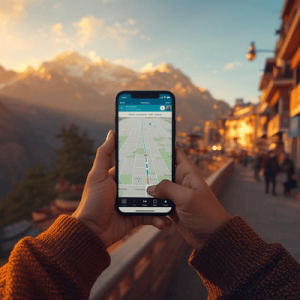
Practical Guide: 5 Essential eSIM Tips for Success
If this is your first time using an e sim, the process is straightforward, but a little preparation goes a long way. Follow these actionable tips to ensure you never lose your signal.
1. Verify Device Compatibility and “Unlock” Status
Before you buy a plan, you must ensure your phone can actually use it.
- Check Settings: On iPhone, go to Settings > General > About and look for “Carrier Lock.” It should say “No SIM restrictions.”
- Check Hardware: On Android, go to Settings > Connections > SIM Manager. If you see an option to “Add eSIM,” you’re likely good to go.
2. Install Before You Fly
The most common mistake first-time users make is trying to install their e sim after they land. Most activations require a stable Wi-Fi connection.
- The Golden Rule: Purchase and install your plan while you are still at home or in the airport lounge before departure.
- Don’t Worry About Data Expiry: Most plans don’t “start” until you actually connect to a local network in your destination country.
3. Master Your “Primary” vs. “Secondary” Labels
Once installed, your phone will ask you to label the new line. We recommend labeling your home SIM as “Primary” and your e sim as “Travel” or the name of the country (e.g., “Italy Data”).
- Data Switching: In your cellular settings, set your e sim as the “Cellular Data” source.
- Keep Your Number: Keep your Primary line on for “Calls & SMS” if you need to receive 2FA (two-factor authentication) codes, but ensure “Data Roaming” is OFF for your home line to avoid unexpected fees.
4. Manage Your Data Like a Pro
Travel apps can be data-hungry. To make your plan last longer:
- Download Offline Maps: Use Google Maps to download your destination city while on Wi-Fi.
- Disable Background Refresh: Turn off “Background App Refresh” for non-essential apps like Instagram or YouTube.
- Use Low Data Mode: Both iOS and Android have settings that automatically reduce data usage when active.
5. Keep Your QR Code Handy
While the installation is usually “one and done,” it’s a smart move to save a screenshot of your activation QR code in your photo gallery or email it to yourself. If you accidentally delete the profile, having that code makes recovery much faster.
Comparing Connectivity: eSIM vs. Traditional Options
How does the e sim stack up against the old ways of staying connected? The following table breaks down the costs, convenience, and features of the top three methods for 2026 travelers.
| Feature | Travel eSIM (e.g., Terminal eSIM) | Local Physical SIM | International Roaming |
| Setup Time | < 2 Minutes (Digital) | 20–60 Minutes (In-person) | Instant |
| Cost | Low (Local Rates) | Lowest | Very High ($$$) |
| Ease of Use | High (No swapping) | Medium (Manual swap) | High |
| Availability | Before Travel | Upon Arrival | Everywhere |
| Keep Home Number? | Yes | No (usually) | Yes |
| Multiple Regions? | Yes (Regional Plans) | No (Country-specific) | Yes |
Key Insights from the Comparison
The data clearly shows that while local physical SIMs can sometimes be a few dollars cheaper, they lack the convenience and flexibility of an e sim. International roaming remains the most expensive option, often leading to “bill shock” upon returning home.
For travelers visiting multiple countries (like a Euro-trip or a Southeast Asia tour), a regional e sim is the undisputed winner. It allows for seamless border crossings without the need to find a new shop in every city.
2026 Trends and Frequently Asked Questions
As we look toward the future of travel, eSIM technology is becoming the “invisible layer” of our journeys. In 2026, we are seeing more integration between travel booking platforms and connectivity. Some airlines and hotels now offer data packages as part of their loyalty programs. Furthermore, the rise of 5G-only eSIMs means that “slow travel” no longer means slow internet.
Common Concerns Addressed
Many travelers worry that using a digital SIM will “break” their WhatsApp or iMessage. Fortunately, this isn’t the case. Because your phone treats the e sim as just another data source, your apps stay tied to your original phone number. You can browse the web using local data while still chatting with friends on your home account.
Frequently Asked Questions (FAQs)
Q: Can I use my eSIM in multiple countries?
A: Yes, if you purchase a regional or global plan. For example, Terminal eSIM offers “Europe” or “Asia” bundles that cover dozens of countries under a single activation.
Q: What happens if I run out of data mid-trip?
A: Most providers allow you to “top up” through their website or app. Your connection will simply refresh once the new data is added, without needing a new QR code.
Q: Is my phone unlocked?
A: If you bought your phone outright, it’s likely unlocked. If you are on a payment plan with a carrier (like Verizon or AT&T), you may need to request an unlock after a certain period of service.
Q: Can I make phone calls with an eSIM?
A: Most travel eSIMs are “Data-Only.” However, you can make calls using data-based apps like WhatsApp, Skype, FaceTime, or Telegram.
Summary of the First-Timer’s Journey
Staying connected while traveling doesn’t have to be a headache. By choosing an e sim, you are opting for a modern, secure, and cost-effective way to navigate the globe.
To recap, the path to success involves:
- Checking your phone’s compatibility and lock status.
- Purchasing a plan tailored to your destination before you leave.
- Installing the digital profile via QR code on a stable Wi-Fi connection.
- Configuring your settings to ensure your phone uses the travel line for data.
- Monitoring your usage and enjoying the freedom of instant connectivity.
Whether you’re looking for a 1GB plan for a weekend getaway or a 50GB plan for a month-long digital nomad stint, the technology is now mature enough to handle all your needs with zero physical effort.
Experience the Future with Terminal eSIM
Ready to leave the SIM-swapping stress behind? At Terminal eSIM, we specialize in providing high-speed, reliable data plans for over 150 destinations worldwide. Our goal is to make sure you spend your time exploring the world, not troubleshooting your phone.
Why choose Terminal eSIM?
- Instant Delivery: Receive your QR code via email immediately after purchase.
- Budget-Friendly: Stop paying for expensive roaming and start paying local rates.
- Flexible Plans: Choose from daily, weekly, or monthly data buckets that fit your specific trip.
- Global Coverage: From the bustling streets of Seoul to the beaches of Brazil, we have you covered.
Don’t wait until you land to figure out your data. Join the thousands of smart travelers who trust us for their global connectivity.
Explore our plans and get your first eSIM today at terminalesim.com!