If you’ve ever landed in a new country, bleary-eyed after a 12-hour flight, and immediately started hunting for a kiosk that sells pieces of plastic, you know the struggle. You’re looking for a SIM card. You’re looking for a paperclip. You’re looking for a way to tell your family you landed—or more importantly, a way to call a ride to your hotel.
In 2026, that ritual is becoming a relic of the past. The rise of the embedded SIM (or eSIM) has quietly revolutionized how we stay connected while crossing borders.
I’ve spent the last few years testing different ways to stay online across Europe, Southeast Asia, and the Americas. I’ve used physical SIMs from corner stores, expensive roaming plans from back home, and almost every major eSIM provider like Airalo, Holafly, and Terminal eSIM.
Here is exactly how an embedded SIM changes the way you move through the world, along with a few honest reality checks on what to expect.
1. You Connect Before You Even Deplane
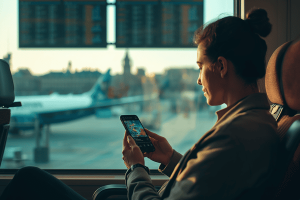
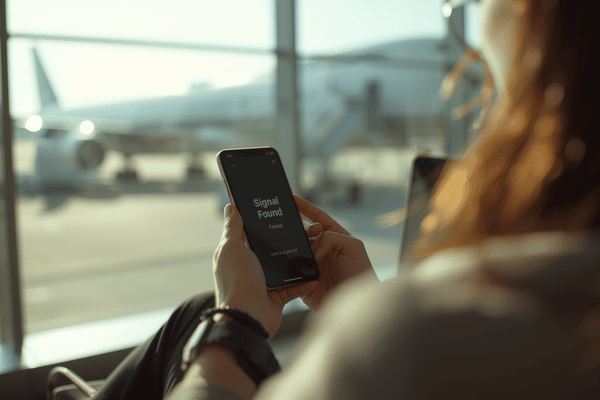
The most satisfying moment of using an embedded SIM happens while the plane is still taxiing to the gate. While everyone else is toggling their airplane mode on and off hoping for free airport Wi-Fi, you just turn on your travel line. By the time you’ve grabbed your carry-on from the overhead bin, your phone has already found a local signal. You can check the exchange rate, message your Airbnb host, and map out the train route before you even step onto the jet bridge.
2. No More “SIM Card Surgery”
We’ve all been there: trying to balance a microscopic piece of plastic on the end of a bent paperclip while sitting in a cramped bus seat. If you drop that physical SIM, it’s gone. With an embedded SIM, there is no physical card. It’s a chip already built into your phone’s motherboard. You download the “profile” digitally. No tray to open, no card to lose, and no need to find a place to tape your home SIM card so it doesn’t disappear during your trip.

3. You Can Keep Your Home Number Active
This is the big one. Most modern phones allow you to run your physical SIM and your embedded SIM at the same time. This means you can use your local travel data for Google Maps and Instagram, but keep your home number active to receive those annoying (but necessary) 2-factor authentication (2FA) texts from your bank.
Pro Tip: Just make sure you go into your settings and turn off “Data Roaming” for your primary home line so you don’t get hit with a surprise $10-a-day fee from your provider back home.
4. Crossing Borders Is a Non-Event
If you’re backpacking through Europe or hopping around Southeast Asia, buying a new SIM card in every country is a chore. Regional embedded SIM plans (like those offered by Terminal eSIM or Nomad) cover entire continents. You can take a train from Paris to Amsterdam and then to Berlin, and your phone just switches networks automatically. No need to find a new shop or learn how to say “10 gigabytes” in five different languages.
5. Better Security in Your Pocket
Public Wi-Fi is a gamble. Whether it’s at a café in Bali or a train station in Rome, hackers love “Free Tourist Wi-Fi.” Having your own dedicated data via an embedded SIM means you don’t have to risk your passwords just to check your bank balance. Plus, if your phone is ever stolen, a thief can’t just “pop out” the SIM card to stop the tracking. Since the SIM is embedded, the phone stays connected to the network longer, giving you a better chance of using “Find My Phone.”
6. You Can Shop Around for the Best Deal
Back in the day, you were stuck with whatever price the airport SIM kiosk was charging. Now, you can compare.
- Airalo is great for small, cheap “snackable” data packages.
- Holafly is famous for unlimited data, though they often don’t allow “hotspotting” to your laptop.
- Terminal eSIM tends to strike a nice balance with high-speed 5G data that actually lets you share your connection with other devices.
You can download these apps, look at the prices, and buy your plan a week before you even leave your house.
7. It’s Significantly Cheaper Than Roaming
Major carriers in the US, UK, and Australia still love to charge “Travel Passes” that cost $10 or more per day. On a two-week trip, that’s $140. An embedded SIM for the same trip usually costs between $15 and $30 total. It’s a no-brainer for anyone trying to travel on a budget without sacrificing speed.
8. No Language Barriers at the Phone Shop
Trying to explain that your APN settings aren’t working to a clerk who doesn’t speak your language is a special kind of travel stress. When you use an embedded SIM, the entire interface is in your language. If something goes wrong, you deal with digital support in an app you understand, rather than gesturing wildly at a storefront in a suburban mall.
9. Instant Top-Ups
There is nothing worse than running out of data in the middle of a hike or while trying to call a late-night Uber. With a physical SIM, you’d have to find a convenience store to buy a top-up voucher. With an eSIM, you just open the app, click “Top Up,” and you’re back online in 30 seconds.
10. It’s a Greener Way to Travel
Think about the billions of plastic SIM cards produced, packaged in even more plastic, and then thrown away every year. By switching to an embedded SIM, you’re cutting out the physical waste entirely. It’s a small change, but for frequent travelers, it adds up.
Pros and Things to Know
The Pros
- Convenience: Setup takes about 2 minutes.
- Dual-SIM: Keep your WhatsApp on your home number while using cheap local data.
- Flexibility: Switch between different plans or providers without a toolkit.
- No Hidden Fees: You pay upfront; there’s no “bill shock” at the end of the month.
Things to Know (The Honest Truth)
- Phone Compatibility: If you’re using a phone from 2018 or earlier, it might not support eSIM. Always check your settings first.
- Locked Phones: If your phone is still being paid off via a contract, your carrier might have “locked” it. An embedded SIM from another provider won’t work until your phone is unlocked.
- Data Only: Most (but not all) travel eSIMs are for data only. You won’t get a local phone number to make traditional “landline” calls, though you can use WhatsApp, FaceTime, or Skype perfectly.
Practical Scenarios: Which eSIM is for you?
- The “Work from Anywhere” Traveler: If you’re tethering your laptop to your phone to take Zoom calls, avoid “Unlimited” plans that throttle your speed. Look for a fixed-data plan from Terminal eSIM or Ubigi that allows full-speed hotspotting.
- The Weekend Warrior: If you’re just going to London for 3 days, a 1GB plan from Airalo for a few bucks is all you need.
- The Social Media Maven: If you’re uploading 4K reels every hour, you’ll want the heavy-duty plans. Holafly offers great value, but be sure to check the fine print on their Fair Usage Policy, as your data speeds might be throttled after heavy usage.
Frequently Asked Questions
Will I lose my WhatsApp conversations?
No. When you install an embedded SIM, WhatsApp will ask if you want to switch to the new number. Simply select “Keep” your old number. All your chats and contacts stay exactly as they are.
Can I use a hotspot with an eSIM?
Usually, yes. However, some providers like Holafly restrict hotspotting on their unlimited plans. Terminal eSIM and Nomad generally allow hotspotting on all their plans, which is a lifesaver if you need to get some work done on your laptop.
What happens to my home SIM card?
Nothing! It stays inside your phone. You can turn that line off in your settings to avoid roaming charges, or leave it on “standby” to receive text messages.
Final Thoughts
The transition to embedded SIM technology isn’t just a “tech trend”—it’s a fundamental shift in how we experience the world. It removes one of the biggest friction points of international travel, leaving you with more time to actually enjoy the destination rather than worrying about your signal bars.
If you’re planning your next trip, I’d suggest giving it a shot. Companies like Terminal eSIM make the process incredibly straightforward, and once you experience the “land and connect” lifestyle, you’ll never want to go back to a paperclip and a plastic card again.