But as we move through 2026, the conversation has shifted.
The rise of “unlimited” esim plans has promised the ultimate freedom—the ability to stream, navigate, and work from anywhere without ever seeing a “Data Exhausted” alert. But is “unlimited” always what it seems? In a world of Fair Usage Policies (FUP) and varying network speeds, the value of these plans depends entirely on your travel style.
This guide breaks down the mechanics, the hidden fine print, and the practical reality of unlimited data to help you decide if an unlimited plan is your best travel companion or if a fixed data package is a smarter play for your next adventure.
The Evolution of Travel Connectivity: Why Everyone is Talking About eSIMs
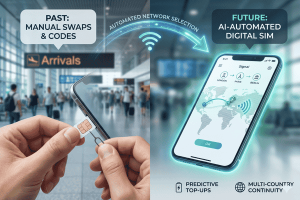
To understand the value of modern esim plans, we have to look at where we came from. Not long ago, international travel meant one of two things: paying your home carrier $10 per day for the privilege of using your own data, or awkwardly fumbling with a paperclip at a foreign airport to swap out a physical SIM card.
An eSIM (Embedded SIM) changed the game by moving the hardware inside your phone. It’s a digital chip that allows you to download a data profile over the air. Since Apple’s shift to eSIM-only models in recent years, this technology has become the global standard for travelers.
Why Unlimited Plans Are Trending in 2026
In 2026, our data habits have exploded. We aren’t just checking emails anymore; we are uploading 4K Reels, attending Zoom calls from seaside cafes, and using AI-powered translation apps that require constant cloud connectivity.
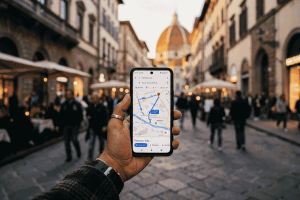
Traditional fixed-data plans—like 3GB for 10 days—often fall short for the “always-on” traveler. This gap created the demand for unlimited esim plans. These plans are designed to provide peace of mind, ensuring that even if you spend three hours on TikTok while waiting for a delayed train in Tokyo, you won’t lose access to your maps when you finally arrive at your hotel.
The “Unlimited” Catch: Fair Usage Policies
It is important to understand that in the telecom world, “unlimited” usually comes with a caveat called a Fair Usage Policy (FUP). Most unlimited eSIMs provide a specific amount of high-speed (4G/5G) data per day—for example, 2GB or 3GB. Once you hit that limit, your speed may be “throttled” to a slower rate (like 128kbps or 256kbps) until the clock resets the next day.
While you still have “unlimited” data, the speed reduction means you might be able to send WhatsApp messages, but you won’t be streaming Netflix in HD. Understanding this distinction is the first step in deciding if these plans are worth the investment.
Practical Guide: How to Choose the Right eSIM Plans for Your Trip
Selecting the right connectivity isn’t just about finding the cheapest price; it’s about matching the plan to your actual digital footprint. Follow these steps to ensure you aren’t overpaying for data you won’t use—or under-buying and getting stranded.
1. Audit Your Data Habits
Before you browse esim plans, check your current phone settings to see how much data you use in a normal week.
- Light Users: If you only use your phone for Google Maps, occasional WhatsApping, and checking emails, you likely only need 500MB to 1GB per day.
- Moderate Users: If you post to Instagram Stories, stream music on Spotify, and browse the web frequently, expect to use 1GB to 2GB per day.
- Heavy Users/Digital Nomads: If you are hotspotting your laptop, watching YouTube, or making video calls, you will easily exceed 3GB+ per day.
How to Activate Your Terminal eSIM in Minutes
Ready to get connected? While the process is simple, seeing it in action helps. Watch our step-by-step video tutorials below to activate your eSIM on your specific device.


2. Check Device Compatibility
Not every phone is eSIM-ready. Generally, iPhone 11 and newer, Samsung Galaxy S20 and newer, and Google Pixel 3 and newer support eSIM. Before purchasing, dial *#06# on your device; if you see an EID number, you’re good to go.
3. Review the “Speed Reset” Time
When using unlimited esim plans, check when the daily high-speed data resets. Some reset at midnight local time, while others reset 24 hours after activation. This is crucial if you have a long travel day and need high-speed data for evening navigation.
4. Look for Hotspot Support
Not all unlimited plans allow you to share your data with other devices. If you plan to connect your laptop or share data with a travel partner, ensure the plan explicitly supports Personal Hotspot or Tethering.
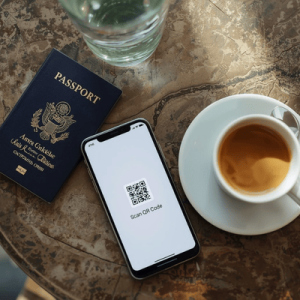
Pro Tip: Always install and activate your eSIM while you still have a stable Wi-Fi connection (like at home or in the airport lounge). This ensures that the moment you land and turn off Airplane Mode, your data kicks in immediately.
Comparison: Unlimited vs. Fixed-Data eSIM Plans
To help you visualize the difference, we’ve compared the two most popular types of esim plans available for travelers today.
| Feature | Unlimited Data Plans | Fixed-Data Plans (e.g., 10GB) |
| Best For | Heavy streamers, TikTokers, & Nomads | Budget-conscious & Light users |
| Peace of Mind | High—never lose connection entirely | Moderate—must monitor usage |
| Speed | High speed up to daily FUP limit | Consistent high speed until empty |
| Hotspotting | Often restricted or limited | Usually fully supported |
| Typical Cost | $4 – $8 per day | $15 – $30 per 30 days |
| Flexibility | Great for “always-on” connectivity | Best for long-term, low-usage trips |
Key Insights from the Comparison
- The Cost-Value Gap: For a 3-day weekend, an unlimited plan is often the best value. However, for a 30-day trip, a large fixed-data plan (like 20GB) is usually significantly cheaper than paying for 30 days of unlimited access.
- The Throttling Factor: If you are a power user who needs 10GB in a single day for a work emergency, a fixed-data plan is better because it won’t throttle your speed halfway through the day.
- Reliability: Unlimited plans are perfect for travelers who don’t want to think about “topping up.” You pay once, and you’re covered for the duration of your trip.
2026 Trends and FAQs: Solving Traveler Concerns
As travel tech evolves, the way we use esim plans is changing. In 2026, we are seeing more “Regional” unlimited plans—for example, a single eSIM that provides unlimited data across all of Europe or Southeast Asia. This eliminates the need to buy a new plan every time you cross a border.
Another major trend is the integration of 5G by default. While 4G used to be the standard for travel eSIMs, the majority of plans now offer 5G access in major urban hubs, making “unlimited” data feel as fast as your home Wi-Fi.
Frequently Asked Questions (FAQs)
Q: Will an unlimited eSIM change my phone number?
No. Your eSIM is for data only. You can keep your primary physical SIM active to receive SMS and calls on your original number while using the eSIM for all your internet needs.
Q: Can I use an unlimited eSIM in multiple countries?
This depends on the plan. “Local” plans work in one country, while “Regional” or “Global” esim plans cover multiple countries. Always check the “Country Coverage” list before buying.
Q: What happens if I hit the Fair Usage limit?
Your data will not be cut off. Instead, your speed will slow down significantly. You will still be able to use basic apps like Google Maps or WhatsApp, but video streaming will likely buffer.
Q: Is it cheaper to buy an eSIM than to use my home provider’s roaming?
In almost 95% of cases, yes. Home providers often charge $10+ per day for roaming. A travel eSIM can provide better coverage and more data for a fraction of that price.
Summary: Is the Unlimited Plan Right for You?
So, are unlimited esim plans worth it? The answer is a resounding yes if you prioritize convenience and peace of mind above all else. They are the “all-inclusive resort” of the mobile world—you pay upfront and stop worrying about the bill.
Choose an unlimited plan if:
- You are a heavy social media user or content creator.
- You rely on GPS and live translation for several hours a day.
- You don’t want the hassle of monitoring data usage or topping up mid-trip.
Choose a fixed-data plan if:
- You are on a tight budget and will have frequent access to hotel Wi-Fi.
- You are traveling for a month or longer and use data sparingly.
- You need a high-speed hotspot for your laptop for large file transfers.
Get Connected with Terminal eSIM
At Terminal eSIM, we believe your travel stories should be shared in real-time, not after you find a coffee shop with working Wi-Fi. We’ve curated the most reliable esim plans across 200+ destinations to ensure you’re always just one tap away from what matters.
Whether you’re looking for a massive unlimited bucket for a trek through Patagonia or a slim 1GB plan for a quick business trip to London, we provide 24/7 support and lightning-fast 5G connectivity. Don’t let high roaming fees or data anxiety ruin your itinerary.
Ready to fly? Browse our latest esim plans at Terminal eSIM and get your activation QR code delivered instantly to your inbox. Your next adventure starts with a connection you can trust.