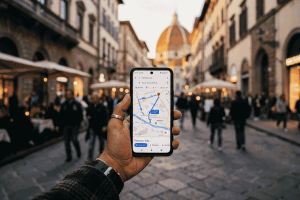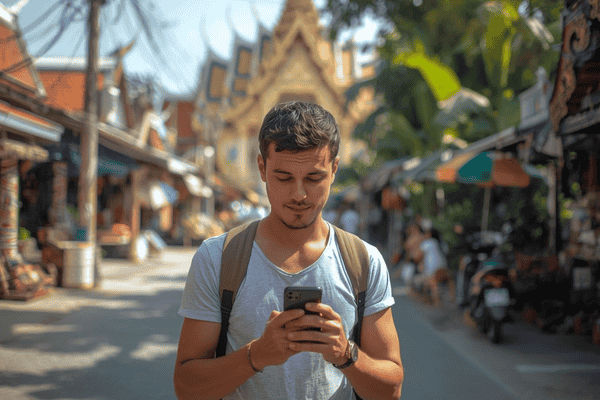
Navigating a foreign country without reliable internet is a recipe for stress. You need Google Maps to find your hotel, translation apps to order street food, and social media to share those stunning sunset photos.
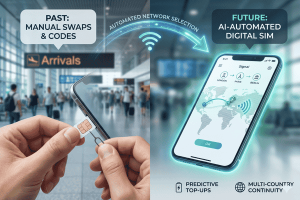
In the past, staying online meant hunting for a local SIM card kiosk at a chaotic airport arrivals hall or dealing with expensive roaming charges from your home carrier. Thankfully, technology has evolved. The embedded SIM, or eSIM, has revolutionized travel connectivity. It’s digital, instant, and incredibly convenient. But with so many providers flooding the market, how do you choose?
This guide cuts through the noise. We will break down exactly what makes a plan the best eSIM for Thailand, compare top options side-by-side, and ensure you land in the Land of Smiles with your connection already sorted. Let’s make sure your phone is as ready for this adventure as you are.
The Evolution of Travel Connectivity in Thailand
Thailand has long been a hub for digital nomads and backpackers, thanks in part to its robust telecommunications infrastructure. If you visited ten years ago, your first hour in the country was likely spent standing in line at Suvarnabhumi Airport. You’d hand over your passport, wait for a photocopy, and watch a staff member fiddle with a paperclip to swap out your plastic SIM card. While functional, the process was time-consuming and came with the risk of losing your original home SIM.
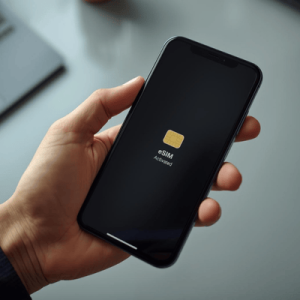
The introduction of eSIM technology has shifted this landscape entirely. An eSIM is a programmable chip embedded directly into your smartphone hardware. Unlike a physical card that identifies you to a network, an eSIM allows you to download a digital profile that does the exact same job. This technology first appeared in consumer devices around 2016 but has exploded in popularity for travelers post-2020.
For Thailand specifically, the shift is significant. The country’s major local networks—AIS, DTAC, and TrueMove H—have excellent 5G coverage, even in remote areas. However, buying directly from them often involves language barriers and confusing “tourist” packages that expire quickly.
Third-party eSIM providers like Terminal eSIM bridge this gap. They partner with these local giants to offer seamless connectivity that you can set up from your couch before you even pack your bags. This shift isn’t just about convenience; it’s about security and sustainability. There is no plastic waste, no tiny chips to lose, and no need to hand your unlocked phone to a stranger. It represents the modern standard for travel tech, allowing you to switch networks with a tap on your screen rather than a swap of a card.

How to Choose the Best eSIM for Thailand: A Practical Guide
Selecting the right plan involves more than just looking at the lowest price tag. Thailand is a diverse country, from the concrete jungles of Bangkok to the remote mountains of Pai. You need a connection that keeps up with you. When searching for the best eSIM for Thailand, keep the following criteria in mind to ensure you get value and reliability.
1. Check Network Partnerships
Not all eSIMs are created equal because they rely on different local backbones.
- AIS: Generally considered the fastest and most reliable, especially in rural areas and on islands.
- TrueMove H: Excellent 5G coverage in cities.
- DTAC: Solid coverage, often slightly cheaper, but can have spotty patches in very remote jungles.
- Tip: Look for an eSIM provider that clearly states which network they use. Terminal eSIM, for example, prioritizes premium local networks to ensure you aren’t left with “No Service” when you need it most.
2. Data vs. Duration
Analyze your usage honestly. Are you a heavy Instagram user uploading reels daily? Or do you just need Maps and WhatsApp?
- The “Unlimited” Trap: Be wary of plans that promise “unlimited” data but throttle your speed to 2G after you use 1GB a day. This is barely enough to load an email.
- Fixed Data Plans: Often offer full 5G speeds for the entire allotment (e.g., 10GB for 15 days). This is usually better for travelers who want consistent speed.
3. Installation Experience
The best eSIM for Thailand is one that works immediately.
- QR Code vs. Direct Install: Most providers send a QR code via email. Newer apps allow “Direct Install,” which sets up the eSIM with a single button press.
- Activation Policy: Check if the plan activates the moment you buy it or the moment you connect to a Thai network. Always choose the latter so you don’t waste days before your trip starts.
4. Hotspot Capabilities
If you are a digital nomad working from a café or need to share data with a travel partner, tethering is non-negotiable. Some “unlimited” plans block hotspot usage. Ensure your plan explicitly allows data sharing.
5. Price Per Gigabyte
Don’t just look at the total cost. Divide the price by the GBs to get the real value. A $5 plan for 1GB ($5/GB) is far more expensive than a $15 plan for 10GB ($1.50/GB).
Comparison Table: Top eSIM Options for Thailand
To help you visualize the differences, we’ve compared popular generic options against specialized travel eSIMs. This table assumes a standard 10-15 day trip for a moderate data user.
| Feature | Local SIM (Airport Kiosk) | Major Global Roaming (e.g., AT&T/Verizon) | Standard Travel eSIM | Terminal eSIM |
| Setup Time | 30-45 mins (Queue + Install) | Instant (Automatic) | 5 mins (QR Code) | 2 mins (Instant Digital Delivery) |
| Cost (Approx) | $10 – $15 USD | $10 per day ($100+ total) | $15 – $25 USD | Competitive & Transparent |
| Data Speed | Full Speed 5G | Often Throttled / 4G | Varies by partner | Unthrottled 5G/4G LTE |
| Physical Swap | Yes (Risk of losing home SIM) | No | No | No |
| Coverage | Direct Local Carrier | Partner Networks | Varies | Premium Local Networks |
| Support | In-person only | Call Center (Long holds) | Email/Chat | 24/7 Digital Support |
| Hotspot | Usually Included | Depends on home plan | Often Restricted on “Unlimited” | Fully Supported |
Key Insights:
- Local SIMs offer great speeds but come with the “airport tax” of time and stress. You also lose access to your home number for 2FA texts (like banking login codes) because you’ve removed your SIM.
- Carrier Roaming is the most expensive option by a landslide. Paying $10 a day is rarely justifiable for Thailand.
- Terminal eSIM hits the sweet spot. You get the connectivity of a local carrier without the queue, and the convenience of keeping your home number active for calls and texts while using the eSIM for data.
Trends, Common Problems, and FAQs
As travel returns to pre-pandemic levels, the way we connect is shifting. Understanding these trends can help you avoid common pitfalls.
The Rise of “Regional” Plans
Many travelers don’t stop at Thailand. They visit Vietnam, Cambodia, and Laos on the same trip. A major trend in 2024 is the Regional Asia eSIM. Instead of buying a separate plan for every border crossing, you can purchase a single “Asia” plan from Terminal eSIM that covers multiple countries. This prevents the headache of losing connection the moment your bus crosses the border.
The “Fair Use Policy” (FUP) Problem
A common complaint among travelers buying cheap “Unlimited Data” eSIMs is sudden speed loss. This is due to the Fair Use Policy. If you see a plan selling for $5 promising unlimited data for a month, it is too good to be true. Usually, after 500MB or 1GB of high-speed use, the provider throttles you to 128kbps. This renders the phone useless for anything but text messages. Always read the fine print regarding FUP.
Device Compatibility
The biggest hurdle for new users is hardware. While most iPhones (XR and newer), Samsung Galaxies (S20 and newer), and Google Pixels support eSIM, older models do not. Always check your device settings before purchasing.
- iOS: Settings > Cellular. If you see “Add eSIM,” you are good to go.
- Android: Settings > Network & Internet > SIMs. Look for “Download a SIM instead.”
Frequently Asked Questions
- Will my WhatsApp number change if I use an eSIM?
No. This is one of the best features of using an eSIM. When you activate your Thailand plan, your phone will ask if you want to keep your primary line for default voice and SMS. Choose yes. WhatsApp will continue to use your original number, so all your contacts and chats remain exactly where they are. - Can I make phone calls with a data-only eSIM?
Most travel eSIMs, including Terminal eSIM plans, are data-only. This means they do not come with a Thai phone number for traditional voice calls. However, you can make calls using data-based apps like WhatsApp, FaceTime, Skype, or Messenger. This is how 99% of travelers communicate today. - When should I install my Thailand eSIM?
You should purchase and install the eSIM before you fly—either at home or at the airport gate. However, do not turn on “Data Roaming” for that eSIM line until you land in Thailand. This ensures the setup is done while you have stable Wi-Fi, so you can simply switch it on when the plane touches down. - Is 5G available everywhere in Thailand?
Thailand has surprisingly advanced 5G coverage, arguably better than many Western countries. Bangkok, Chiang Mai, Phuket, and Pattaya have widespread 5G. Once you head into rural provinces or smaller islands like Koh Tao, your signal may switch to strong 4G LTE, which is still perfectly fast for streaming and navigation. - What happens if I run out of data?
With a physical SIM, you have to find a 7-Eleven to buy a top-up voucher. With Terminal eSIM, you can simply log into the portal and purchase a “top-up” package. It adds more data to your existing eSIM instantly, ensuring you never go offline.
Summary: Staying Connected in the Land of Smiles
Choosing the right connection is about balancing cost, convenience, and reliability. Here is a quick recap of what we have covered:
- Avoid the Queue: Don’t waste your first hour in Thailand standing in line at the airport. Digital setup is the modern standard.
- Check the Network: Ensure your provider uses top-tier networks like AIS or TrueMove H for the best coverage on islands and in cities.
- Beware of “Unlimited”: Read the fine print on fair use policies. A dedicated high-speed data cap (like 10GB or 20GB) is often superior to a throttled “unlimited” plan.
- Keep Your Number: Using an eSIM allows you to keep your home SIM card inside your phone, ensuring you never miss important banking codes or emergency calls from home.
- Go Regional: If you are backpacking across Southeast Asia, look for regional plans rather than buying single-country plans.
Thailand is a country that demands to be shared. From the street food markets to the elephant sanctuaries, you will want a connection that works as hard as you play. By choosing a reputable eSIM provider, you remove the friction from your travel experience.
Ready for Your Thai Adventure?
Your trip to Thailand should be defined by memories, not connectivity issues. Whether you are navigating the BTS Skytrain in Bangkok, booking a Grab taxi in Chiang Mai, or FaceTiming family from a beach in Krabi, you need a connection you can trust.
Terminal eSIM was built for travelers who refuse to compromise on quality. We offer transparent pricing, instant delivery, and partnerships with the best local networks in Thailand to ensure you have full-speed 5G/4G LTE wherever your journey takes you. No hidden fees, no plastic waste, and no airport queues.
Don’t wait until you land to figure it out. secure your connection now and land with confidence.