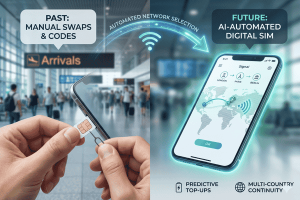
In the past, this meant hunting for a Pocket WiFi rental counter or swapping out your tiny physical SIM card with trembling hands, hoping you wouldn’t drop it into a grate.
Fortunately, travel technology has evolved. The Embedded Subscriber Identity Module (eSIM) has revolutionized how we stay connected in the Land of the Rising Sun. But with so many options flooding the market, how do you choose the right one?
If you are planning a trip to Tokyo, Kyoto, or the ski slopes of Niseko, reliable data isn’t a luxury—it’s a necessity. This guide will walk you through everything you need to know to select the best provider for your specific needs, ensuring your Japanese adventure remains connected, convenient, and stress-free.
The Evolution of Connectivity in Japan
To understand why choosing the right eSIM Japan plan matters, it helps to look at how connectivity has shifted over the last decade. Japan has always been technologically advanced, yet for a long time, staying connected as a tourist was surprisingly difficult.
The Era of Pocket WiFi
For years, the gold standard for tourists was the Pocket WiFi—a small router you rented at the airport. While effective, it came with significant downsides. You had to carry an extra device, keep it charged (often requiring a portable battery pack), and return it before leaving the country. If you lost it, you faced steep fines.
The Physical SIM Card Hurdle
Physical SIM cards were the next step. You could buy these from vending machines or electronics stores like Bic Camera. However, this required an unlocked phone and the dexterity to swap tiny chips. Many travelers found themselves losing their home SIM cards during the swap, leading to headaches when they returned home.
The Rise of the eSIM
Enter the eSIM. This technology is built directly into modern smartphones (like the iPhone XR and newer, Google Pixel 3 and newer, and recent Samsung Galaxy models). It allows you to download a data plan digitally without inserting a physical card.
For Japan, this is a game-changer. The country’s dense urban environments and high-speed rail networks require robust connectivity. eSIMs tap directly into local networks like Docomo, KDDI (au), or SoftBank, offering 4G LTE and 5G speeds without the hardware hassle. You can keep your home number active for 2FA texts or emergency calls while using the eSIM for data. It is the seamless, invisible solution that modern travel demands.

How to Choose the Best eSIM Japan Plan for Your Trip
Selecting an eSIM Japan provider isn’t just about finding the cheapest price. It’s about balancing coverage, speed, and data allowance against your specific travel habits. Here is a practical guide to making the right choice.
1. Assess Your Data Appetite
Be honest about how you use your phone.
- The Minimalist: You only need maps and translation apps. (1GB – 3GB total)
- The Social Sharer: You post Instagram Stories, check emails, and browse restaurants. (1GB – 2GB per day)
- The Power User: You stream video, work remotely, or upload 4K content. (Unlimited or 5GB+ per day)
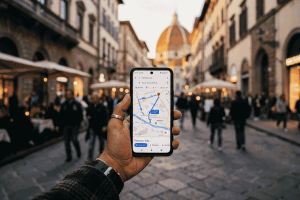
Tip: Google Maps in Japan consumes more data than you might expect because of the complex transit routing. Always budget a buffer of at least 500MB per day.
2. Check Network Partnerships
Not all eSIMs are created equal. The quality of your connection depends on the local Japanese carrier the eSIM connects to.
- NTT Docomo: The gold standard. Best coverage in rural areas, mountains, and remote islands.
- KDDI (au): Excellent urban coverage and strong reliability.
- SoftBank: Great for cities but can be spotty in very remote hiking areas.
Look for a provider like Terminal eSIM that prioritizes high-quality network partnerships to ensure you aren’t left with “No Service” when you’re hiking Mount Fuji or exploring the rural villages of Shirakawa-go.
3. Validity Period
Does the plan match your itinerary?
- If you are staying for 7 days, don’t overpay for a 30-day plan.
- Conversely, if you are a digital nomad staying for a month, buying daily top-ups will drain your wallet. Look for flexible durations.
4. Activation Policy
This is a crucial but often overlooked detail.
- Immediate Activation: The clock starts ticking the moment you install the eSIM.
- First Usage Activation: The clock starts only when the eSIM connects to a network in Japan.
Recommendation: Always choose “First Usage Activation.” This allows you to install the eSIM while you are still at home with stable Wi-Fi, without wasting days of your plan before your flight even takes off.
5. Tethering (Hotspot) Capability
If you need to work on a laptop or share data with a travel companion, ensure your chosen plan supports tethering. Some “unlimited” plans throttle speeds or block hotspot usage entirely.
Comparing the Top Options: Features vs. Price
To make your decision easier, let’s look at how different types of plans stack up against each other. It’s important to compare apples to apples when looking at the esim japan market.
The table below outlines the key differences between standard data packages, unlimited options, and flexible regional plans.
Comparison Table
| Feature | Standard Data Plans (e.g., 5GB/10GB) | Unlimited Data Plans | Terminal eSIM Japan Plans |
| Best For | Budget travelers, light users, short trips | Heavy streamers, groups, anxiety-free browsing | Travelers seeking reliability, speed, and clear pricing |
| Cost | Low ($5 – $15) | High ($30 – $60+) | Competitive & Flexible |
| Speed | Full 4G/5G speed until cap | Often throttled after daily cap (e.g., 2GB/day) | High-speed priority networks |
| Hotspot | Usually Included | Often Restricted or Slow | Supported |
| Network | Varies (check provider) | Often secondary networks | Premium Tier 1 Networks |
| Expiration | Fixed (7, 15, 30 days) | Fixed (5 – 30 days) | Flexible durations available |
Key Insights
- The “Unlimited” Trap: Many providers market “Unlimited Data,” but hide a Fair Usage Policy (FUP) in the fine print. This usually means you get high speeds for 1GB or 2GB a day, and then the speed drops to 128kbps—which is barely enough to load a text email.
- The Sweet Spot: For most travelers, a high-capacity fixed plan (like 10GB or 20GB) is often better than a cheap unlimited plan. It guarantees full speed for all your data, rather than punishing you for heavy usage on a single day.
- Regional Roaming: If you are visiting Japan as part of a larger Asia tour (e.g., stopping in South Korea or Taiwan), look for a regional eSIM that covers multiple countries so you don’t have to buy separate plans.
Trends, Common Concerns, and FAQs
As travel to Japan surges, the demand for connectivity has revealed several trends and common pitfalls for tourists.
Trend: The Decline of Public Wi-Fi Reliance
Japan was notoriously slow to adopt free public Wi-Fi compared to other developed nations. While it has improved—you can find it in major JR stations and convenience stores—it is often frustrating. Log-ins require email registration, sessions time out after 30 minutes, and security is non-existent. Travelers are increasingly realizing that relying on public Wi-Fi is a recipe for getting lost. Having your own secure eSIM connection is now considered a safety essential, not just a convenience.
Trend: Digital Nomad Visas
With Japan introducing visas for digital nomads, there is a higher demand for long-term, high-data eSIMs. These users need robust upload speeds for Zoom calls, not just download speeds for maps.
Traveler Concern: “Will my phone work in Japan?”
Japan uses specific frequency bands. Most modern smartphones are “global” and will work fine. However, older budget phones from regions like Europe or South America might lack the specific bands (like Band 1, 19, or 28) used by Docomo or SoftBank.
- Solution: Check your phone specifications against Japan’s LTE bands before you go. If you have an iPhone 11 or newer, you are almost certainly safe.
Frequently Asked Questions (FAQs)
Q1: Can I make voice calls with a Japan eSIM?
A: Generally, no. Most travel eSIMs are data-only. They do not come with a Japanese phone number (+81). However, you can still use VoIP apps like WhatsApp, FaceTime, LINE, or Skype to make calls over the data connection. In Japan, LINE is the dominant communication app, so it’s useful to have it installed.
Q2: How do I install the eSIM?
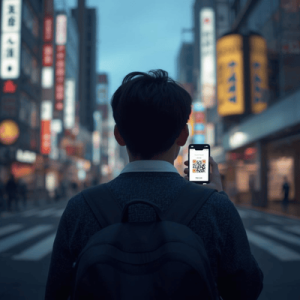
A: It is simple. After purchase, you will receive a QR code via email.
- Go to Settings > Cellular/Mobile Data > Add eSIM.
- Scan the QR code.
- Label the plan (e.g., “Japan Trip”).
- When you land, switch your “Cellular Data” line to the new eSIM and turn on “Data Roaming.”
Q3: What happens if I run out of data?
A: With many providers, your data simply cuts off. This can be scary if you are navigating. Premium providers often allow you to “top up” via their app or website without reinstalling a new eSIM. Always check if your provider offers easy top-ups.
Q4: Is 5G available on tourist eSIMs?
A: Yes, but it depends on the provider and the area. Tokyo, Osaka, and Fukuoka have extensive 5G coverage. Rural areas rely on 4G LTE. For typical travel needs (maps, web, social), 4G LTE is more than fast enough.
Q5: Will using an eSIM drain my battery?
A: Not significantly more than a regular SIM. However, searching for a signal drains battery. If you are in a remote area with poor coverage, your phone works harder. Using 5G can also consume more power. If battery life is a concern, switch your settings to “4G/LTE Only.”
Summary: Making the Right Connection
Choosing the right connectivity option is one of the most important pre-trip decisions you will make. Let’s recap the essentials for your Japanese journey:
- Ditch the Hardware: Pocket Wi-Fi and physical SIMs are outdated, bulky, and easily lost. eSIMs offer a superior, software-based solution.
- Network Matters: Ensure your eSIM connects to top-tier networks like Docomo or KDDI (au) for coverage that extends beyond the big cities.
- Beware of “Unlimited”: Read the fine print on unlimited plans to avoid speed throttling. A generous fixed-data plan often provides a faster, more consistent experience.
- Setup Before You Fly: Install your eSIM at home. It’s safer, easier, and ensures you are connected the moment your plane touches the tarmac.
- Data Estimation: Budget slightly more data than you think you need. Navigating Japan’s complex streets requires constant map usage.
Japan is a country where modern efficiency meets ancient tradition. Your connectivity should match that efficiency. You shouldn’t have to worry about finding a Wi-Fi signal when you’re trying to translate a menu in an Izakaya or find the right platform at Shinjuku Station.
Ready for Japan? Stay Connected with Terminal eSIM
Your trip to Japan should be defined by sushi, shrines, and neon lights—not by stress over a disconnected phone.
At Terminal eSIM, we understand the modern traveler. We know that when you are navigating the Tokyo Metro or hiking the Kumano Kodo trail, you need a connection that just works. That is why our Japan plans are built on premium local networks, ensuring high-speed 4G and 5G connectivity wherever your adventure takes you.
Why choose Terminal eSIM for Japan?
- Instant Delivery: Get your QR code seconds after purchase.
- No Hidden Throttling: Clear, transparent data packages so you know exactly what you are getting.
- Keep Your Number: Maintain your home line for 2FA and emergency calls while using our data for everything else.
- Traveler-First Support: We are here if you need us.
Don’t wait until you’re lost in translation. Secure your connection today and travel with confidence.