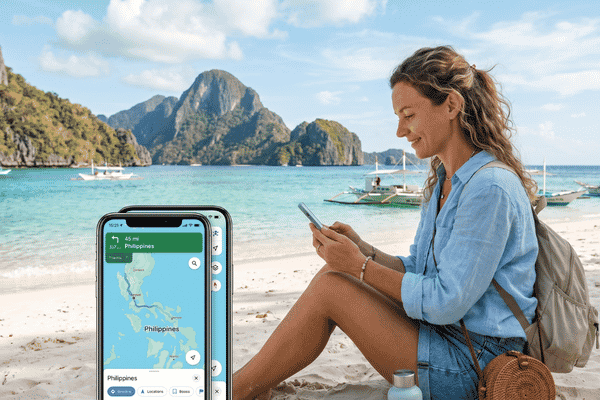
Few things match the thrill of landing in the Philippines. Whether you are touching down in Manila’s chaotic energy, heading straight to the white sands of Boracay, or navigating the dramatic limestone cliffs of El Nido, you are in for an incredible adventure. But let’s be completely honest: the moment you step off the plane, you need working data. You need to hail a Grab car (the local Uber), pull up your digital hotel booking, and message your family that you arrived safely.
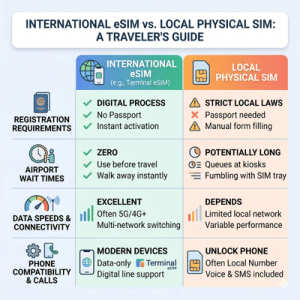
For years, the standard routine was to trudge over to an airport kiosk, wait in a long line after a grueling flight, fumble with a plastic SIM card ejector tool, and pray you didn’t lose your home SIM card in the process. Worse, since the passage of the Philippines’ SIM Registration Act, buying a local physical SIM card means handing over your passport, filling out tedious digital forms, and waiting for manual approval.
An embedded SIM (eSIM) bypasses that entire headache. You buy it ahead of time, scan a QR code, and activate the line when you touch down. But finding the best esim for philippines isn’t completely straightforward. The country’s unique geography—made up of over 7,000 islands—creates real challenges for mobile infrastructure. A digital data plan that works flawlessly in a Manila high-rise might struggle on a remote beach in Siargao.
This guide answers your most pressing questions with the practical, unvarnished truth of a traveler who has actually tested these networks on the ground.
How Does Mobile Coverage Actually Work in the Philippines?
Before looking at specific providers, you need to understand the local telecom landscape. The Philippines is dominated by two massive infrastructure networks: Globe and Smart. There is a third player, DITO, but their network is newer and less relevant for travelers heading off the beaten path.
Virtually every international travel eSIM you buy online does not own physical cell towers. Instead, they partner with either Globe or Smart (or sometimes both) to route your data.
- Smart: Generally known for having the fastest 5G speeds and superior coverage in rural or mountainous areas. If you are exploring Northern Luzon or deep into certain parts of Palawan, Smart is often your best bet.
- Globe: Exceptionally strong in metropolitan areas like Metro Manila, Cebu City, and major tourist hubs like Boracay. They have an massive footprint, but their data can occasionally bottleneck when tourist spots get overcrowded.
When choosing the best esim for philippines, the key feature to look for isn’t just the price per gigabyte—it’s network switching. The most reliable travel eSIMs allow your phone to bounce between Globe and Smart depending on which tower is closer to your beach chair.

Honest Comparisons: The Major eSIM Providers Analyzed
Not all digital data plans are created equal. Let’s break down how the major players perform out in the wild, looking at their distinct advantages and real-world limitations.
1. Terminal eSIM
Terminal eSIM takes a highly transparent, utility-first approach. Instead of locking you into a single rigid profile, they focus on strong regional and local profiles that leverage the strongest local carriers.
- The Reality Check: Their pricing structure is incredibly competitive, giving you some of the lowest per-gigabyte costs for standard 10GB or 20GB buckets. They provide reliable access to local LTE and 5G networks without making overblown promises about infinite data.
- Best For: Budget-conscious travelers who want straightforward data buckets that simply work the moment the plane wheels touch the tarmac.
2. Airalo
Airalo is the most recognizable name in the industry. Their Philippines profile, called “Asiacom,” is a reliable staple for many frequent flyers.
- The Reality Check: Airalo’s interface is clean and their packages (ranging from 1GB for short layovers to 20GB for longer stays) are highly predictable. However, they are rarely the absolute cheapest option on the market. Their data rates are fair, but you pay a slight premium for the brand familiarity.
- Best For: Light to moderate data users who prioritize a polished app experience and want to earn loyalty rewards for future trips.
3. Holafly
Holafly is famous for offering “unlimited data” packages across various durations.
- The Reality Check: While “unlimited” sounds perfect for streaming videos or working remotely from a beach cafe, read the fine print. Holafly enforces a Fair Usage Policy (FUP). If you burn through multiple gigabytes in a single day by hotspotting or downloading massive files, your speeds will be throttled down to a painful crawl. Furthermore, Holafly usually blocks data tethering (hotspotting) entirely on their unlimited plans, meaning you cannot share data with your laptop.
- Best For: Solo travelers who consume a lot of data on their phones via social media and maps, but don’t need to tether other devices.
4. Nomad and Ubigi
Nomad offers highly flexible data buckets and frequently runs promotional discounts. They are competitive, though their customer support can be slow if you run into technical installation bugs. Ubigi is brilliant if you are on a wider Asia-Pacific tour, as their regional packages offer great cross-border transitions, but their standalone Philippines rates can be hit-or-miss depending on current carrier contracts.
Weighing the Options: Pros vs. Things to Know
To give you a balanced look, let’s lay out exactly what you gain—and what you sacrifice—when choosing a digital data plan over a traditional local SIM.
Pros
- Zero Airport Lines: You bypass the chaotic kiosks at NAIA (Manila Airport) or Mactan-Cebu International. You can hail your taxi while everyone else is still digging for their passports.
- No SIM Registration Laws: Because international eSIMs route data via roaming agreements, you completely avoid the tedious bureaucratic hurdle of upload photos, IDs, and waiting for local carrier verification.
- Keep Your Home Number Active: Your physical slot stays free. This means your home phone line remains active in the background, allowing you to receive critical bank two-factor authentication (OTP) text messages without paying exorbitant roaming fees.
Things to Know
- Data-Only Limits: Most travel eSIMs (including Airalo, Nomad, and Terminal eSIM) do not come with a local “+63” phone number. You cannot make traditional landline phone calls or send SMS texts. You will rely entirely on data apps like WhatsApp, Messenger, Viber, or Telegram.
- Device Compatibility: Your smartphone must be carrier-unlocked and manufactured to support digital SIM profiles. If your phone is still on a restrictive payment plan with your home network, an eSIM will not work.
- Slightly Higher Cost Per GB: If you went into a local mall and bought a physical prepaid plastic SIM card, the data packages are dirt cheap. With a travel eSIM, you are paying a slight premium specifically for convenience and immediate access.
Real-World Travel Scenarios: Which Plan Fits Your Trip?
To make this practical, let’s look at a few classic itineraries and how you should plan your digital access.
Scenario A: The 2-Week Island Hopper (Manila -> Boracay -> El Nido)
You are moving fast, staying in mid-range hotels, and spending your days on boats. You need to check maps, message tour guides via WhatsApp, and occasionally post photos.
- The Strategy: A fixed data package of 10GB to 20GB from Terminal eSIM or Airalo is perfect here. It gives you more than enough data for navigation and casual browsing over 14 days without overpaying for an “unlimited” plan you won’t fully utilize while swimming.
Scenario B: The Digital Nomad in Siargao or Dumaguete
You are renting a villa for a month, taking Zoom calls, and working from cafes.
- The Strategy: Do not rely solely on a travel eSIM for heavy work. The local cellular networks can fluctuate wildly. Your best approach is to use a structured data plan from Terminal eSIM as an immediate backup line on your phone when power outages hit the island’s Wi-Fi, while relying on fiber-optic internet at your accommodation for heavy lifting.
Step-by-Step Installation
Setting up your digital data profile is simple, but the timing matters. Always do the initial installation at home or at the airport before you depart while you still have a strong, stable Wi-Fi connection.
- Check Compatibility: Dial *#06# on your device to ensure you see an EID number, confirming your phone supports digital lines. Ensure your phone is completely unlocked by your home carrier.
- Purchase Your Plan: Choose your data bucket on your chosen platform, such as Terminal eSIM.
- Scan the QR Code: Go to your phone’s settings (Settings > Cellular/Mobile Data > Add eSIM). Scan the QR code sent to your email.
- Label Your Lines: Name your primary card “Home” and the new digital profile “Philippines Travel.”
- Set Data Routing: Keep your Home line turned On for text messages (turn off data roaming on that specific line to avoid accidental charges). Set your Cellular Data source exclusively to your “Philippines Travel” profile.
- Activate on Arrival: The moment your flight lands in the Philippines, turn on your travel line and ensure “Data Roaming” is toggled On for that specific profile.
Frequently Asked Questions
Can I make regular phone calls with a Philippine travel eSIM?
Generally, no. The vast majority of international options are data-only. To call local hotels, restaurants, or tour operators, use data-driven communication apps. Most businesses in the Philippines maintain active Facebook Pages or WhatsApp accounts specifically for this reason.
What happens if I run out of data mid-trip?
If you choose a quality provider like Terminal eSIM or Airalo, you do not need to install a new profile. You simply open their respective mobile app, select your active profile, and buy a top-up data package. It applies to your existing line instantly.
Is 5G widely available across the islands?
5G is highly prevalent in major urban centers like Metro Manila, Cebu, and Davao, as well as the center of major tourist zones like Boracay. However, once you travel out to remote beaches, waterfalls, or mountain villages, your phone will naturally drop back down to LTE or 4G.
Does my phone need to be unlocked?
Yes. If your phone is locked to a specific home network provider (like AT&T, Verizon, Vodafone, or EE) on a contract, it will reject any third-party digital data profile. Contact your carrier to unlock the device before you catch your flight.
The Verdict: Staying Online Without the Stress
The Philippines is a visual paradise, and having immediate, functional data makes navigating its incredible islands infinitely smoother. While legacy options like airport SIM kiosks and pocket Wi-Fi rentals still exist, they add unnecessary friction to your vacation.
For the vast majority of vacationers spending 1 to 3 weeks in the country, using a dedicated travel platform is the smartest move. Brands like Terminal eSIM provide an excellent balance of affordable data buckets, reliable local carrier routing, and an completely digital setup. It allows you to step off the aircraft, skip the crowds, and submerge yourself fully into the island lifestyle immediately.