Whether you are navigating the neon-lit streets of Tokyo, attending business meetings in London, or posting sunset reels from a beach in Bali, having reliable internet for travel is no longer a luxury—it’s a survival tool.
In this guide, we explore the best eSIM plans for 2026, focusing on how you can secure high-speed data, avoid predatory roaming fees, and keep your primary number active—all without ever opening your SIM tray. We’ll look at why Terminal eSIM is leading the charge in making global connectivity as simple as scanning a QR code.
What is an eSIM and Why is it the Future of Travel?
To understand why the world has moved away from physical SIM cards, we first have to look at the technology under the hood. An eSIM, or “embedded SIM,” is a small chip built directly into your smartphone’s hardware. Unlike traditional cards, which are “locked” to a specific carrier until you physically replace them, an eSIM is programmable.
This means you can download a digital “profile” from a provider like Terminal eSIM, and your phone will instantly recognize it as a secondary line. In 2026, nearly every major flagship phone—from the latest iPhone 17 to the newest Google Pixel and Samsung Galaxy models—is optimized for multiple eSIM profiles.
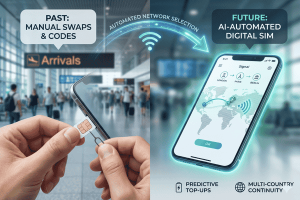
The Death of the SIM Swap
For years, the “SIM swap” was a travel ritual. You’d land, find a kiosk, wait in line, hand over your passport, and then carefully store your home SIM card in your wallet, praying you wouldn’t lose it. If you lost that tiny piece of plastic, you lost your connection to your bank, your two-factor authentication (2FA), and your family back home.
With an eSIM, that risk is zero. Your home SIM stays safely inside your phone (or remains active as a digital profile), while your travel data runs on a separate, dedicated “lane.” This dual-SIM capability allows you to:
- Receive urgent texts and calls on your original number.
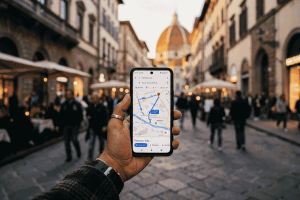
- Use high-speed local data for maps, browsing, and streaming.
- Avoid the $10-per-day “travel passes” offered by home carriers that often throttle your speeds.
Speed and Reliability in 2026
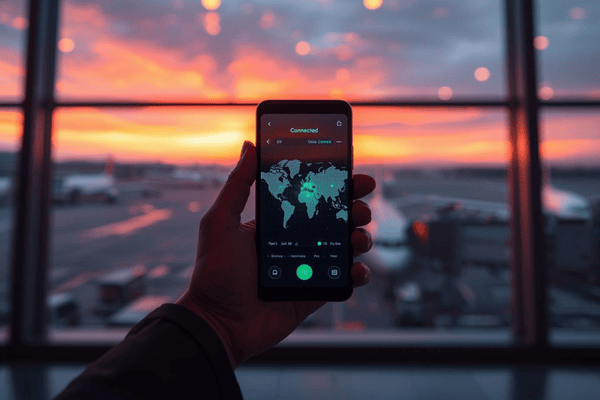
Network technology has evolved. In 2026, eSIM providers are no longer just offering “backup” 3G or 4G speeds. Top-tier providers now have direct roaming agreements with local 5G giants. This means when you use a Terminal eSIM plan, you aren’t just getting “internet”; you’re getting the same priority speeds as a local subscriber.
How to Choose the Best Internet for Travel in 2026
Choosing a data plan used to be about finding the cheapest price per gigabyte. Today, it’s about finding the right “fit” for your specific journey. To get the best internet for travel, you should evaluate providers based on three main pillars: Coverage, Flexibility, and Ease of Use.
1. Identify Your Coverage Needs
Are you visiting one country or hopping across a continent?
- Local Plans: Best if you’re staying in one place (e.g., just France). These offer the lowest rates and highest speeds.
- Regional Plans: Ideal for “Euro-trips” or Southeast Asia backpacking. One eSIM works across 30+ countries, so you don’t have to change settings when crossing borders by train or bus.
- Global Plans: For the true digital nomad. These cover 100+ countries, ensuring you have a signal the moment you land, whether you’re in Dubai or New York.
2. Check for 5G Support
Not all eSIMs are created equal. Some budget providers still route your data through distant servers (a process called “latency”), which makes your internet feel sluggish even if you have “full bars.” Ensure your provider offers 5G in your destination to handle high-bandwidth tasks like video calls or 4K uploads.
3. Look for “Instant Activation”
The best internet for travel should be ready when you are. Look for providers that offer:
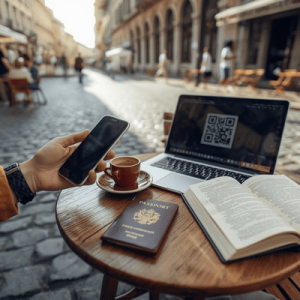
- QR Code Installation: Scan and go.
- In-App Management: Check your remaining data in real-time so you aren’t suddenly cut off mid-navigation.
- Manual Topping Up: The ability to add more data without installing a new eSIM.
Pro-Tips for a Seamless Experience:
- Install Before You Fly: Always set up your eSIM while you still have a stable Wi-Fi connection at home or in the airport lounge.
- Label Your Lines: In your phone settings, label your home SIM as “Primary” and your Terminal eSIM as “Travel” to avoid confusion.
- Turn Off Data Roaming on Primary: Ensure your home line has “Data Roaming” toggled OFF to prevent accidental charges from your home carrier.
2026 eSIM Plan Comparison Table
To help you decide, we’ve compared the top-performing categories for 2026. While prices fluctuate based on local carrier rates, this table represents the standard value you can expect from a premium provider like Terminal eSIM.
| Plan Type | Best For | Typical Data | Validity | Key Advantage |
| USA Local | Short Vacations | 1GB – 20GB | 7-30 Days | Lowest Latency / 5G |
| Europe Regional | Multi-country Trips | 5GB – 50GB | 30 Days | Seamless Border Crossing |
| Asia-Pacific | Business & Leisure | 10GB | 30 Days | High-speed in 15+ countries |
| Global Nomad | Frequent Flyers | 20GB | 365 Days | Set it and forget it |
Summary of Insights
As the table shows, Regional Plans offer the best balance of value and convenience for the modern traveler. If you are visiting Europe, a single regional eSIM prevents the “no signal” anxiety that occurs every time you cross from Germany into Austria. For heavy users, Local Plans provide the highest speeds for data-intensive apps like TikTok or Zoom.
2026 Trends and Common Traveler Problems
The eSIM landscape is shifting. In 2026, we are seeing three major trends that solve old “pain points” for travelers:
Trend 1: The Rise of “Always-On” Connectivity
In the past, you bought data, used it, and the eSIM “died.” Today, providers like Terminal eSIM offer “Top-up” features. You keep the same digital profile on your phone and simply add more gigabytes as needed. This is much more eco-friendly and convenient than the “disposable” SIM mentality of the past.
Trend 2: Improved Battery Optimization
Early eSIM technology was known to drain phone batteries slightly faster because the phone was “searching” for two networks at once. In 2026, updated modem firmware in modern smartphones has virtually eliminated this gap, allowing you to enjoy dual-SIM benefits without carrying a power bank everywhere.
Trend 3: Transparent “Fair Use” Policies
One common problem travelers face is “Unlimited” plans that aren’t actually unlimited. Many providers throttle your speed to 2G levels after you use just 1GB in a day. The trend in 2026 is moving toward Transparent Fixed-Data Plans, where you get exactly what you pay for at 5G speeds, with no hidden “speed caps.”
Frequently Asked Questions (FAQs)
Q: Can I keep my WhatsApp number with an eSIM?
A: Yes! WhatsApp, iMessage, and Telegram are tied to your phone number, not your data connection. You can use your Terminal eSIM for data while your apps continue to run on your original number.
Q: How do I know if my phone is compatible?
A: Generally, any iPhone from the XS/XR onwards and most Android flagships released after 2020 are compatible. You can check by going to your settings; if you see an “Add eSIM” or “Sim Manager” option, you’re good to go.
Q: Is eSIM internet for travel safer than public Wi-Fi?
A: Absolutely. Public Wi-Fi in hotels and cafes is often unencrypted and prone to “Man-in-the-Middle” attacks. Using a private eSIM connection is as secure as your mobile data at home.
Summary: The New Standard for Global Roaming
In 2026, the benchmark for a great trip is a seamless digital experience. We’ve moved beyond the era of expensive roaming bills and the logistical nightmare of physical SIM cards. The best internet for travel is now:
- Digital: No physical swapping required.
- Global: One app can connect you to 150+ countries.
- Affordable: Prices are now comparable to local rates.
- Fast: 5G is the standard, not the exception.
By choosing an eSIM, you aren’t just buying data; you’re buying time and peace of mind. You can hit the ground running the second your plane touches the tarmac, calling a ride-share or checking your hotel location before you even exit the cabin.
Experience the Best Internet for Travel with Terminal eSIM
Don’t let your next adventure be sidelined by a “No Service” notification or a $500 roaming bill. Terminal eSIM was built by travelers, for travelers, with the goal of providing the most reliable internet for travel on the market.
Whether you need a quick 1GB boost for a weekend in London or a massive 50GB bucket for a month-long digital nomad stint in Thailand, we have a plan that fits your itinerary. Our 24/7 support and lightning-fast 5G networks ensure that you stay connected to what matters most.
Why choose Terminal eSIM?
- Instant Delivery: Get your QR code via email the second you purchase.
- No Hidden Fees: Pay once and enjoy your data—no contracts, no surprises.
- Global Coverage: Stay online in over 150 destinations worldwide.
Ready to upgrade your travel game? 👉 Explore Terminal eSIM Plans and Get Connected Today!