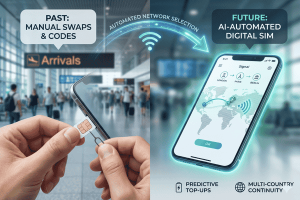
But technology has finally caught up with our globetrotting desires. The solution lies in eSIM-compatible phones, which are completely changing how we think about global connectivity.
An eSIM, or embedded SIM, is a digital version of the physical SIM card you’re used to. Instead of a chip you insert, it’s built directly into your phone’s hardware. This tiny powerhouse allows you to download and activate a cellular plan from a provider like Terminal eSIM with just a few taps on your screen. No more fumbling with paperclips to open SIM trays or worrying about losing your primary card. For travelers, this means seamless, affordable internet access wherever your adventures take you. It’s the perfect blend of convenience and technology, made for the modern explorer.
The Evolution of Staying Connected Abroad
To understand why eSIM technology is such a game-changer, let’s look back at how travelers have stayed connected over the years. Not too long ago, international travel meant being completely offline or facing astronomical roaming bills from your home carrier. A simple email check could cost a small fortune, and streaming a video was out of the question. These “bill shock” stories became a cautionary tale for anyone daring to use their phone abroad.
The first major improvement was the rise of physical, prepaid SIM cards. Travelers could land in a new country, find a local mobile store, and purchase a SIM card with a data plan. This was certainly cheaper than roaming, but it came with its own set of frustrations. You had to navigate language barriers, figure out which local carrier offered the best deal, and go through the physical process of swapping cards. It also meant you couldn’t use your primary phone number for calls or texts, which could be inconvenient for receiving verification codes or important messages.
Then came portable Wi-Fi hotspots, or MiFi devices. These gadgets offered a private Wi-Fi network for your devices, using a local SIM card. While they solved the problem of connecting multiple devices, they were yet another piece of hardware to carry, charge, and manage. Forgetting to charge your hotspot could leave you disconnected at the worst possible moment.
Enter the eSIM. First introduced in consumer devices around 2017, this technology has rapidly become a standard feature in modern smartphones. An eSIM digitizes the entire process. You can browse, purchase, and activate a data plan for your destination before you even leave home. Upon landing, your phone connects to the local network instantly. This leap forward eliminates physical limitations, providing a streamlined, flexible, and cost-effective solution that feels almost like magic.

A Practical Guide to Using eSIM-Compatible Phones for Travel
Making the switch to an eSIM for your next trip is simpler than you might think. If you own a recent smartphone from major brands like Apple, Samsung, or Google, there’s a good chance you already have one of the many eSIM compatible phones available. The first step is to confirm your device’s compatibility, which can usually be found in your phone’s settings under “Cellular” or “Mobile Data.”
Once you’ve confirmed your phone is ready, follow these simple steps to get set up for seamless global roaming:
1. Choose Your Destination and Plan
Before your trip, visit a global eSIM provider like Terminal eSIM. You can browse plans by country, region (e.g., Europe, Asia), or even a global package if you’re visiting multiple continents. Consider how much data you’ll need based on the length of your trip and your usage habits. Are you a light browser who just needs maps and email, or a digital nomad who will be attending video calls and uploading large files? Choose a plan that fits your needs.
2. Purchase and Install Your eSIM
After selecting your plan, you’ll complete the purchase online. You will then receive a QR code via email. To install the eSIM, simply go to your phone’s cellular settings and select “Add eSIM” or “Add Cellular Plan.” Your phone’s camera will open, and you just need to scan the QR code. Follow the on-screen prompts to label your new eSIM (e.g., “Europe Data”) to easily distinguish it from your primary SIM. It’s best to do this while you still have a stable internet connection at home.
3. Activate Upon Arrival
Keep your eSIM turned off until you land at your destination. This prevents it from activating prematurely. Once you’ve arrived, go back into your cellular settings and turn on your travel eSIM. You should also enable “Data Roaming” for this specific line. Within moments, your phone will connect to the local network, and you’ll have instant internet access. Your primary SIM can remain active for calls and texts from your home number, giving you the best of both worlds without the high cost.
Using an eSIM simplifies travel connectivity. It eliminates the need for physical SIMs, prevents expensive roaming fees, and gives you control over your data usage, all from the palm of your hand.
Comparing Connectivity Options: eSIM vs. Physical SIM vs. Roaming
For travelers, choosing how to stay connected is a critical part of trip planning. Each option has its own benefits and drawbacks related to cost, convenience, and flexibility. Understanding these differences can help you make the best choice for your journey.
Below is a comparison table that breaks down the key features of using an eSIM, a local physical SIM, and traditional international roaming with your home carrier.
| Feature | Terminal eSIM | Local Physical SIM | International Roaming |
| Cost | Highly affordable, fixed price | Generally affordable, but can vary | Typically very expensive |
| Convenience | Instant digital setup, purchase anytime | Must find a store upon arrival | Automatic, but requires setup with carrier |
| Flexibility | Switch plans and destinations easily | Locked to one country’s network | Limited to carrier’s partner networks |
| Setup Process | Scan a QR code, activate in settings | Physical swap of SIM cards | Enable roaming in phone settings |
| Phone Number | Keep your primary number for calls/texts | Requires a new, temporary number | Keep your primary number |
| Multi-Country Travel | Seamless with regional/global plans | Requires a new SIM for each country | Usually works, but costs can skyrocket |
| Availability | Requires an eSIM-compatible phone | Works with any unlocked phone | Works with most phones |
As the table shows, eSIMs offer a powerful combination of affordability and convenience. While international roaming from your home carrier is the easiest to activate, it often comes with shocking costs that can ruin a travel budget. Local physical SIM cards are a cost-effective alternative, but the hassle of finding a store, dealing with language barriers, and losing access to your primary number makes them less than ideal.
Terminal eSIM emerges as the clear winner for the modern traveler. It combines the low cost of a local plan with even greater convenience than traditional roaming. The ability to purchase a plan for Europe, Asia, or the entire globe and have it ready to go before you even pack your bags is a significant advantage. This digital-first approach provides the freedom and flexibility that today’s globetrotters demand.
Trends and Traveler FAQs About eSIMs
As eSIM technology becomes more mainstream, its role in travel is expanding. One of the biggest trends is the move towards eSIM-only devices. Some new phone models are being released without a physical SIM tray at all, signaling that the future of mobile connectivity is entirely digital. This shift is pushing more travelers to adopt eSIMs and discover their benefits. Another trend is the rise of flexible, multi-country plans. Providers like Terminal eSIM are catering to the “slowmad” and multi-destination traveler by offering regional and global packages that cover dozens of countries under a single, easy-to-manage plan. This eliminates the need to purchase a new plan for every border crossing.
Even with growing popularity, many travelers still have questions. Here are answers to some of the most common ones.
Frequently Asked Questions (FAQs)
- Can I use an eSIM and my regular SIM at the same time?
Yes, most eSIM compatible phones are also Dual SIM compatible. This means you can keep your primary physical SIM active for receiving calls and texts on your regular phone number while using your travel eSIM for all mobile data. It gives you the best of both worlds without any surprise roaming charges. - What happens to my eSIM after I finish my trip?
Your eSIM profile remains stored on your phone. If you purchased a one-time plan, it will simply expire. You can delete the profile from your settings or keep it for a future trip. If you plan to return to the same destination, you may be able to top up the existing eSIM, depending on the provider and plan you chose. - Is my phone compatible with an eSIM?
Most smartphones released since 2018 are eSIM-compatible. This includes Apple iPhones from the XS model onward, Samsung Galaxy S20 series and later, and Google Pixel 3 and newer. The best way to be certain is to check your phone’s specifications or look in the “Cellular/Mobile” section of your settings for an option to “Add eSIM” or “Add Cellular Plan.” - Is using an eSIM secure?
Absolutely. eSIMs are considered more secure than physical SIM cards. Because the SIM is embedded in your device, it cannot be physically removed and stolen to gain access to your phone number. All data is encrypted, and activation is managed securely through your device and the provider’s network.
The Future of Travel is Connected and Simple
The days of complicated and expensive international connectivity are behind us. We’ve moved from the shock of massive roaming bills to the inconvenience of hunting down physical SIM cards in foreign airports. Today, we have a solution that is elegantly simple, powerful, and designed for the modern world: the eSIM.
For travelers, this technology removes one of the biggest sources of stress. Having one of the many eSIM-compatible phones means you can land in a new country and be connected instantly. No more waiting in lines, no more fumbling with tiny plastic chips, and no more worrying about unexpected fees. It’s about having the freedom to use your phone just as you would at home—for navigation, for sharing your moments, and for staying in touch with loved ones.
The benefits are clear: superior convenience, significant cost savings, and the flexibility to stay connected across multiple destinations with a single digital plan. An eSIM transforms your smartphone from a potential liability into your most reliable travel companion. It’s a seamless experience that lets you focus on what truly matters: enjoying your journey.
Your Adventure Awaits—Stay Connected with Terminal eSIM
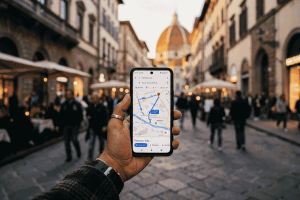
Imagine stepping off the plane in Tokyo, Paris, or São Paulo and instantly sharing your first photo without a second thought. Picture navigating bustling city streets with confidence, knowing your map app has a reliable connection. This is the freedom that Terminal eSIM provides. Whether you’re a digital nomad building a business from a beach in Thailand, a frequent flyer hopping between continents for meetings, or a family on a once-in-a-lifetime vacation, staying connected should be the easiest part of your trip.
Don’t let connectivity issues hold you back. With Terminal eSIM, you can purchase affordable, high-speed data plans for over 190 countries and regions directly from your phone. Our process is simple, our prices are transparent, and our connection is reliable. Prepare for your next adventure the smart way. Explore our flexible data plans and join the thousands of travelers who have discovered the ultimate way to stay connected.