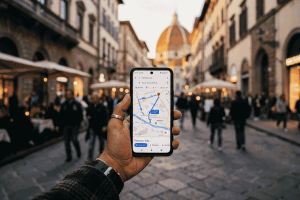
These fees can quickly turn a dream vacation into a financial nightmare. How can you share your travel photos, navigate new cities with GPS, or stay in touch with loved ones without breaking the bank?
Fortunately, staying connected abroad has become easier and more affordable than ever. The days of being at the mercy of your home carrier’s expensive roaming packages are over. From local SIM cards to portable Wi-Fi hotspots and the revolutionary eSIM technology, you have a wealth of options. This guide will walk you through everything you need to know to secure fast, dependable internet for travel, allowing you to focus on making memories rather than watching your data usage. We’ll explore each solution, helping you find the perfect fit for your travel style and budget.
The High Cost of Staying Connected: Understanding Roaming
International roaming is the service that allows your phone to connect to a partner network when you travel outside your home carrier’s coverage area. It’s convenient because it works automatically—your phone simply latches onto a local network, letting you make calls, send texts, and use data just like you would at home. However, this convenience comes at a steep price. The reason roaming is so expensive is due to the complex agreements between your home provider and foreign carriers. Your provider is essentially “renting” access to another company’s infrastructure, and they pass those high costs, plus a significant markup, directly to you.
Think of it like this: You have a membership to a local gym (your home carrier). When you travel, you want to use a gym in another city. The local gym lets you in but charges your home gym a premium “guest fee.” Your home gym then bills you for that fee, often adding its own service charge on top. This is why a few minutes of map usage or a quick video call can result in charges of tens or even hundreds of dollars.
For years, travelers had limited alternatives. The main options were to either pay these exorbitant fees or go on a “digital detox,” which isn’t practical for most people today. We rely on the internet for travel to navigate, book last-minute accommodations, check transport schedules, and stay connected with family. The frustration of slow, expensive hotel Wi-Fi or the security risks of public hotspots only added to the problem. This clear need for a better solution paved the way for more traveler-friendly technologies, empowering users to take control of their international connectivity and bypass traditional roaming entirely.

A Practical Guide to Finding the Best Internet for Travel
Securing affordable internet abroad doesn’t have to be complicated. With a little planning, you can stay connected seamlessly. Your best options depend on your device, destination, and how much you plan to use data. Let’s break down the most popular methods.
1. Buy a Local Physical SIM Card
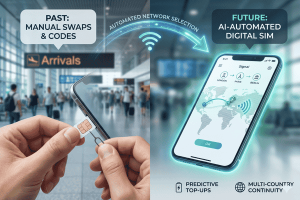
One of the most traditional methods is to purchase a local SIM card upon arrival. You can usually find them at airports, convenience stores, or official mobile carrier shops.
- How it works: You replace your primary SIM card with a new one from a local provider. This gives you a local phone number and access to that provider’s data plans at local prices, which are almost always cheaper than roaming.
- Best for: Longer trips (a week or more) in a single country. It’s also great for budget travelers who don’t mind the small hassle of finding a store and swapping cards.
- Keep in mind: Your phone must be “unlocked” to accept a SIM from another carrier. You will also have a different phone number, which can be inconvenient for receiving calls or texts to your regular number.
2. Use a Portable Wi-Fi Hotspot (MiFi)
A portable Wi-Fi device, often called a MiFi, is a small, battery-powered gadget that creates a personal Wi-Fi network. You can rent or buy one and purchase data plans for your destination.
- How it works: You turn on the device, and it uses a cellular connection to broadcast a Wi-Fi signal. You can then connect your phone, laptop, and tablet to it.
- Best for: Groups or families traveling together, as multiple people can share one connection. It’s also ideal for those with multiple devices or who need to connect a laptop.
- Keep in mind: It’s another device to carry, charge, and keep track of. Data plans can sometimes be more expensive than local SIMs.
3. Embrace eSIM Technology
The eSIM (embedded SIM) is a digital SIM that allows you to activate a cellular plan without needing a physical SIM card. Many modern smartphones support eSIM technology.
- How it works: You purchase an eSIM data plan online, scan a QR code, and instantly install the plan on your phone. You can even store multiple eSIMs and switch between them.
- Best for: Almost every type of traveler, especially those visiting multiple countries. It offers the ultimate convenience, as you can set it up before you even leave home. It’s perfect for short trips, business travel, and digital nomads.
- Keep in mind: Your phone must be eSIM-compatible. Companies like Terminal eSIM make this process incredibly simple, offering affordable data plans for hundreds of destinations worldwide.
Comparing Your International Connectivity Options
Choosing the right way to get internet for travel depends on your priorities. Do you value convenience above all else? Is budget your main concern? Or do you need to connect multiple devices? The table below breaks down the key differences between the most popular solutions to help you decide.
| Feature | Local Physical SIM | Portable Wi-Fi (MiFi) | eSIM | International Roaming |
| Convenience | Low | Medium | High | Very High |
| Cost | Low | Medium | Low to Medium | Very High |
| Setup Process | Requires visiting a store, swapping cards | Carry and charge an extra device | Instant digital setup (QR code) | Automatic |
| Flexibility | Locked to one country/carrier | Can be used in multiple countries | Easily switch between plans/countries | Seamless across countries |
| Phone Number | Get a new, local number | Keep your original number | Keep your original number | Keep your original number |
| Device Sharing | No (Tethering drains battery) | Yes, easy for multiple devices | No (Tethering drains battery) | No (Tethering drains battery) |
| Best For | Single-country trips, budget travelers | Groups, families, multiple devices | Multi-country trips, convenience seekers | Short emergencies, absolute convenience |
As the table shows, eSIMs strike a powerful balance between convenience and cost. You get the affordability of local data plans without the hassle of physical SIM cards. You can purchase and activate a plan from home, ensuring you have internet access the moment you land. For most modern travelers, the simplicity and flexibility of an eSIM make it the superior choice for staying connected abroad.
Solving Common Traveler Connectivity Problems
Even with modern solutions, travelers often face hurdles when trying to get online abroad. From security concerns to technical glitches, staying connected isn’t always straightforward. Here’s a look at common issues and how to solve them.
Problem: Unreliable and Insecure Public Wi-Fi
Many travelers rely on free Wi-Fi at cafes, hotels, and airports. However, these networks are often slow, unreliable, and unsecured. Using them for anything sensitive, like online banking, puts your personal information at risk of being stolen by hackers on the same network.
Solution: Having your own secure data source is the best defense. An eSIM or a local SIM card provides a private, encrypted connection that is far safer than any public network. It gives you the freedom to connect anywhere, anytime, without worrying about who might be watching.
Problem: The Hassle of Managing Physical SIM Cards
Juggling tiny physical SIM cards is a common travel annoyance. They are easy to lose, and swapping them can be a delicate operation. If you lose your home SIM card while traveling, it can be a major headache to replace.
Solution: eSIMs eliminate this problem. Since an eSIM is digital, there’s nothing to lose. You can download and store multiple eSIM profiles on your phone, making it effortless to switch between your home plan and your travel data plan. For travelers visiting multiple countries, you can have a separate eSIM for each destination ready to go.
Frequently Asked Questions (FAQs)
- Is my phone compatible with eSIM?
Most smartphones released in the last few years are eSIM-compatible. This includes iPhone XS and newer, Google Pixel 3 and newer, and Samsung Galaxy S20 and newer. The easiest way to check is to look in your phone’s settings under “Cellular” or “Mobile Data” for an option like “Add Cellular Plan” or “Add eSIM.” - Can I keep my home phone number while using an eSIM for data?
Absolutely! This is one of the biggest advantages of eSIMs. You can set your eSIM as your primary source for mobile data while keeping your home physical SIM active for calls and texts. This dual-SIM functionality lets you enjoy affordable data without missing important communication. - What happens if I run out of data on my eSIM plan?
With most eSIM providers, including Terminal eSIM, topping up your data is simple. You can easily purchase more data directly through the provider’s app or website without needing to install a new eSIM. The new data is added to your existing plan almost instantly.
The Smart Traveler’s Summary
Navigating the world of international connectivity can seem complex, but it boils down to a few key choices. For decades, travelers were stuck between paying outrageous roaming fees or enduring the frustration of spotty, insecure public Wi-Fi. This forced a compromise between staying connected and staying on budget. Thankfully, the landscape has changed dramatically, putting the power back in the hands of the traveler.
We’ve explored the primary ways to get affordable internet for travel: purchasing a local physical SIM card, using a portable Wi-Fi hotspot, and embracing the convenience of eSIM technology. While local SIMs are cheap, they require time and effort to acquire. Portable hotspots are great for groups, but mean carrying and charging another device. For the modern traveler, the eSIM emerges as the clear winner, offering a seamless blend of affordability, convenience, and flexibility. It allows you to pre-purchase a data plan, activate it digitally, and connect the moment you arrive at your destination, all while keeping your original phone number active.
Your Adventure Awaits—Stay Connected with Terminal eSIM
Your travels should be about discovering new cultures, tasting new foods, and creating lifelong memories—not about worrying over data limits or surprise phone bills. Choosing the right connectivity solution frees you to immerse yourself fully in your experience. Imagine navigating the streets of Tokyo with instant map access, sharing a sunset video from the Greek islands in real-time, or video-calling your family from the base of a Swiss mountain, all without a second thought about the cost.
This is the freedom that modern travel technology provides. With Terminal eSIM, you can get affordable, high-speed data in over 190 countries. Whether you’re a digital nomad hopping between continents, a family on a two-week vacation, or a business traveler needing reliable internet for meetings, we have a plan for you. Our setup is instant, our plans are transparent, and our connection is dependable. Stop paying for expensive roaming and start traveling smarter.
Explore the world with confidence. Visit Terminal eSIM today to find the perfect data plan for your next adventure.