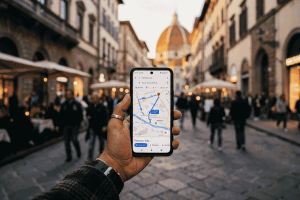
But amidst the excitement of dreaming about Parisian pastries, Tokyo’s neon streets, and Andean peaks, one crucial, less glamorous detail requires your attention: how will you stay connected?
In 2026, consistent, reliable data isn’t a luxury; it’s an absolute necessity. It’s your map when you’re lost, your translator when you’re confused, your connection to loved ones, and your tool for capturing and sharing every incredible moment. The old days of relying solely on spotty hotel Wi-Fi or hunting down local SIM cards in every new country are fading fast. The choice now boils down to two main contenders: the tried-and-true physical SIM card and its modern, rapidly evolving successor, the virtual SIM (or eSIM).
So, for your epic 2026 journey, which one should you choose? This detailed guide will break down the history, practicalities, and pros and cons of both, helping you make the smartest decision for seamless global connectivity.
The Evolution of Connectivity: From Plastic to the Cloud
For decades, the physical SIM (Subscriber Identity Module) card has been the undisputed king of mobile connectivity. That tiny piece of plastic with its embedded chip is what tells a mobile network who you are and which services you’re entitled to. We’ve watched it shrink from the original credit-card size to the mini, micro, and finally, the nano-SIM that most modern phones use today. It’s a familiar, tactile piece of technology.
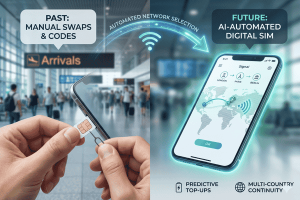
The process is simple and universally understood: you buy a SIM card (either from your home carrier or a local provider when you travel), use a tiny tool (or a paperclip) to pop open your phone’s SIM tray, fuddle with the impossibly small piece of plastic, push the tray back in, and—voila!—you have network access. When you travel, you swap it for another one, carefully storing your original SIM so you don’t lose it.
Enter the Virtual SIM (eSIM)
A virtual SIM, or eSIM (Embedded SIM), is a significant technological leap. As the name suggests, it is NOT a physical card you insert or remove. Instead, it’s a tiny chip that is reprogrammable and soldered directly into your device’s motherboard during manufacturing. It does everything a physical SIM does, but digitally.
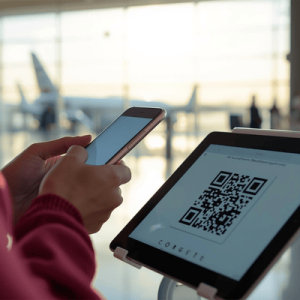
Think of it like downloading an app. Instead of physically swapping plastic, you “download” a carrier’s profile onto your phone, often just by scanning a QR code or entering a few details. This profile contains all the necessary cryptographic keys and network information to connect you. Your phone can store multiple eSIM profiles simultaneously (though you typically only use one for data at a time).
While eSIM technology has been around for several years, its adoption has accelerated dramatically. Modern smartphones, including almost all flagship models from Apple, Samsung, Google, and others, are now eSIM-compatible. In fact, we are seeing a shift where some phone models are eSIM-only, completely eliminating the physical SIM slot. This trend is set to become even more widespread by 2026.
This shift from a tangible object to a downloadable profile is more than just convenience; it’s a fundamental change in how we access and manage our mobile connectivity, especially for international travel.
A Practical Guide to Using a Virtual SIM on Your 2026 World Tour
For a multi-destination adventure, the virtual SIM offers levels of flexibility and ease that a physical SIM can struggle to match. Here’s a practical look at how you might use an eSIM during your world tour:
- Preparation is Key (Before You Leave): With an eSIM, your connectivity prep can be done entirely from the comfort of your home. Before you even pack your bags, you can research and purchase data plans for each country or region you plan to visit. Providers like Terminal eSIM make this incredibly simple.
- Seamless Setup: Once you purchase a plan, you’ll typically receive a QR code via email. While still connected to your home Wi-Fi, you scan this code with your phone. Your device then securely downloads the eSIM profile. This process usually takes just a couple of minutes. Pro-tip: Download your profiles a day or two before you depart.
- Instant Activation on Arrival: This is a game-changer. As soon as your plane lands at your first destination—say, London Heathrow—you can switch on your phone. Because the profile is already downloaded, it should automatically connect to the local partner network. No more long queues at airport kiosks, no more fumbling with tiny cards while jet-lagged, no more searching for Wi-Fi to figure out where to go. You have data immediately.
- Managing Multiple Destinations: Your 2026 tour will likely span continents. An eSIM shines here. You can store your plan for the UK, your regional plan for Europe, and your individual plan for Japan, all on your phone at once. When you move from country to country, it’s a matter of going into your settings and selecting the appropriate eSIM profile. Some regional eSIMs (like a “Europe” plan) will even handle the switching automatically as you cross borders.
- Cost and Flexibility: eSIM plans are often highly competitive, especially for travelers. You’re not locked into long contracts. You can choose a plan with a specific data amount (e.g., 5GB, 10GB, 20GB) for a set duration (e.g., 7 days, 15 days, 30 days). If you need more, many providers offer simple top-up options that can be done directly through their app or website. This level of control and transparency is invaluable for budgeting a long trip.
- Keeping Your Original Number: Most modern phones with eSIM are “dual SIM” devices. This means you can keep your original physical SIM card (with your home number) active for calls and texts, while using the eSIM solely for data. This is crucial for receiving 2-factor authentication codes from your bank, staying in touch via text, and letting family know you’ve arrived safely, all without incurring your home carrier’s exorbitant roaming charges for data.
In essence, a virtual SIM provides a frictionless way to manage connectivity across a complex itinerary, putting you in complete control and saving precious time and money.
Virtual SIM vs. Physical SIM: The Ultimate Comparison
Here’s a side-by-side comparison to help you visualize the key differences and advantages.
| Feature | Virtual SIM (eSIM) for Travel | Physical SIM for Travel |
| Form Factor | Digital, downloadable profile. | A physical piece of plastic with a chip. |
| Setup Process | Buy online, scan QR code via Wi-Fi. | Buy at a shop or kiosk, manually insert. |
| Ease of Switching | Instant, via phone settings. | Requires physically swapping cards. |
| Multi-Country Use | Switch profiles digitally; regional plans. | Requires a new SIM for each country. |
| Arrival Connection | Instant; data as soon as you land. | Delay while finding and purchasing a SIM. |
| Flexibility | Highly flexible, easy to top up online. | Less flexible; plan bound to physical SIM. |
| Risk of Loss | Zero. It’s stored digitally. | High. Tiny cards are easy to lose or damage. |
| Keep Home Number? | Yes, on your physical SIM (in dual SIM devices). | No, you must remove your home SIM. |
| Device Compatibility | Most modern smartphones. | All mobile phones. |
| Primary Advantage | Unmatched convenience and seamless flow. | Simplicity and universal availability. |
| Primary Disadvantage | Requires compatible device and internet for setup. | The physical hassle and time lost. |
Analysis: What This Means for Your World Tour
For a truly global trip, the advantages of the virtual SIM are overwhelming. The ability to plan ahead, the sheer convenience of instant data upon arrival, the zero risk of losing a microscopic piece of plastic, and the capability to use regional plans make it the superior choice. The time you don’t spend in lines or troubleshooting connectivity can be spent exploring. The physical SIM’s sole strong point is its near-universal compatibility, but as devices evolve, this advantage is rapidly diminishing.
Trends, FAQs, and Your Concerns Answered
The world of mobile connectivity is not static, and by 2026, several key trends will be well-established:
1. eSIM-Only Devices are Becoming the Standard
As mentioned, the push towards eSIM-only phones is real. Apple’s US iPhone 14, 15, and 16 models have already made this jump. This trend is not just to save space for a larger battery; it’s a move toward a more secure, completely digital future. By 2026, many of the newest flagship phones globally will likely be eSIM-only, making it not just a better choice, but the only choice for modern hardware.
2. Rising Demand for Global and Regional Plans
Travelers no longer want to manage a separate plan for every single country. The demand for robust regional (e.g., all of Europe, all of Asia) and even truly global eSIM plans is exploding. Providers are responding with increasingly competitive and comprehensive options. Terminal eSIM, for instance, has developed a range of regional plans to meet this exact need, simplifying data for multi-country travel.
3. Integrated Solutions and Travel Tech
We will see more travel apps and platforms directly integrating eSIM functionality. Your airline app or hotel booking platform might offer an eSIM plan as an add-on during the booking process. The lines between your travel logistics and your connectivity will become seamless.
Frequently Asked Questions (FAQs)
Q: Can I keep my original phone number?
A: Yes! This is one of the biggest benefits. On most dual SIM phones, you keep your physical SIM with your original number for calls and texts, and use a separate eSIM only for data, avoiding roaming fees.
Q: Will my phone work with a virtual SIM?
A: Almost certainly, if it’s a modern device. Check your phone’s settings (usually under ‘Mobile Data’ or ‘Network’) for an option that says “Add eSIM” or “Add Data Plan”. You can also search online for “[your phone model] eSIM compatibility”.
Q: How do I buy a virtual SIM plan?
A: Online! Visit a reliable eSIM provider like Terminal eSIM. Choose your destination or region, select a data plan, and purchase. You’ll instantly receive a QR code via email.
Q: What happens if I use up my data?
A: Don’t worry. You can usually top up your plan quickly and easily through the provider’s website or app. You don’t need a new QR code; the extra data is just added to your existing profile.
Q: Is a virtual SIM safe?
A: Yes, it’s extremely secure. Because it’s embedded in the phone’s hardware and cannot be physically stolen like a physical SIM, it offers a high level of security. Furthermore, your data plan is connected directly to you and managed through a secure portal.
Summary: For a Seamless Journey, Choose the Virtual SIM
Planning a world tour involves managing a thousand details, and your connectivity shouldn’t be a source of stress. The choice between a physical SIM and a virtual SIM for your 2026 adventure is clear.
A virtual SIM offers a level of convenience, flexibility, and control that is simply unmatched. It empowers you to plan your connectivity ahead of time, get online instantly upon arrival in any country, and manage data across a multi-destination itinerary with a few taps. It eliminates the hassle of physical card swapping, the risk of loss, and the need to search for local carrier shops. The trend of mobile technology is moving decisively in this direction, with phones becoming eSIM-centric. A virtual SIM isn’t just a smarter choice; it’s the future-proof choice for global travelers.
Make Your 2026 World Tour Unforgettable with Terminal eSIM
You’re not just planning a vacation; you’re planning a collection of life-changing experiences. You don’t want to spend your precious time in Paris or Tokyo looking for a SIM card shop. You want to be present, capturing and sharing every incredible moment.
For your 2026 world tour, ensure you have the best connectivity partner. Terminal eSIM is designed by travelers, for travelers. We understand the unique needs of digital nomads, adventure seekers, and global explorers. Our plans are flexible, affordable, and incredibly easy to use.
Choose from a wide variety of country-specific plans, or for ultimate simplicity, select from our robust regional data packs that cover multiple countries in Europe, Asia, and other key global hubs. With instant, hassle-free activation and reliable data speeds, you’ll have one less thing to worry about. Focus on the adventure, not the logistics. Don’t leave your global connectivity to chance. Visit https://terminalesim.com today to explore our plans and get your virtual SIM set up for your epic 2026 world tour!