
It was a rite of passage for international travelers. But what if there was a way to bypass all that hassle and get connected instantly, right from your phone’s settings?
Welcome to the world of the embedded SIM, or eSIM. This tiny, built-in chip is changing how we think about mobile connectivity abroad. It offers a digital, seamless alternative to traditional plastic SIM cards, allowing you to activate a cellular plan without any physical hardware. For the modern traveler, this technology isn’t just a convenience; it’s a game-changer. This guide will walk you through everything you need to know about using an embedded SIM for your next trip, from how it works to whether it’s the right choice for your travel style.
What Exactly Is an Embedded SIM and How Does It Work?
At its core, an embedded SIM is a small, programmable chip that is permanently soldered onto your device’s motherboard. Think of it as a digital version of the traditional SIM card you’ve been using for years. Instead of being a removable piece of plastic, it’s an integrated part of your phone, tablet, or smartwatch. This fundamental difference is what makes it so powerful for travelers.
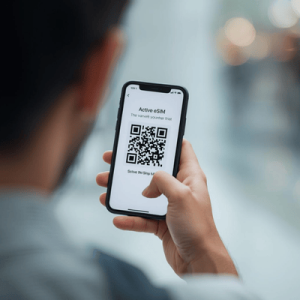
The “e” in eSIM stands for “embedded,” not “electronic,” although its function is entirely digital. Because it’s programmable, you can download and install data plans from various carriers directly onto your device. You don’t need to visit a store, wait for a card to be mailed, or fumble with a tiny ejector tool. You simply scan a QR code or use a provider’s app to activate a new plan. This means you can purchase a data plan for Spain while you’re still packing in New York and have it ready to go the moment your plane touches down in Madrid.
This technology first appeared in 2016 but has rapidly gained traction, with major device manufacturers like Apple, Google, and Samsung including it as a standard feature in their newer models. The primary advantage is flexibility. An embedded SIM can store multiple carrier profiles at once, though you can typically only use one at a time. This allows you to switch between your home provider and a travel data plan with just a few taps in your phone’s settings, giving you unparalleled control over your connectivity and costs while abroad. It simplifies one of the most persistent challenges of international travel: staying connected affordably and easily.
Your Guide to Using an Embedded SIM for Travel
Making the switch to an embedded SIM for your travels is simpler than you might think. The process is designed to be user-friendly and quick, getting you online in minutes. Here’s a step-by-step guide to get you started, along with some practical tips to ensure a smooth experience.
First, you need to confirm your device is eSIM-compatible. Most smartphones released in the last few years, including iPhone XS models and newer, Google Pixel 3 and newer, and recent Samsung Galaxy devices, support this technology. A quick check of your phone’s specifications or a search online will confirm its compatibility.
Once you know your phone is ready, follow these steps:
- Choose a Provider and Plan: Select an eSIM provider that offers coverage in your destination country or region. Companies like Terminal eSIM specialize in travel data plans, offering flexible options for over 100 countries. Consider the amount of data you’ll need and the length of your trip when choosing a plan.
- Purchase and Install: After purchasing a plan online, you’ll typically receive a QR code via email. To install the embedded SIM profile, go to your phone’s settings, navigate to “Cellular” or “Mobile Data,” and select “Add eSIM” or “Add Data Plan.” Your phone’s camera will open, allowing you to scan the QR code.
- Activate Your Plan: Follow the on-screen prompts to label your new plan (e.g., “Europe Travel”) and choose how you want to use it. You can set it as your primary data line while abroad, while keeping your home number active for calls and texts. It’s best to wait until you arrive at your destination to activate the plan to ensure you get the full duration you paid for.
- Manage Your Usage: Once activated, your phone will connect to the local network automatically. You can monitor your data usage through your phone’s settings to avoid running out unexpectedly. If you need more data, many providers allow you to easily top up your plan through their app or website.
A key tip is to install your eSIM profile before you leave home while you have a stable internet connection. This saves you from having to find Wi-Fi upon arrival. Also, remember to turn on Data Roaming for your eSIM line once you land, as this is often required to connect to the partner network.
eSIM vs. Traditional SIMs vs. Pocket Wi-Fi: A Traveler’s Comparison
Choosing the right connectivity option for your travels can significantly impact your trip’s convenience and budget. Each method has its own set of advantages and disadvantages. Let’s compare the embedded SIM with its main alternatives: traditional physical SIM cards and portable pocket Wi-Fi devices.
This table breaks down the key differences:
| Feature | Embedded SIM (eSIM) | Traditional SIM Card | Pocket Wi-Fi |
| Activation | Instant; digital QR code scan | Physical swap required | Turn on device and connect |
| Convenience | High; no physical parts to lose | Low; requires finding a vendor and swapping cards | Medium; must carry and charge an extra device |
| Flexibility | High; switch plans and providers digitally | Low; tied to one provider per card | Medium; tied to the device’s plan |
| Cost | Often cheaper for short-term data | Can be very cheap, but requires research | High upfront rental/purchase cost plus data plan |
| Device Use | Uses your own phone seamlessly | Uses your own phone | Connects multiple devices, but is separate hardware |
| Security | High; cannot be physically stolen or cloned | Moderate; can be lost or stolen | Moderate; password-protected but device can be lost |
| Best For | Tech-savvy travelers, short-to-medium trips, frequent flyers | Budget-conscious, long-term stays in one country | Groups, families, or travelers with multiple devices |
In summary, the embedded SIM shines in its convenience and flexibility. The ability to purchase and activate a plan from anywhere, without physical constraints, is a massive advantage for modern travelers who value efficiency. While a local physical SIM might sometimes offer a slightly lower price for heavy data users on long stays, the time and effort saved with an eSIM often outweigh the minor cost difference. Pocket Wi-Fi remains a niche solution, useful for groups but cumbersome for solo travelers who want to pack light. For most international trips, the embedded SIM strikes the perfect balance of ease, cost, and performance.
Common Questions and Trends in Travel Connectivity
As more travelers adopt eSIM technology, certain questions and concerns naturally arise. At the same time, the landscape of global connectivity is constantly evolving. Let’s address some frequently asked questions and look at the trends shaping how we stay connected on the go.
One major trend is the move towards eSIM-only devices. In some markets, manufacturers are already releasing phones without a physical SIM tray. This shift signals that the embedded SIM is not just a passing fad but the future standard for mobile devices. This will likely accelerate the adoption rate and encourage even more carriers to offer competitive eSIM plans, giving travelers more choices and better prices.
Another growing trend is the rise of regional and global eSIM plans. Instead of buying a plan for a single country, travelers can now purchase a single eSIM that covers an entire continent, like Europe or Asia, or even provides global coverage. For backpackers on a multi-country tour or business travelers hopping between regions, this simplifies connectivity immensely. A single purchase can cover an entire itinerary.
Here are answers to some common questions:
- Can I still use my original phone number with an embedded SIM?
Yes, absolutely. Most modern smartphones are Dual SIM, Dual Standby (DSDS) capable. This means you can keep your primary SIM active for receiving calls and text messages on your regular number while using the embedded SIM for affordable mobile data abroad. This gives you the best of both worlds. - What happens if I lose my phone with an eSIM installed?
Because an eSIM is tied to your device and can’t be physically removed, it is more secure than a traditional SIM. A thief cannot simply take out your SIM card and put it in another phone to access your number. You can deactivate the eSIM profile remotely by contacting your provider, securing your plan and personal information. - Is my phone unlocked? Do I need an unlocked phone for an eSIM?
Yes, your phone must be carrier-unlocked to use an eSIM from a different provider. If you bought your phone directly from a carrier on a contract, it might be locked. You can contact your home carrier to request that they unlock it before your trip.
The Verdict: Is an Embedded SIM Your New Travel Essential?
After exploring the ins and outs of the embedded SIM, it’s clear that this technology represents a significant leap forward for international travelers. We’ve moved from the tedious process of buying and swapping physical SIM cards to a streamlined digital experience. The ability to purchase, install, and activate a data plan in minutes directly from your phone removes a major point of friction upon arriving in a new country.
The core benefits are undeniable. An embedded SIM offers unparalleled convenience, allowing you to stay connected from the moment you land without having to hunt for a local store. It provides flexibility, with the option to store multiple plans and switch between them as needed. This is perfect for multi-destination trips or for frequent flyers who need reliable data across different regions. Furthermore, it enhances security, as the digital nature of the SIM prevents it from being physically lost or stolen. While traditional SIMs and pocket Wi-Fi still have their place, the embedded SIM provides a superior blend of performance, ease of use, and modern efficiency.
Unlock Seamless Travel with Terminal eSIM
For the digital nomad working from a cafe in Lisbon, the family exploring the temples of Kyoto, or the adventurer backpacking through Southeast Asia, reliable connectivity is non-negotiable. An embedded SIM is more than just a piece of tech; it’s your key to a smoother, more connected, and less stressful travel experience. It empowers you to navigate with maps, book a ride, translate a menu, or share your moments with loved ones back home, all without worrying about exorbitant roaming fees.
Stop letting connectivity be a source of anxiety on your trips. Embrace the future of travel with a solution designed for the modern world. With plans covering over 100 countries, Terminal eSIM offers the flexibility and affordability you need to roam freely. Explore our data plans and discover how simple and cost-effective your international connectivity can be.
Ready to travel smarter? Visit Terminal eSIM today to find the perfect plan for your next adventure.